Lazer Dim 700 Net Worth: How the Cordele Rapper Turned Internet Chaos Into $1.5 Million
Quick Bio
| Info | Detail |
| Full Name | Devokeyous Keyshawn Hamilton |
| Stage Name | Lazer Dim 700 (stylized LAZER DIM 700) |
| Date of Birth | March 8, 2002 |
| Place of Birth | Cordele, Georgia, USA |
| Nationality | American |
| Profession | Rapper, Singer, Songwriter, Audio Engineer |
| Former Stage Name | Luh4thagod |
| Genre | Underground Rap / Dark Plugg / Trap |
| Key Songs | “Asian Rock,” “Treacherous,” “Laced Max,” “Greg Heffley,” “Injoyable” |
| Notable Projects | Injoy (2024), Keepin It Cloudy (2024), Sins Aloud (2025) |
| Major Collaborations | Denzel Curry, Trippie Redd, Baby Kia, Bktherula |
| Accolade | 2025 XXL Freshman Class |
| Net Worth (est.) | ~$1.5 million |
Cordele’s Most Unexpected Export
You’ve got to understand something about Cordele, Georgia before you can understand Lazer Dim 700. It’s a small city in the south-central part of the state — population somewhere around fourteen thousand, the kind of place where not a lot happens, where the nearest major city is Macon and Atlanta feels genuinely far away. It’s watermelon country. It’s quiet. It’s not the place music industry people drive through looking for the next big thing.
And yet, out of Cordele came one of the most genuinely bizarre, funny, and weirdly compelling rappers to break into mainstream awareness in the last couple of years. A kid who built his sound on deliberately lo-fi production, vocals that sound like they were recorded on a phone in a back bedroom, and bars that swing between deeply chaotic and strangely poetic in the same breath. A kid who raps in what one music critic memorably described as the “prophetic perfect tense” — talking about things like they already happened before they did.
His name, legally speaking, is Devokeyous Keyshawn Hamilton. His stage name is Lazer Dim 700. And the story of where both of those names came from is exactly as absurd as everything else about him.
He matters because he’s a genuine original. In a rap landscape stuffed with artists chasing formulas and templates, Lazer Dim 700 arrived sounding like nobody you’d heard before — and made it work not in spite of the roughness but because of it. The deliberately terrible mix. The wild vocal runs over distorted 808s. The stream-of-consciousness lyrics that land somewhere between confessional and hallucinatory. He built an audience of millions not by polishing his edges but by leaning into them harder.
See also “Treat Williams Net Worth: How the Almost-A-List Star Built His $10 Million Fortune“
Growing Up Between Cordele and Clayton County
Devokeyous Keyshawn Hamilton came into the world on March 8, 2002. His parents are known publicly only as Mr. and Mrs. Hamilton — he’s kept the specifics of his family life close to the chest, which is a little ironic given how openly he shares his personality on social media. But a few things have come out over the years.
He grew up partly in Cordele and partly in Clayton County, the southern Atlanta-area county that borders the city proper. Clayton County has its own cultural identity — it’s produced artists and athletes over the years, but it’s not the flashy part of the Atlanta metro. It’s working class, suburban in a particular Georgia way, more highway motels and strip malls than the gleaming highrises of Buckhead.
Between Cordele and Clayton County, young Devokeyous got exposure to both the deep south rural pace and the Atlanta-adjacent hustle. It’s a combination that shows up in his music — there’s something genuinely country and unhurried about his energy even when the beat is moving fast.
His father rapped. That detail comes up every time someone asks Lazer about his influences — he grew up hearing his dad make music, which means the concept of someone in his family making rap wasn’t abstract or aspirational. It was just a thing that happened at home. Add to that an early obsession with Lil Wayne — one of the most technically complex and lyrically inventive rappers of the last twenty years — and you start to understand where his interest in wordplay and flow construction came from.
He was rapping by second grade. Not seriously — just a kid messing around, spitting bars the way little kids do when they’ve absorbed enough music to want to imitate it. But the seed was in the ground early.
He has a younger brother, who turns out to be directly responsible for the name the whole world knows him by now. More on that in a moment.
School, Dropping Out, and Teaching Himself the Studio
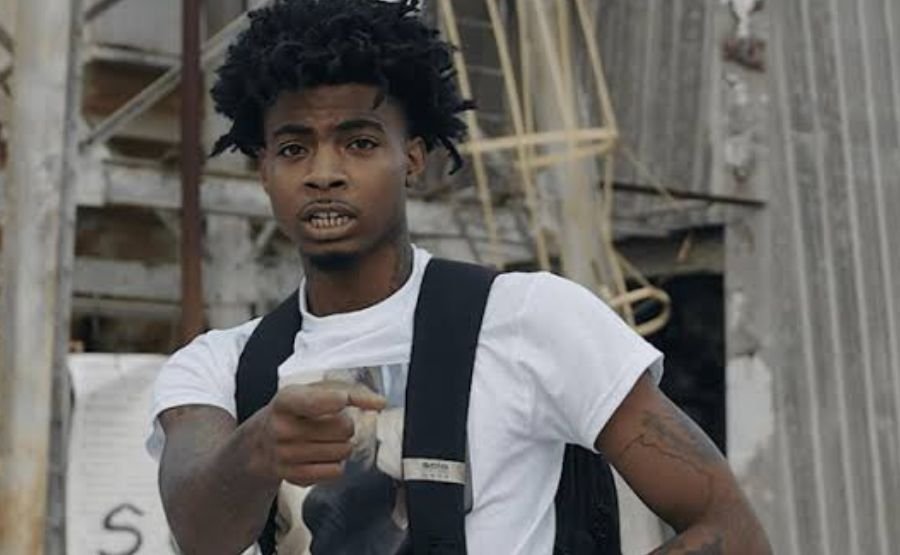
Lazer Dim 700 attended Crisp County High School in Cordele. He didn’t finish — he dropped out before graduating, which is either a cautionary tale or simply a reflection of the fact that he was already focused on something else entirely. Given where he ended up, it’s hard to argue with the decision in hindsight, even if nobody should read it as a blueprint.
What he was doing instead of schoolwork was teaching himself audio engineering. This is the detail about Lazer Dim 700 that surprises people who just know him from his online presence or his biggest songs. Before he was a rapper, he was working on the production side — learning how to build and shape beats, how recording equipment works, how to engineer a track. He did session work in Georgia, mixing and producing for other people.
The skills he picked up doing that work gave him something most rappers don’t have when they’re starting out: full control over his own sound. He didn’t need to find a producer willing to work with him. He could make the beats himself, engineer the recordings himself, release everything himself. That independence — paired with a genuine vision for what he wanted to sound like — is what made the early Lazer Dim 700 catalog possible.
His first big musical influence beyond his father was Lil Wayne, but you can hear other things in his DNA too. Young Nudy’s ease and menace. Playboi Carti’s approach to vocals is pure sound. The whole Atlanta underground tradition of treating the recording process as a vibe rather than a technical exercise. He absorbed all of it and cooked it into something that came out distinctly his own.
The Name, the First EP, and Six Years of Groundwork
Let’s talk about the name, because it’s one of those origin stories that’s too good to make up.
When he was making a Facebook profile — just a teenager trying to get online — he and his younger brother sat together trying to come up with something that sounded cool. They threw things around, landed on “Lazer Dim,” and then added “700” because they thought it sounded hard. That was it. There was no deep meaning, no elaborate concept. Just two brothers riffing on what sounds tough and memorable.
The name stuck. And it turned out to be perfect for the artist he would become — surreal, slightly absurd, hard to explain, but completely impossible to forget once you’ve heard it.
His very first stage name was reportedly “Juice Money” — a name he’s since laughed about publicly. After that came “Luh4thagod,” which he used when he first started releasing music around 2018. Under that name he put out his debut EP in 2019, a project called 4zzz (Drakes Mixtape), released on SoundCloud. Rough edges everywhere. Janky production. The kind of thing that sounds like someone finding their voice in real time.
Between 2019 and 2023, he kept releasing material steadily — projects called The World Is Yours, Hot Streak, 8890, Disaster, Arnandez. A whole body of work that built up quietly on SoundCloud and through word of mouth in underground rap circles. Nobody outside that world was really paying attention yet. But the people who were paying attention were extremely loyal, and the catalog was stacking up.
He was learning with every release. Getting sharper. Getting stranger. Getting more specifically himself.
“Asian Rock” and the Moment Everything Changed
In early 2024, a song called “Asian Rock” found its way out of underground circles and into the broader internet. The timing was partly algorithmic luck, partly genuine quality catching up with it — but whatever the combination, it spread fast.
“Asian Rock” doesn’t sound like anything from the mainstream rap charts. The beat is heavy and distorted, almost abrasive. Lazer’s delivery is loose and meandering in a way that somehow locks into the rhythm rather than fighting it. The lyrics are unpredictable. And the whole thing has an energy that’s genuinely fun — chaotic but intentional, weird but not alienating.
People started sharing it. TikTok picked it up. Reddit threads appeared. The underground rap community, which had been sitting on Lazer Dim 700 for years, suddenly found itself being heard by a much bigger audience.
“Treacherous,” which he had released in late 2023, started getting pulled back into the conversation alongside it. The two songs together gave people enough to grab onto — they weren’t one-offs, this was a whole vibe, a whole artist with a whole thing going on.
On March 13, 2024, he released Injoy, his debut studio album — which he considers the first proper album of his career even though the SoundCloud catalog behind him was already substantial. The standout tracks were “awsum” and “injoyable,” and the whole project showed an artist who had figured out exactly what he was doing, even if that thing was deliberately rough around the edges.
Then, in December 2024, came Keepin It Cloudy — his second studio album, self-released and reviewed by Pitchfork, which gave it a 5.9 and said, essentially, that they loved what Lazer was doing but felt some of the raw electricity of his early work had gotten sanded down a little in the transition to more polished releases. That Pitchfork review happening at all was its own milestone — underground rappers from Cordele don’t usually get covered by the website that covers Kendrick Lamar and Radiohead in the same breath.
2025 brought Sins Aloud and, more significantly, an induction into the XXL Freshman Class — one of hip-hop journalism’s most recognized annual acknowledgments of emerging artists. He was twenty-two years old and he was sharing a class with artists who had come up through completely different pipelines.
The Denzel Curry collaboration — “Still in the Paint,” released in October 2024, featuring both Lazer and Bktherula — was the kind of cosign that carries institutional weight. Curry is critically beloved and genre-spanning. When he calls on an underground artist, people listen. And Lazer held his own on the track completely.
The PBM Incident: When the Internet Found Him for the Wrong Reasons Too
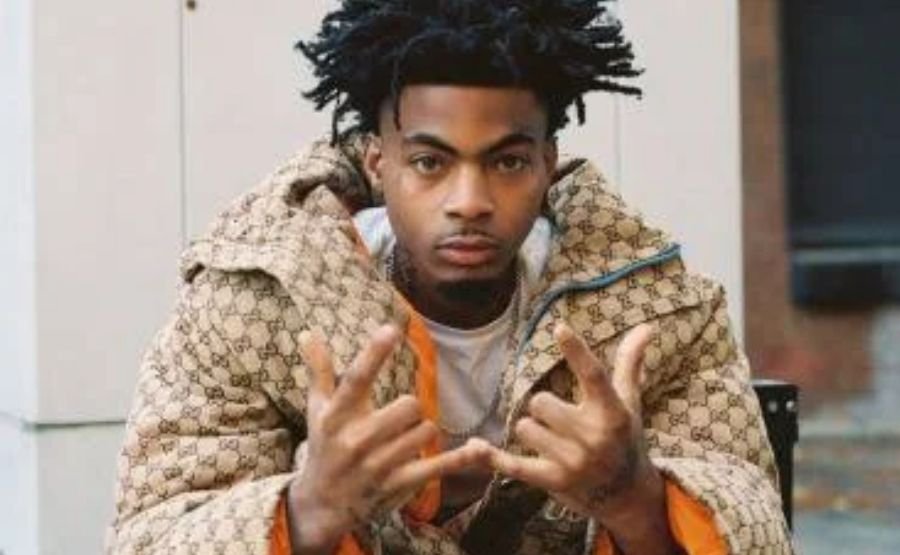
No Lazer Dim 700 biography is complete without mentioning the Plaqueboymax incident, because it went viral and because it tells you something about who this person is.
Plaqueboymax is a popular YouTube creator who films studio sessions with rappers. He filmed one with Lazer. Before the session started, they smoked a joint that Lazer had rolled. Lazer had, by his own admission and general internet knowledge, laced it with something. Max had a famously bad time on camera.
The clip spread everywhere. People were horrified. People were laughing. People couldn’t decide how to feel. And Lazer — rather than distancing himself or issuing a carefully worded apology — leaned into it with the same chaotic energy he brings to everything else. He released a song called “Laced Max,” which became one of his most-played tracks.
This is either deeply irresponsible or genuinely deranged performance art or both. It’s exactly the kind of thing that’s impossible to predict or manufacture. And it cemented a certain character in the public imagination — Lazer Dim 700 as someone who operates outside the normal rules of artist PR, for better and for worse.
Personal Life: Private Where It Counts
For someone who shares so much of himself online — his Twitter and Instagram are full of his actual personality, not a managed brand version of it — Lazer Dim 700 is genuinely private about the things that matter.
He’s confirmed to have no children and no public romantic relationship as of 2026. His parents remain almost entirely in the background. His younger brother, the one who helped him come up with his name, is occasionally referenced but not a public figure.
He still lives in Cordele. That fact alone says something about who he is. He could easily have moved to Atlanta by now — plenty of artists do the moment there’s money and momentum. He stays. He makes his music from where he’s from, which makes sense given that so much of his appeal is tied to an authenticity that couldn’t survive being manufactured somewhere else.
His personality online — funny, self-deprecating, willing to be weird, genuinely interactive with fans — is a big part of why people connect with him. He doesn’t perform a version of himself designed to be palatable. He just is himself, which in 2025 is genuinely radical.
The Difficult Parts: Low-Budget Beginnings and Industry Skepticism
The years between 2018 and 2023 were not a straight path upward. Lazer was releasing music consistently but not getting paid consistently. Underground SoundCloud rap doesn’t generate the kind of revenue that sustains a career without a label deal or serious streaming numbers. He was building a fanbase, but slowly, and in a scene that doesn’t always convert loyalty into actual income.
The sound he was developing — deliberately lo-fi, intentionally rough, aesthetically committed to a kind of anti-polish — is exactly the kind of thing that makes industry gatekeepers nervous. It’s not radio-ready. It doesn’t fit the formulas. It requires an audience willing to meet it where it lives, and building that audience from Cordele, Georgia without label infrastructure behind you is genuinely hard work.
There’s also the question of artistic integrity under pressure. When Keepin It Cloudy got a middling Pitchfork review partly on the grounds that he’d smoothed some of his rougher edges in pursuit of a more listenable product, that’s the kind of feedback that cuts both ways: you’re getting reviewed by the tastemakers, which means you’ve arrived, but they’re essentially telling you the thing that made you special was the chaos you were trying to move past. Navigating that feedback publicly, as a twenty-two-year-old, isn’t easy.
Financial Picture: What $1.5 Million Actually Means at 24
The estimates put Lazer Dim 700’s net worth somewhere around $1.5 million as of 2025 and into 2026. That number comes from streaming income, touring revenue, the Denzel Curry collaboration exposure, merchandise, and whatever came from the XXL Freshman deal and associated appearances.
For a twenty-four-year-old who was releasing music independently on SoundCloud six years ago, $1.5 million is a remarkable number. It’s not Drake money. It’s not the kind of wealth that lets you stop thinking about money. But it’s genuine financial stability built entirely off the back of his own vision and his own catalog, without a major label advance propping it up.
He is signed with a representative — Jonathan B. handles his bookings and agency work — but his music has largely been self-released. That means the revenue he does generate isn’t being split with a label taking the largest share. He owns his sound.
The net worth will grow. He’s twenty-four. He’s on an upward trajectory with institutional co-signs, a growing streaming presence, and a fanbase that is fiercely devoted. The financial picture in 2030 looks different from 2026.
Where He Is Now
As of 2026, Lazer Dim 700 is in his mid-twenties, living in Cordele, making music, building his catalog, and occasionally doing things on the internet that make people do a double take. He’s a 2025 XXL Freshman. He’s toured. He appeared on a Denzel Curry project. He’s in Trippie Redd’s orbit. He’s releasing albums.
Sins Aloud, his 2025 project, extended the run. And given the pace he’s been moving, more music is inevitable and probably imminent.
The question everyone in his corner of the internet asks is: does he cross over fully, or does he stay in the underground and become a cult legend there? The honest answer is that nobody knows, including probably him. But based on everything about how he operates — the refusal to change his sound for approval, the willingness to be genuinely weird in public, the comfort with staying in Cordele — it feels like the crossover, if it happens, will happen on his terms.
Final Words
Lazer Dim 700 is the kind of artist who makes you rethink what “quality” means in music. His sound isn’t polished. His career didn’t follow a plan. His choices have been unpredictable at best and genuinely questionable at moments. And yet there’s something undeniably real about what he makes — a quality of attention and invention that you can feel even when you can barely make out what the words are.
He came from a small city in Georgia that nobody was watching, taught himself audio engineering because he couldn’t afford to pay someone else to do it, released music for six years into the void before the void started talking back, and built a genuine career on the premise that being completely himself was enough.
For a generation of listeners exhausted by calculated authenticity and focus-grouped rap personas, Lazer Dim 700 is what the real thing looks like. Messy, funny, strange, and completely impossible to ignore.
See also “Jamal Morton Net Worth: How the J’Amore Love Star Built His Million-Dollar Fortune“
FAQs
1. What is Lazer Dim 700’s real name?
His full legal name is Devokeyous Keyshawn Hamilton. He was born in Cordele, Georgia on March 8, 2002.
2. Where did the name “Lazer Dim 700” come from?
He came up with it while creating a Facebook account with his younger brother. They wanted something that sounded cool, settled on “Lazer Dim,” added “700” because it sounded hard, and it stuck. There’s no deeper meaning — it’s genuinely just what happened.
3. What was his name before Lazer Dim 700?
He went by “Luh4thagod” when he first started releasing music around 2018. His very first rap name, which he’s since joked about, was apparently “Juice Money.”
4. Where is he from?
He’s from Cordele, Georgia — a small city in the south-central part of the state. He also spent time growing up in Clayton County near Atlanta. He still lives in Cordele.
5. What is Lazer Dim 700’s net worth?
Estimates put it at approximately $1.5 million as of 2025. His income comes from music streaming, touring, collaborations, merchandise, and media appearances.
6. What is he known for musically?
He’s known for a deliberately lo-fi sound — deliberately rough vocal mixes layered over bass-heavy beats with distorted 808s. His lyrics are unpredictable and often described as chaotic but inventive. His biggest song is “Asian Rock,” which broke him through to wider audiences in early 2024.
7. What was the PBM (Plaqueboymax) incident?
During a filmed studio session with YouTuber Plaqueboymax, Lazer gave him a joint he’d laced with something. Max had a very bad time on camera, the clip went viral, and Lazer responded by releasing a song called “Laced Max” which became one of his most-played tracks.
8. Has Lazer Dim 700 worked with major artists?
Yes. He appeared on Denzel Curry’s “Still in the Paint” alongside Bktherula in October 2024 — one of the highest-profile collaborations of his career. He also appeared with Trippie Redd on “Murderman” and has collaborated with Baby Kia, Ola Runt, and others.
9. Was Lazer Dim 700 an XXL Freshman?
Yes. He was selected as part of the 2025 XXL Freshman Class, one of hip-hop journalism’s most recognized annual acknowledgments of emerging artists.
10. What albums has he released?
His main studio projects include Injoy (March 2024), Keepin It Cloudy (December 2024), and Sins Aloud (2025). Before those, he released a series of SoundCloud projects under his earlier name, including The World Is Yours, Hot Streak, 8890, Disaster, and Arnandez.
11. Does Lazer Dim 700 have a record deal?
His music has been largely self-released. He is represented by an agent named Jonathan B. for bookings and business. Reports from September 2024 suggested his producer, 381, made announcements about a potential deal, but he has operated primarily independently.
12. How did he learn music production?
He taught himself audio engineering and worked as a sound engineer in Georgia before he started rapping. That background gave him the ability to produce, record, and release his own music without depending on outside help — a key factor in his early productivity and creative control.
Discover people, ideas, and stories that matter with CelebsBeacon.