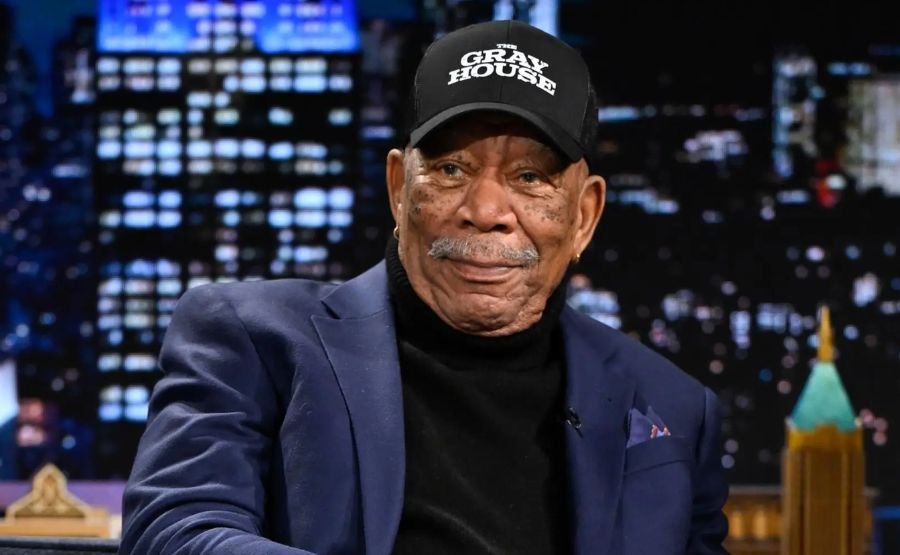
Morgan Freeman Net Worth: How the Late-Blooming Hollywood Legend Built His $250 Million Fortune
Quick Bio
| Detail | Information |
| Full Name | Morgan Porterfield Freeman Jr. |
| Date of Birth | June 1, 1937 |
| Birthplace | Memphis, Tennessee, USA |
| Nationality | American |
| Profession | Actor, Producer, Narrator, Director |
| Major Achievements | Academy Award (Million Dollar Baby, 2005); five Oscar nominations; Golden Globe Award; Kennedy Center Honor (2008); AFI Life Achievement Award (2011); Cecil B. DeMille Award (2012); SAG Life Achievement Award (2018). |
| Box Office Total | Films have grossed over $11 billion worldwide |
| Estimated Net Worth | $250 million |
| Companies | Revelations Entertainment (co-founded 1996); Ground Zero Blues Club, Clarksdale, Mississippi |
| Marriages | Jeanette Adair Bradshaw (1967–1979); Myrna Colley-Lee (1984–2010) |
Who This Man Is — And Why His Story Is Worth Telling
There’s a very short list of actors whose voice alone can stop a room. Morgan Freeman sits at the top of it. Before you even process what he’s saying, that low, unhurried, warm-but-authoritative voice has already told you to pay attention. It’s not a trick. It’s just who he is — and six decades of film and television have only made it more recognizable.
But here’s what makes his story genuinely interesting beyond the voice and the awards: he was fifty years old before most of the world knew his name. Not thirty. Not even forty. Fifty. The career everyone associates with Morgan Freeman — Shawshank, Se7en, Million Dollar Baby, narrating March of the Penguins — all of that came after decades of grinding obscurity, a children’s television show, soap operas, stage work, and a lot of years where nobody was handing him leading roles.
His story is one of the great slow builds in Hollywood history. And it’s worth understanding in full, because the version most people carry around in their heads is missing the first half.
See also “Prince Harry Net Worth: How the Spare Built a $60 Million Fortune Without the Crown“
A Childhood That Never Stood Still
Morgan Freeman came into the world on June 1, 1937, in Memphis, Tennessee. His father, Morgan Porterfield Freeman Senior, was a barber. His mother, Mamie Edna, was a teacher. He had three older siblings, which means he grew up the youngest in a full house with a mother who valued education and a father who died of cirrhosis when Morgan was just twenty-three.
The family moved frequently. Mississippi, Indiana, Illinois — the South and the Midwest during the late 1930s and 1940s, when segregation was not a political talking point but a daily physical reality. He eventually settled in Greenwood, Mississippi, where he finished high school in 1955. In a line that has become one of the more quoted things he ever said, he described his goal upon graduating as simply wanting to get out of Mississippi.
What’s striking is that even in those early years, something was already pulling him toward performance. He acted in school plays. He found that standing in front of people and inhabiting a character felt natural rather than terrifying. That pull never went away.

The Air Force, Los Angeles, and a Decision That Changed Everything
After high school, Freeman joined the United States Air Force. He served from 1955 to 1959, reaching the rank of Airman First Class and working primarily as a radar technician stationed in California. The military gave him discipline and geography — it put him on the West Coast, which turned out to matter enormously.
When he left the Air Force in 1959, he didn’t go home. He went to Hollywood. He enrolled at Los Angeles City College to study theater arts, where a teacher actually encouraged him to pivot toward dance, a suggestion he absorbed but ultimately didn’t follow entirely. He was building technique, refining instincts, doing the unglamorous work of learning his craft in a city full of people trying to do exactly the same thing.
The late 1950s and early 1960s in Hollywood were not friendly to a young Black man with serious theatrical ambitions. The parts available were limited, the industry was deeply segregated in its own ways, and the path to anything substantial was long and uncertain. Freeman kept going anyway.
The Long Climb: Stage, Soap Operas, and Easy Reader
His first credited film appearance came in 1964, but the movie almost nobody remembers. His Broadway debut arrived in 1968, in an all-Black production of Hello Dolly! — a production that gave him exposure and helped him build a reputation in the New York theater world.
Stage work followed through the late 1960s and 1970s, including a Tony Award nomination for The Mighty Gents in the late 1970s. He also won multiple Obie Awards for off-Broadway work, including a production of Driving Miss Daisy long before it became a film. The stage was where he developed the command that would eventually translate so powerfully to screen.
But the big exposure — the thing that put his face in American living rooms — came from a most unexpected place. From 1971 to 1976, Morgan Freeman played a character named Easy Reader on The Electric Company, a children’s educational show on PBS. Easy Reader was a smooth, book-obsessed character in a leather jacket and a headband, practically the coolest thing on children’s television. Millions of American kids grew up watching him before they even knew what acting was. It also helped pay the bills during a period when film roles weren’t materializing.
When The Electric Company ended in 1976, he found himself back at square one in some ways. He picked up a role on the soap opera Another World. He kept doing theater. He kept waiting for the film world to catch up with what the stage already knew.
Street Smart, Driving Miss Daisy, and the Industry Waking Up
It took until 1987 for things to genuinely shift. That year, Freeman appeared in a thriller called Street Smart, playing a character named Fast Black — a menacing, unpredictable street pimp who was magnetic and terrifying in equal measure. The performance was so far outside what audiences expected from him that critics sat up straight. His first Academy Award nomination was for Best Supporting Actor. He was fifty years old.
Two years later, 1989 became the year everything changed at once. He reprised the stage role he had already perfected — Hoke, the gentle, proud chauffeur in Driving Miss Daisy opposite Jessica Tandy — and the film became a cultural moment. He earned a Golden Globe and his second Oscar nomination. In the same year, he appeared in Glory, the Civil War drama about the 54th Massachusetts Infantry, which he has described as one of the most personally meaningful projects of his career.
The 1990s were relentless in the best possible way. Robin Hood: Prince of Thieves, starring Kevin Costner. Unforgiven with Clint Eastwood. Then, in 1994, The Shawshank Redemption — arguably the most beloved prison film ever made, certainly one of the most beloved American films of any genre. His portrayal of Ellis Boyd “Red” Redding earned a third Oscar nomination and a permanent place in film history. The following year, Se7en — where he played the older, weathered detective opposite Brad Pitt — became one of the defining thrillers of the decade.
The Oscar finally came in 2005, for Million Dollar Baby alongside Clint Eastwood and Hilary Swank. Best Supporting Actor. Thirty-eight years after his Broadway debut.
Beyond Acting: The Businessman, the Narrator, the Explorer
Freeman didn’t just perform in Hollywood — he built something there. In 1996, he co-founded Revelations Entertainment with his producing partner Lori McCreary. The company gave him creative control over projects that mattered to him, including the CBS political drama Madam Secretary, which ran for six seasons.
Then there’s the narrator. If you’ve watched a documentary in the last twenty years, there’s a reasonable chance Morgan Freeman told you something about it. He narrated March of the Penguins in 2005, which won the Academy Award for Best Documentary. He hosted and narrated Through the Wormhole, a science documentary series on the Science Channel that explored big cosmological questions across eight seasons from 2010 to 2017. He followed that with The Story of God with Morgan Freeman on National Geographic, traveling the world to examine how different cultures understand the divine.
And back in Mississippi, he opened Ground Zero Blues Club in Clarksdale — a city that sits at the heart of the American blues tradition. Freeman is deeply rooted in Mississippi despite the career that took him everywhere else, and the blues club reflects that. He owns property there, he goes back regularly, and he’s invested in the place where his family came from.
Personal Life: Two Marriages, Four Children, Unimaginable Loss
Freeman has been married twice. His first marriage, with Jeanette Adair Bradshaw, lasted from 1967 until 1979. His second, to costume designer Myrna Colley-Lee, ran from 1984 to 2010. He has four children across both relationships, and also helped raise his step-granddaughter E’Dena Hines — the granddaughter of his first wife, whom he treated as his own grandchild and loved as family.
The divorce from Myrna Colley-Lee in 2010 came with a financial settlement that, by most credible accounts, was staggering — estimates range from $100 million to $200 million in real estate and cash transferred to his ex-wife. It is one of the costliest celebrity divorces on record, and it means his current net worth, while enormous, is notably lower than it might have been otherwise.
And then came August 2015. E’Dena Hines, thirty-three years old, was found stabbed to death on a street in Harlem. Her boyfriend was charged with her murder and later sentenced to twenty years in prison. Freeman issued a statement that was heartbreaking in its simplicity: he said the world would never know what she had to offer, and that her star would keep shining in the hearts of everyone who loved her. It was the kind of grief that doesn’t fully go away. You carry it.
The 2008 Accident and What It Left Behind
Before E’Dena’s death, Freeman had already endured a terrifying physical ordeal. On a late August night in 2008, at age seventy-one, he lost control of his car on a rural Mississippi highway. The vehicle — a borrowed 1997 Nissan Maxima — flipped and rolled, trapping him and his passenger inside. Emergency crews had to use hydraulic rescue equipment to extract both of them. He was transported to a hospital in Memphis.
The immediate injuries were serious: a broken shoulder, arm, and elbow. Surgery lasted four hours. He was conscious at the scene and — characteristically — reportedly cracked a joke with emergency responders. But the lasting damage was more insidious. The nerve damage to his left arm never fully resolved. His left hand became largely immobile, and the blood circulation issues led to a diagnosis of fibromyalgia. For years since, he has worn a black compression glove on that hand to keep blood moving — you can spot it in interviews and award appearances throughout the 2010s and into the 2020s.
He has spoken about it matter-of-factly, without self-pity. The hand doesn’t work right. That’s just reality. You keep going.
The Money: How He Built $250 Million and What It Cost
Morgan Freeman’s wealth is substantial and well-documented. The consistent estimate across credible sources is $250 million, though some put it slightly higher. The remarkable thing about this figure is that it represents what remains after the divorce settlement — had that not occurred, his peak wealth would have been dramatically higher.
Where does the money come from? Decades of film work in some of the highest-grossing movies ever made. His films collectively have generated over $11 billion at the box office — placing him among the top earners in Hollywood history by that metric. He commands top-tier fees per picture, earns royalties on decades of catalog work, and has narration income from documentary series and countless commercial voice projects. His production company generates revenue. His Mississippi real estate holdings add to the picture. And the Ground Zero Blues Club, while more passion project than financial engine, is a business nonetheless.
He’s not flashy about it. He’s known for a ranching lifestyle in Mississippi, for keeping a relatively modest public profile given his wealth, and for investing in property rather than burning money on excess.
Where He Is Now, at 87
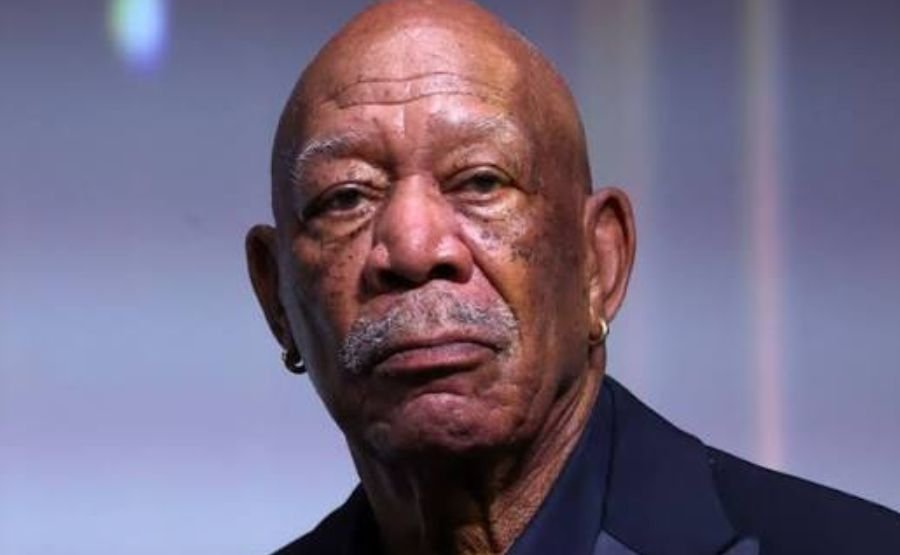
Morgan Freeman turned eighty-seven in June 2024. He is still working. He appeared at the 2022 FIFA World Cup opening ceremony in Qatar, gloved hand visible and composure immaculate. He continues to take on film and television roles selectively. His production company remains active. He still narrates projects.
The hand that was injured in 2008 never fully healed, but it hasn’t stopped him. The grief over E’Dena is something he carries privately. The legacy that surrounds him — the awards, the box office numbers, the voice that has narrated everything from penguin documentaries to questions about the universe — continues to grow.
He remains one of the most beloved figures in American entertainment, which is a strange and specific category of cultural standing. The kind of love he receives isn’t just admiration for talent. It’s something closer to gratitude.
Final Words
What makes Morgan Freeman’s story genuinely remarkable is the timeline. He didn’t arrive. He accumulated. He spent the first half of his career doing the kind of work that most people never see — stage productions, soap operas, a children’s show in a leather jacket — and then he spent the second half becoming one of the most recognized faces and voices on the planet.
He’s played presidents. He’s played God. Twice. He’s played a chauffeur and a pimp and a prison lifer and a boxing trainer and a narrating penguin. The range is absurd, and yet every performance carries the same gravitational weight — that quality of a man who is fully present in whatever he’s doing, who isn’t performing with confidence but actually has it.
The losses in his personal life are real and heavy. The accident changed his body permanently. The divorce cost him an almost incomprehensible sum. The death of E’Dena Hines left a mark that no career achievement can touch.
And through all of it, he has kept that voice steady. That’s not nothing. That’s actually everything.
FAQs
1. What is Morgan Freeman’s estimated net worth?
Approximately $250 million as of 2025–2026. This figure is after a divorce settlement with his second wife, Myrna Colley-Lee, which reportedly cost him between $100 million and $200 million in cash and real estate. His pre-divorce wealth would have been significantly higher.
2. What is Morgan Freeman’s real name?
Morgan Porterfield Freeman Jr. — he was born with that name and uses it professionally without alteration.
3. When was Morgan Freeman born?
June 1, 1937, in Memphis, Tennessee. He is currently 87 years old.
4. How many Oscar nominations does he have?
Five total. He was nominated for Street Smart (1987), Driving Miss Daisy (1989), The Shawshank Redemption (1994), Million Dollar Baby (2004 — which he won), and Invictus (2009).
5. What was Morgan Freeman’s big break?
His first major Hollywood breakthrough came at age fifty with the 1987 film Street Smart, which earned him his first Oscar nomination. His wide commercial stardom arrived two years later with Driving Miss Daisy.
6. Why does Morgan Freeman wear a glove on his left hand?
In August 2008, he was seriously injured in a car accident in rural Mississippi. The crash left him with permanent nerve damage in his left arm and hand, causing the hand to be largely immobile and prone to poor circulation. The compression glove he wears helps manage blood flow and reduce discomfort from fibromyalgia.
7. Was Morgan Freeman ever on a children’s TV show?
Yes — from 1971 to 1976, he played the character Easy Reader on The Electric Company, a PBS educational series. The character was a hip, book-loving figure in a leather jacket. It was one of his most widely seen early roles.
8. Has Morgan Freeman been married?
Twice. First to Jeanette Adair Bradshaw from 1967 to 1979, then to costume designer Myrna Colley-Lee from 1984 to 2010.
9. What production company does Morgan Freeman own?
Revelations Entertainment, which he co-founded in 1996 with his producing partner Lori McCreary. The company has produced television series including Madam Secretary and numerous film projects.
10. What happened to Morgan Freeman’s granddaughter?
E’Dena Hines, his step-granddaughter whom he helped raise and considered his grandchild, was murdered in Manhattan in August 2015 at age thirty-three. Her boyfriend was charged, convicted, and sentenced to twenty years in prison. Freeman issued a public statement expressing deep grief over her death.
11. What documentary series has Morgan Freeman hosted?
He hosted and narrated Through the Wormhole on the Science Channel (2010–2017), which explored cosmology and physics over eight seasons. He also hosted The Story of God with Morgan Freeman on National Geographic (2016–2019), examining religious belief across world cultures.
12. Does Morgan Freeman have a connection to Mississippi blues music?
Yes, a strong one. He co-owns the Ground Zero Blues Club in Clarksdale, Mississippi — a city with deep roots in American blues history. He has maintained a home in Mississippi for decades and feels deeply connected to the region where he was raised.
Discover people, ideas, and stories that matter with CelebsBeacon.

2 Comments