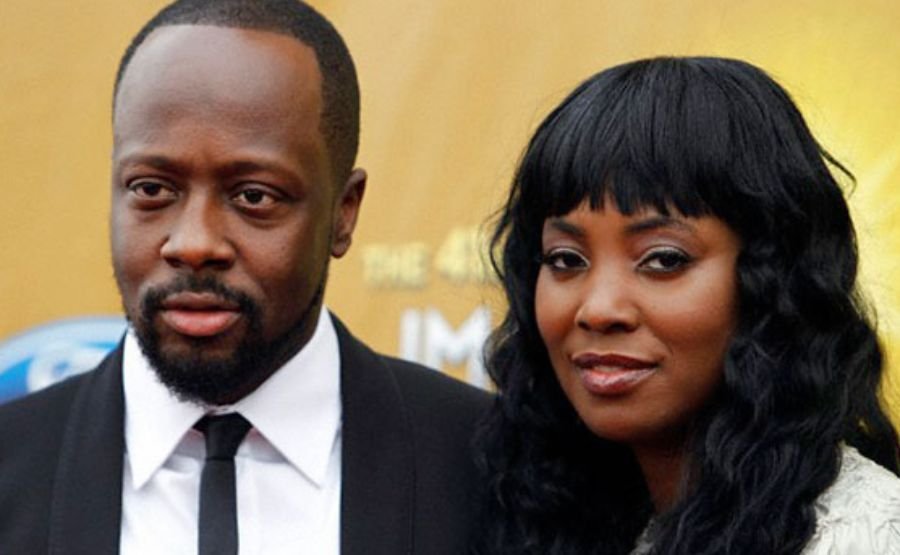
Claudinette Jean: Fusha, Faith, and the Woman Who Held It All Together
Quick Bio
| Detail | Info |
| Full Name | Marie Claudinette Pierre Jean |
| Date of Birth | August 6 (year approximately early 1960s) |
| Birthplace | Haiti (reportedly Jérémie) |
| Nationality | Haitian-American |
| Profession | Fashion Designer, Entrepreneur, Philanthropist |
| Major Achievements | Creator of Fushá Village LLC (real estate, 2007), founder and CEO of Fushá Designs Inc., featured on OWN’s Behind Every Man (2020), and styled Wyclef Jean for InStyle magazine’s list of the top ten most stylish performers |
| Married | Wyclef Jean (1994 — present) |
| Children | Angelina Claudinelle Jean (adopted from Haiti, 2005) |
| Named After | Claudinette Foushard, a celebrated Haitian beauty queen |
She Was Never Just “Wyclef’s Wife”
Let’s be honest. If you search her name, most of what you find is going to be framed around her husband. The Grammy winner. The Fugees front man. The guy who ran for the presidency of Haiti. And yes, Claudinette Jean has been married to that man since 1994, which is itself a story worth telling.
But here’s what gets buried under all of that: Claudinette built something real. She sewed clothing as a girl in Haiti before she had any name in fashion. She walked her designs under the elite tents at New York Fashion Week — one of just two Black women designers to do so in her season. She transformed a New Jersey boutique into a disaster relief operation the day her homeland fell. And she did all of this while navigating fame, financial pressure, a marriage that nearly broke, and a culture that often expects the woman beside a famous man to simply stand still and smile.
She did not stand still. She never has.
See also “Molly Brolin: The Quiet Creative Who Turned a Famous Name Into Her Own Artistic Identity“
A Girl From Haiti, Named for a Beauty Queen
Claudinette Jean came into the world in Haiti, in a country of vivid contradictions — staggering natural beauty alongside deep poverty, a proud revolutionary history alongside generations of political dysfunction. She was born in the early 1960s, her exact birth year varying slightly across sources, but her birthday is recorded as August 6 — which makes her a Leo, a fact that may explain a few things about her personality.
Her parents gave her a name loaded with meaning. She was named for Claudinette Foushard, one of Haiti’s most celebrated beauty queens — a woman who, according to family lore, lived in the fairy tales of Haitian men of that generation. It was a beautiful, ambitious thing to name a daughter, and it set an expectation before she could walk.
She grew up in a household that sewed. Like so many Haitian women before her, the needle and fabric were tools passed down not as art but as necessity — you made clothes because you needed them, you fixed things because you couldn’t always buy replacements. That relationship with fabric, humble and practical as it began, planted something in Claudinette that kept growing.
She had four brothers and one sister. The family was Catholic, as so many Haitian families are, and the rhythms of faith and community were woven into daily life. When Claudinette was around eight years old, the family made the move that would define the rest of her story. They settled in New Jersey — in the tight, vibrant orbit of Haitian immigrant life that had taken root in the Garden State. They brought Haiti with them in the way immigrants do: in the food, the language, the music, the church, and in the women who kept sewing even when they didn’t have to anymore.

New Jersey, Montclair, and the Fork in the Road
Claudinette grew up in New Jersey and attended school there, eventually making her way to Montclair State University in Passaic County — a school that, back then, was carving out a real reputation in creative fields. She was smart enough and driven enough to consider multiple paths. One of them was medicine. She apparently had the academic footing to head toward a medical career, and there were people in her circle who expected she might.
She chose fashion instead.
The decision wasn’t impulsive. It was the honest acknowledgment of where her passion actually lived. She enrolled in Fashion Studies at Montclair State and earned her Bachelor of Arts degree there. She was learning technical construction, design theory, draping, pattern work — the real craft beneath the glamour that the outside world never sees when it looks at a finished garment on a runway.
And it was on that campus, at some point during her studies, that she met a young musician who was about to change everything.
A Fashion Show, a Guitarist, and a Decision That Lasted
Wyclef Jean was also at Montclair State. He was performing, finding his footing as a musician, figuring out how to turn raw talent into a career. Their paths crossed at a fashion show on campus — Claudinette presenting her work, Wyclef in the audience. The story goes that the moment he saw her, he told people she was going to be his wife. That’s the kind of story people tell after thirty years of marriage, and it might be true or it might be the softened retelling of something messier and more ordinary. Either way, something connected between them that evening.
Their relationship developed over the years that followed. They were both young, both Haitian-American, both building things from scratch in a country that didn’t hand immigrants a map. They understood each other in ways that only people sharing a cultural inheritance can. They married in 1994 — the same year Wyclef’s group, the Fugees, put out their first studio record.
That first record, Blunted on Reality, did not go well. It was received poorly, the critics were unimpressed, and the commercial numbers were dismal. For Claudinette, who had just married this man and was watching his dream sputter on the launch pad, it was a genuine test. She has spoken openly about how close she came to walking away during that period. The financial pressure was real, the uncertainty was corrosive, and she had her own ambitions to consider alongside his failing ones.
She stayed. And the following two years changed everything.
The Score, the Suits, and Fushá Takes Shape
The Fugees came back with The Score in 1996, and it became one of the best-selling albums of the decade. Wyclef’s career didn’t just survive — it exploded. Solo albums, collaborations with every major artist of the era, international touring, a presence at every major awards stage. The man Claudinette had almost left was now one of the most recognizable musicians on the planet.
And she got to work.
She launched Fushá Designs. The name came from her own name — derived from “Foushard,” the beauty queen she’d been named after — and reworked with her own spin. It nodded to fuchsia, the vivid purplish-pink that showed up constantly in her color palette. The brand’s aesthetic was something she described as French Caribbean Couture: a marriage of 18th-century aristocratic elegance with genuine Caribbean sensibility and modern cutting techniques. It was not a safe, commercial concept. It was personal and vivid and specific.
She put Wyclef in her designs. He wore them to the MTV Europe Music Awards. InStyle magazine took notice and named him one of the top ten best-dressed entertainers in entertainment. That placement wasn’t an accident — it was Claudinette’s eye, her hand, her vision. Wyclef has been unambiguous about this, telling interviewers that she deserved the credit.
Her client list grew. Mary J. Blige wore her pieces. Whitney Houston. Patti LaBelle. Ja Rule. Kelly Price. She was showing at New York Fashion Week — under the actual tents, not outside them — and she was one of just two Black women to earn that placement in her debut season. That is not a small distinction.
The spring collection show, her fourth Fashion Week appearance, captured the energy of what she’d been building. Stylish assistants. A packed runway. Wyclef performed a solo acoustic set on a yellow guitar before the show began. He told reporters afterward that every season, she got better. The pride was audible in it.
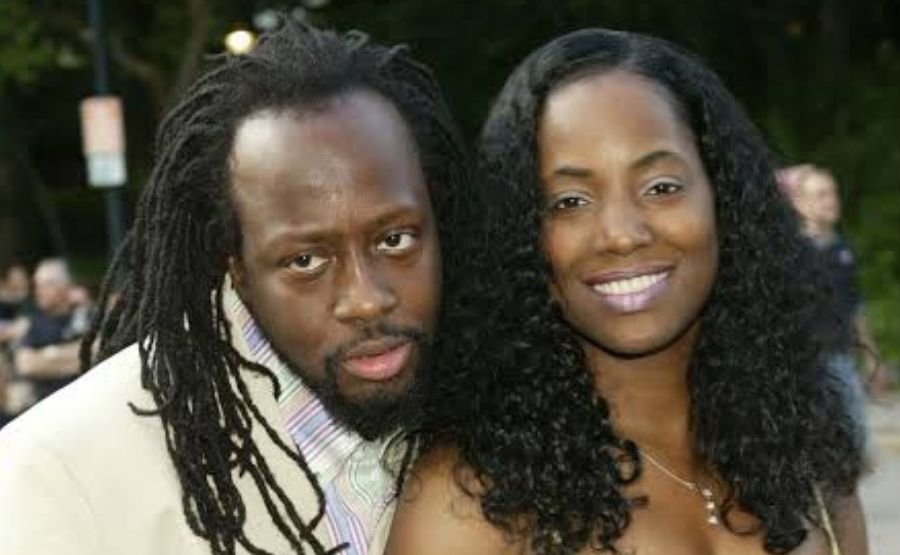
Branching Out: From Garments to Buildings
Fashion wasn’t the whole picture. Claudinette had been watching how wealth moved, and by 2007 she had launched a second venture: Fushá Village LLC, a real estate company. The name kept her brand identity intact while expanding her footprint into an entirely different industry.
Real estate in New Jersey — particularly in the affluent suburbs where she and Wyclef had settled, areas like Saddle River and South Orange — was a serious business. She was building the kind of diversified portfolio that fashion designers rarely get credit for pursuing. She was also running Angelina Holdings LLC, another business entity tied to her various interests.
Her boutique in South Orange became something of a community hub — not just a retail space but a gathering place for the Haitian-American community in the area. Which is partly why, when the earthquake hit Haiti in January 2010, the boutique was the first thing she converted.
January 2010: When Everything Else Stopped
On the twelfth of January 2010, a catastrophic earthquake struck Haiti. The magnitude 7.0 quake killed somewhere between 100,000 and 300,000 people — the exact number has always been disputed, but the scale of suffering was undeniable. It was one of the deadliest natural disasters in recorded history, and it hit the country Claudinette had left as a child, the country she had never stopped loving.
She didn’t wait for advice from others. Within days, she had converted her South Orange boutique into a sorting, packing, and drop-off center for donations funneling into Yéle Haiti — the foundation Wyclef had co-founded in 2005. She wasn’t staffing it with paid workers. She was volunteering every hour, organizing supplies, managing logistics, and coordinating with the foundation’s field teams.
Then she went to Haiti herself.
Claudinette traveled to her native country to personally inspect the temporary housing models Yéle Haiti was building — 1,200 units meant to move families out of the tent cities that had spread across the country. She visited areas where other NGOs refused to go. She approved construction designs. She oversaw the rollout on the ground.
When she came back, she described what she had seen with precision and emotion. She made the point that more than a million Haitians were still living under tents, that the cholera outbreak that followed the earthquake was killing people who had already survived the rubble. “People think it’s over,” she said. “It’s not.”
Wyclef put it plainly in his writing during that period, describing her as “part mom, part wife, and part warrior when it comes to Yéle and our mission.” It was the truest description of what she had become.
Her five-year-old daughter Angelina — born in Haiti, adopted by the Jeans in 2005 — handed her mother a bundle of her own dolls before one of those trips and asked her to bring them to the children in Haiti through Yéle. Claudinette did.
Adoption, Family, and the Life They Built
Angelina Claudinelle Jean arrived in their lives in March 2005. She was born in Haiti, and her adoption marked a profound chapter for the couple — a Haitian child coming home to Haitian parents who had made their lives in New Jersey, an act that was both personal and, in a small way, political. Claudinette and Wyclef were clear about the importance of Angelina maintaining her connection to where she came from.
Claudinette has spoken warmly about her own parents, and about being what sources describe as deeply attached to family. She has four brothers and a sister, and the texture of her life has always been shaped by that extended network of people who knew her before she was anybody in particular.
The marriage itself has had its seasons. Claudinette has been public about how hard the early years were — the financial strain, the uncertainty around the Fugees’ early failure, and the question of whether to stay. She stayed. And then the marriage was tested again by the pressures that come with massive, rapid fame — the touring, the fame dynamics, the scrutiny. The couple appeared on OWN’s Behind Every Man in November 2020, an episode that gave Claudinette genuine screen time to speak about her own path, her sacrifices, and what keeping that marriage intact had actually required.
Financial Picture: What She’s Built
Claudinette Jean’s personal net worth is genuinely difficult to peg. Sources vary widely, with estimates ranging from around $2 million to $10 million on the high end. The honest answer is probably somewhere in the lower-to-middle of that range for her personal earnings — built across Fushá Designs, the real estate company Fushá Village, Angelina Holdings, and various brand and commercial collaborations over the years.
Wyclef Jean’s net worth, separately, is estimated at around $10 million — a figure that has fluctuated significantly over the years given the financial scrutiny that surrounded Yéle Haiti after the 2010 earthquake, along with various business ventures.
The family’s combined financial picture is solidly comfortable, though not the stratospheric wealth the early 2000s peak might have suggested. They have lived in Saddle River and South Orange in New Jersey. They travel. They give. And Claudinette continues to operate her businesses with the same hands-on energy she brought to everything from the first fashion show at Montclair State to the tent cities outside Port-au-Prince.
Where She Is Now
Claudinette Jean is in her early-to-mid sixties. She still runs Fushá Designs. She still maintains her brand. She still shows up when Haiti needs her — and Haiti, with its ongoing political and environmental crises, needs its diaspora often. She is raising Angelina, who by now is in her early twenties and growing up as a young Haitian-American woman shaped by two parents who never let her forget where she came from.
The Behind Every Man episode on OWN gave her a platform she used well — she talked about her career, her daughter, her marriage, her homeland, and the question of what it costs to stand beside someone famous without disappearing. She answered honestly. She hasn’t disappeared. She made sure of that.
Final Words
There is a specific kind of strength that doesn’t announce itself. It just keeps showing up. It sewed clothes as a girl in Haiti because that’s what the women in her family did. It pivoted from medicine to fashion because honesty about your own passion matters more than a sensible career track. It stayed in a marriage during the hard years because it believed in something longer than the current moment. It turned a boutique into a relief center within days of a disaster. It flew to Haiti and approved temporary housing models in the rubble of a catastrophe.
That is Claudinette Jean. And the thread running through all of it — the fashion, the philanthropy, the marriage, the motherhood, the real estate — is the same one she first learned to handle as a small girl in Jérémie. The fabric holds because of the person working it.
Her story isn’t finished. But what she’s already made is genuinely something.
FAQs
1. Who is Claudinette Jean?
She is a Haitian-American fashion designer, entrepreneur, and philanthropist. She is the CEO and founder of Fushá Designs Inc. and the spouse of Wyclef Jean, a Grammy-winning artist.
2. When was Claudinette Jean born?
Her birthday is August 6, though her exact birth year isn’t publicly confirmed. She is estimated to be in her early-to-mid sixties as of 2026.
3. Where is Claudinette Jean from originally?
She was born in Haiti, reportedly in the coastal city of Jérémie, and moved to New Jersey at approximately eight years old.
4. What is Fushá Designs?
It is Claudinette’s fashion brand and company, founded as Fushá Designs Inc. The name derives from “Foushard” — the Haitian beauty queen Claudinette was named after — with a nod to the color fuchsia. The aesthetic blends Caribbean sensibility with French historical influences.
5. What celebrities has Claudinette Jean dressed?
Her client list has included Mary J. Blige, Whitney Houston, Patti LaBelle, Ja Rule, and Kelly Price, among others. She also styled Wyclef Jean, whose wardrobe she designed earned him a spot on InStyle magazine’s top ten best-dressed entertainers list.
6. How did Claudinette Jean and Wyclef Jean meet?
They met at Montclair State University in New Jersey, where both were students. Their paths crossed at a campus fashion show — she was presenting her designs, and Wyclef was in the audience.
7. When did Claudinette Jean and Wyclef Jean get married?
They married in 1994, the same year the Fugees released their first studio album. They have been together for over 30 years.
8. Did Claudinette Jean almost divorce Wyclef Jean?
She has spoken about this openly. When the Fugees’ debut album Blunted on Reality failed commercially in 1994, the financial and emotional strain brought the marriage to a serious crossroads. She has acknowledged she came very close to leaving. She stayed, and the following year the Fugees made one of the best-selling albums of the decade.
9. Do Claudinette and Wyclef Jean have children?
They have one daughter, Angelina Claudinelle Jean, adopted from Haiti in March 2005. She was born in Haiti and is now a young adult.
10. What did Claudinette Jean do after the 2010 Haiti earthquake?
She converted her South Orange, New Jersey boutique into a donation sorting and packing facility for Yéle Haiti. She then traveled to Haiti personally to inspect and approve temporary housing construction for displaced families, visiting areas other NGOs would not enter.
11. What other businesses has Claudinette Jean founded?
In addition to Fushá Designs Inc., she founded Fushá Village LLC, a real estate company, in 2007, and also runs Angelina Holdings LLC.
12. Where does Claudinette Jean live now?
She lives in New Jersey with Wyclef Jean. The family has been based in various locations across the state over the years, including Saddle River and South Orange.
Discover people, ideas, and stories that matter with CelebsBeacon.






2 Comments