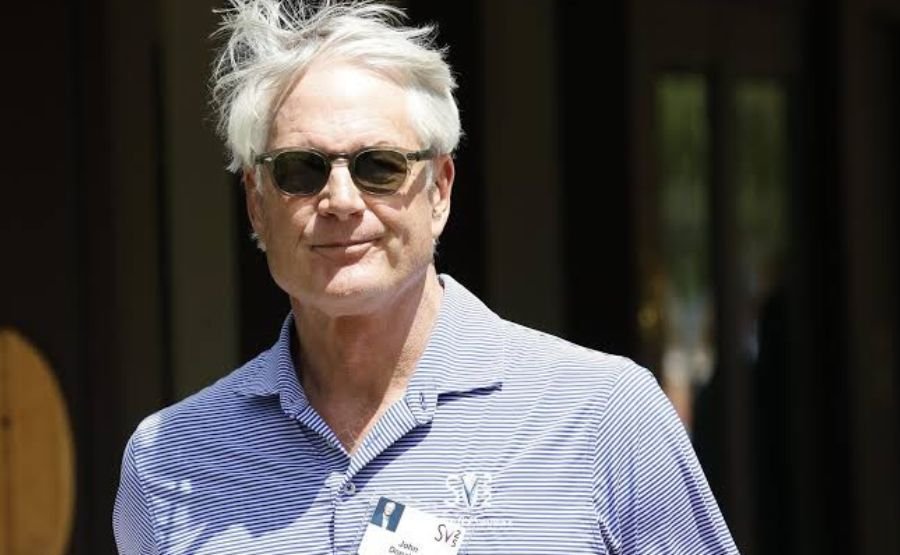
John Donahoe: The Consultant Who Ran Three Giants — and What Happened When He Got to Nike
Quick Bio
| Info | Detail |
| Full Name | John Joseph Donahoe II |
| Date of Birth | April 30, 1960 |
| Place of Birth | Evanston, Illinois |
| Nationality | American |
| Profession | Business Executive, Corporate Leader, University Athletic Director |
| Education | BA Economics, Dartmouth College (1982); MBA, Stanford Graduate School of Business |
| Major Career Roles | President & CEO, Bain & Company; President & CEO, eBay; President & CEO, ServiceNow; President & CEO, Nike (2020–2024) |
| Current Role | Athletic Director, Stanford University (from September 2025) |
| Spouse | Eileen Chamberlain Donahoe (met at Dartmouth; married early 1980s) |
| Net Worth (est.) | ~$155 million |
| Heritage | Irish-American |
A CEO Who Always Delivered — Until the Job That Didn’t Fit
Some people are built for turnarounds. They walk into chaos, figure out what’s broken, and put it back together — sometimes brilliantly. John Donahoe made his entire career being that person. At Bain & Company, the consulting firm where he spent his first twenty years, he learned how to diagnose broken businesses from the outside. At eBay, he took over a company struggling to define itself in a shifting internet landscape and doubled its size. At ServiceNow, he turned a good cloud software company into a great one.
Then he became CEO of Nike, and something didn’t click.
It’s important to understand the rest of the story before getting to that chapter, though. Because the Nike chapter is the one people remember most right now — the one that ended with his quiet removal in October 2024 and a company veteran being called out of retirement to clean things up. But it was only five years out of a forty-plus-year career that was, by almost any honest measure, genuinely impressive.
John Donahoe’s story is one of the most instructive in modern American business precisely because it shows that the skills that make someone exceptional in one context don’t automatically transfer to every context. He was a brilliant operator. He was the wrong person for one very specific job. Both of those things are true at the same time, and the nuance between them is what makes the story worth telling.
See also “Morgan Freeman Net Worth: How the Late-Blooming Hollywood Legend Built His $250 Million Fortune“
Evanston, Illinois: An Accountant’s Son With Big Ambitions
John Donahoe grew up in Evanston, a diverse, intellectually active suburb that sits directly north of Chicago on the Lake Michigan shoreline. His father worked as an accountant at Price Waterhouse, one of the most prestigious accounting firms in the country at the time — a career that planted early seeds of respect for financial rigor and organizational discipline.
He is of Irish descent, which in the context of the greater Chicago area means he grew up in a cultural milieu that valued hard work, Catholic community, and the kind of competitive spirit that finds its outlet in sports as much as schoolwork.
He attended New Trier High School in Winnetka — one of the most academically intense and well-resourced public high schools in the state of Illinois, famous for sending its graduates to elite universities in large numbers. Getting through New Trier requires a certain kind of focused persistence that doesn’t come from natural talent alone. You must learn how to work.
After graduation, before heading to college, Donahoe did something a lot of his Ivy-bound classmates probably didn’t: he took a job at a Schlitz beer distribution company, arranged through a friend’s father who thought it would build character. He joined the International Brotherhood of Teamsters to do it. The story has become something he tells — not as a badge of scrappiness exactly, but as an early lesson that the world works differently at ground level than it does in the offices at the top. He drove trucks or moved cases or whatever it involved, and he learned something about the people who actually do the physical work that moves commerce forward.
Dartmouth, Stanford, and Meeting the Person Who Would Shape His Life
Donahoe enrolled at Dartmouth College in New Hampshire in 1978, where he studied economics and graduated in 1982. He wasn’t just a grind-at-the-library student — he played basketball, JV level, which told anyone paying attention that he had the competitor’s wiring. Sport was serious to him, not just recreation.
More importantly, at Dartmouth he met a woman named Eileen Chamberlain, who was a class ahead of him — class of 1981. They met and married in the early 1980s, after falling in love. Eileen Chamberlain Donahoe went on to have a remarkable career in her own right, serving as President Obama’s ambassador to the United Nations Human Rights Council. The Donahoes are genuinely one of those couples where both people built serious, consequential careers while also building a life together that has lasted over four decades.
After Dartmouth, Donahoe pursued his MBA at Stanford Graduate School of Business, one of the most competitive business programs in the world. The Stanford experience took him out of the East Coast establishment world and landed him in Silicon Valley’s orbit — a perspective that would shape how he thought about technology, disruption, and what businesses could become with the right combination of product and scale.
He has also spoken openly about the spiritual dimension of his leadership philosophy. He is a deeply committed meditator, something he has credited with genuinely changing how he manages stress, makes decisions, and shows up for the people around him. He exercises most mornings. He practices gratitude deliberately, not as a self-help performance but as something woven into his daily structure. Leadership coaches and academics at Dartmouth, where he eventually became a trustee, have featured him as a model of what they call servant leadership — the orientation that says a leader’s job is to make the people around them better, not to accumulate authority for its own sake.
Twenty Years at Bain: Building the Foundation
Donahoe joined Bain & Company after Stanford, and what followed was a twenty-year apprenticeship in one of the world’s most demanding management consulting environments. Bain was and remains one of the elite strategy consulting firms — the kind of place that attracts the sharpest MBAs and then works them very, very hard in exchange for a deep education in how businesses actually function.
He started as an associate consultant — the bottom of the ladder. He was learning from the ground up: how to analyze an industry, how to structure a problem, how to walk into a company that’s struggling and figure out which levers to pull. Management consulting at that level isn’t theory. It’s an applied diagnosis. You sit across from executives who are facing real problems and you have to have real answers.
He was good at it. Consistently good, in the way that earns promotions. By 1999 — after two decades at the firm — he had climbed all the way to president and CEO of Bain & Company itself. That is an unusual thing. Most consulting firm careers follow a partner track with periodic leadership rotations. Rising to the top of the entire global institution takes something more than competence. It takes the ability to build relationships, inspire large groups of people, manage complex competing interests, and grow the business while maintaining the quality that made it worth growing.
Under his leadership, Bain expanded internationally and deepened its reputation. He was there until 2005, when a new opportunity arrived.
eBay: Where He Made His Biggest Mark
In 2005, Donahoe joined eBay as president of eBay Marketplaces — not as CEO yet, but running the company’s core business, which was the online auction and shopping platform that had made eBay one of the defining companies of the early internet era.
By 2008, when the board chose him as CEO, eBay was in a complicated spot. The excitement of early online commerce had become established infrastructure. The company needed someone who could build on that foundation without coasting on it. Donahoe brought the consultant’s toolkit: strategic clarity, operational discipline, a willingness to make hard calls about what the business should and shouldn’t be.
His biggest call at eBay was also his most controversial in the moment and most vindicated in retrospect: separating PayPal from eBay into its own independent public company. PayPal had been growing into something much larger and more strategically significant than just eBay’s payment processing arm. It was, in effect, a fintech company that happened to live inside an e-commerce company. Donahoe pushed for the separation. Activist investors, including Carl Icahn, had been agitating for it. In 2015, it happened.
Today PayPal is worth tens of billions of dollars as a standalone company. The separation is generally regarded as the right call. Donahoe oversaw acquisitions during his eBay years — Shopping.com, StubHub, Gumtree — that expanded what the eBay ecosystem covered. By the time he left in 2015, he had roughly doubled the company’s size.

ServiceNow: The Cloud Chapter
After eBay, Donahoe worked as an advisor for a few years, collecting his breath and deciding out what to do next. In February 2017, he became president and CEO of ServiceNow, a cloud-based enterprise software company that provides tools for IT service management, HR workflows, and business process automation.
ServiceNow was already a solid company when he arrived. The work he did there accelerated its trajectory significantly. He leaned into the company’s positioning as a platform — not just an IT ticketing system but an enterprise operating system that could sit under workflows across entire organizations. The growth under his leadership was substantial, and ServiceNow’s valuation climbed meaningfully during his time there.
Importantly, it was also at ServiceNow that Nike’s board came to know his work. He had joined Nike’s board of directors in 2014, while he was still at eBay, and had been watching the company from the inside as a director for several years before anyone asked him to run it.
Nike: The Job That Defined His Legacy Differently Than He Expected
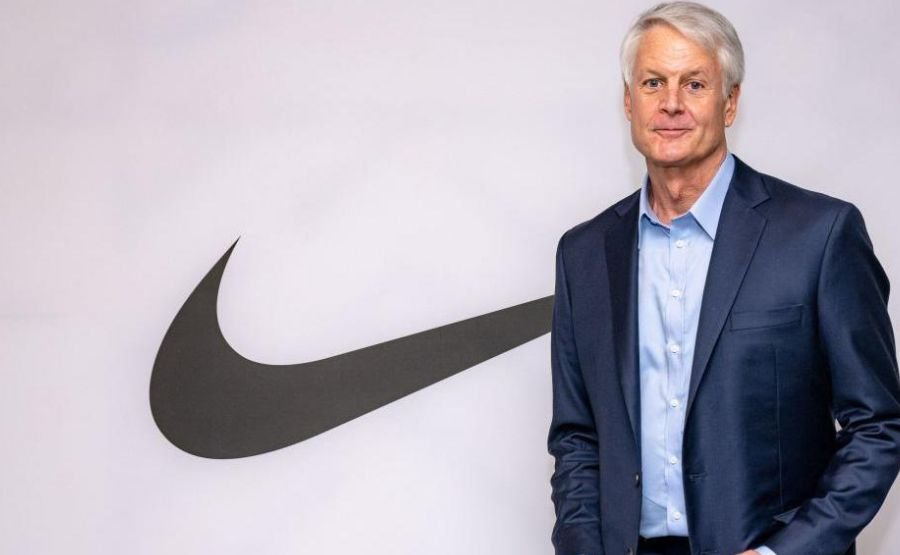
In October 2019, Nike announced that John Donahoe would succeed Mark Parker as president and CEO. The announcement generated some surprise in the sneaker world — Donahoe wasn’t a product person. He wasn’t an athlete by Nike’s standards. He was a consultant-turned-tech-executive, which is a very specific kind of profile.
The board’s logic was coherent: Nike had been pushing into direct-to-consumer digital sales, building out apps and e-commerce infrastructure, gathering consumer data, and trying to evolve from a wholesale brand that sold through Foot Locker and department stores into something more like a modern digital-first consumer company. Donahoe was, on paper, exactly the kind of CEO you’d want for that transformation.
He took over in January 2020, and six weeks later the COVID-19 pandemic shut down global retail. In that moment, the digital-first strategy that had seemed ambitious suddenly looked prescient. While physical stores closed, Nike’s online sales surged. Donahoe’s instinct to prioritize the company’s own channels over third-party retail appeared to be validated in real time.
But when the pandemic ended and the retail landscape reopened, cracks appeared. Cutting ties with wholesale partners — department stores, sporting goods chains, shoe retailers — turned out to have consequences that hadn’t been fully gamed out. Those retailers had done something valuable that wasn’t obvious until they were gone: they put Nike shoes in front of customers who hadn’t already decided to buy Nike. They drove trial, discovery, and impulse. Without them, Nike was only talking to people who already knew they wanted Nike.
Meanwhile, new competitors — Hoka, On Running, New Balance in its refreshed iteration — were quietly stealing shelf space and market share. Nike’s innovation pipeline, which requires long lead times and deep product culture, had been somewhat deprioritized in favor of digital infrastructure. The signature franchises — Air Force 1s, Dunks, Jordan retros — got leaned on heavily to generate revenue, flooding the market until the scarcity that made them desirable evaporated. Nike’s stock, which had peaked above $170 in late 2021, was trading in the low $70s by mid-2024 and touched lows not seen in over a decade.
In September 2024, the Nike board announced that Donahoe would retire. Elliott Hill, a thirty-two-year Nike veteran who had actually retired in 2020, was coming back to take the helm. Nike’s stock jumped roughly ten percent on the news — the market’s way of saying it thought a change was overdue.
Donahoe stepped down in October 2024 and remained as an advisor through January 2025. In September 2025, he was named athletic director at Stanford University, his business school alma mater — a role that puts him back in a sports context but one built around education, student athletes, and institutional leadership rather than quarterly earnings calls.
Eileen, Family, and What Grounds Him
Through all of this — Bain, eBay, ServiceNow, Nike, and whatever comes next — Donahoe has had Eileen. They have been married for over forty years, which in the world of high-velocity American corporate life is its own kind of extraordinary achievement.
Eileen’s career has been equally substantial. She served as the U.S. Ambassador to the UN Human Rights Council under Obama, and has continued her work in human rights and technology policy through Stanford and various nonprofit organizations. They are, by most accounts, genuine partners — two people who built serious independent careers that somehow coexisted rather than competed.
John has spoken openly in leadership forums about the support structure that made his career possible, naming Eileen directly and without the vague corporate-speak that executives sometimes use to acknowledge family without actually engaging with the subject. He has four children. He has made the point, more than once, that maintaining relationships and taking care of yourself aren’t soft distractions from leadership — they are the foundation it stands on.
The Financial Picture
Donahoe’s net worth is estimated at around $155 million. That number reflects four decades of top-tier compensation at some of the most lucrative positions in American corporate life. In 2023 alone, his total compensation from Nike was reported at approximately $32.8 million — a figure that, in the context of Nike’s simultaneous stock decline, became a point of pointed criticism from shareholders and commentators.
He is not among the wealthiest people in American business — he doesn’t have a founder’s equity stake in anything he built from scratch. But he is comfortably, seriously wealthy in the way that accrues to someone who spent twenty-plus years at Bain, ran two major public companies as CEO before Nike, and then collected a decade-plus worth of Nike compensation on top of it.
The PayPal chairmanship has also been a source of both income and influence — he remains connected to the fintech world he helped enable when he ran eBay.
What He’s Doing Now
After Nike, Donahoe didn’t disappear. He stepped into the role of Athletic Director at Stanford University in September 2025 — a job that is genuinely demanding in its own right, overseeing one of the most athletic programs in the country across thirty-six varsity sports.
The Stanford role is a fascinating fit in several ways. He went to Stanford for his MBA. He was a Dartmouth trustee and deeply engaged with collegiate athletics and education throughout his career. He believes in the coach-athlete relationship as a model for leadership — he has said, repeatedly, that his most powerful leadership teachers weren’t fellow CEOs but coaches and athletes who had to perform under pressure with everyone watching.
Running Stanford Athletics means navigating the rapidly shifting world of college sports — NIL deals, the transfer portal, conference realignment, Title IX compliance, facilities competition. It’s a big job. It’s also, notably, a job that doesn’t come with the stock-price clock that defined his Nike years. He is back in an institution where the timescales are longer and the success metrics are more complex.
Final Words
John Donahoe’s career is a useful reminder that excellence in one kind of leadership doesn’t guarantee excellence in all kinds. He was, at Bain and at eBay especially, genuinely excellent — clear-eyed, strategic, good at the hard calls. His bet on PayPal’s independence turned out to be one of the best corporate separations of the last two decades.
At Nike, he applied a framework that was internally consistent and intellectually coherent — and still managed to get a crucial read wrong on what Nike actually was and what it needed. He treated it like a tech platform when it was really a culture company. He optimized for the consumer data when he should have been protecting the brand mythology. The distinction sounds abstract until the stock is down eighty percent from its peak and a thirty-two-year veteran has to be called out of retirement to repair the damage.
None of this erases what came before. The Teamsters card, the Dartmouth basketball court, twenty years at Bain, a decade running one of the internet’s foundational companies, and a marriage that outlasted all of it — John Donahoe’s life adds up to something real and substantial. The Nike chapter is just the most instructive one.
See also “David Frecka Net Worth: How the Plastics King Built a $60 Million Supercar Empire“
FAQs
1. Who is John Donahoe?
He’s a veteran American business executive who served as CEO of three major companies — Bain & Company, eBay, and Nike — over a forty-plus-year career. He is currently the Athletic Director at Stanford University, starting in September 2025.
2. Why did John Donahoe leave Nike?
Nike’s board announced in September 2024 that he would retire, effective October 2024. The company was struggling with slumping sales, aggressive competition from brands like Hoka and On Running, and criticism that its aggressive push to sell directly to consumers had weakened its relationships with traditional retail partners and hurt the brand’s visibility.
3. What is John Donahoe’s net worth?
Estimates place it at approximately $155 million, accumulated across senior roles at Bain, eBay, ServiceNow, and Nike. His 2023 Nike compensation alone was reported at $32.8 million.
4. What did Donahoe accomplish at eBay?
He ran eBay from 2008 to 2015, roughly doubling the company’s size. His most significant decision was orchestrating the separation of PayPal into an independent public company — a move that was controversial at the time but has since been widely regarded as the right call. He also made notable acquisitions including StubHub.
5. Where did John Donahoe go to school?
He earned a BA in economics from Dartmouth College in 1982 and an MBA from Stanford Graduate School of Business. He later served as a trustee emeritus at Dartmouth.
6. Who is his wife?
Eileen Chamberlain Donahoe, whom he met at Dartmouth. She has had an independent career in public service, most notably as the U.S. Ambassador to the United Nations Human Rights Council under President Obama. They’ve been married for almost 40 years.
7. What went wrong at Nike?
Donahoe’s primary strategy — cutting ties with wholesale retailers to focus on direct-to-consumer digital sales — initially looked smart during the COVID-19 pandemic when online sales soared. Once the pandemic ended, however, the strategy backfired. Physical retail partners had been generating discovery and trial that Nike couldn’t replicate through its own channels. Meanwhile, the product pipeline was uneven, signature sneaker styles were over-distributed, and competitors took advantage of the gaps.
8. What is his new role at Stanford?
He became Athletic Director of Stanford University in September 2025. The role involves overseeing one of the country’s most comprehensive collegiate athletic programs, spanning thirty-six varsity sports.
9. Did Donahoe have any business experience in sports before Nike?
He joined Nike’s board of directors in 2014, five years before becoming CEO. He also has a personal background as a competitive athlete — he played JV basketball at Dartmouth — and has repeatedly cited coaches and athletes as his most influential leadership teachers.
10. What is Archewell? Wait — wrong person. What is the Bridgespan Group?
The Bridgespan Group is a nonprofit consulting organization that advises foundations, nonprofits, and social enterprises. Donahoe has served on its board of directors, reflecting his commitment to applying business rigor to social-sector challenges.
11. What is John Donahoe’s management philosophy?
He has spoken extensively about servant leadership — the idea that a leader’s primary function is to develop and support the people around them rather than to accumulate power. He is a committed daily meditator and has credited mindfulness practice with transforming how he manages pressure and makes decisions.
12. What happened to Nike after Donahoe left?
Elliott Hill, a thirty-two-year Nike veteran who had retired in 2020, was brought back as president and CEO effective October 14, 2024. Nike’s stock jumped roughly ten percent on the announcement. Hill launched what was described as a listening tour — meeting with retailers, athletes, and employees — and began working to rebuild wholesale relationships and refocus the company on product innovation and sports culture.
Discover people, ideas, and stories that matter with CelebsBeacon.






2 Comments