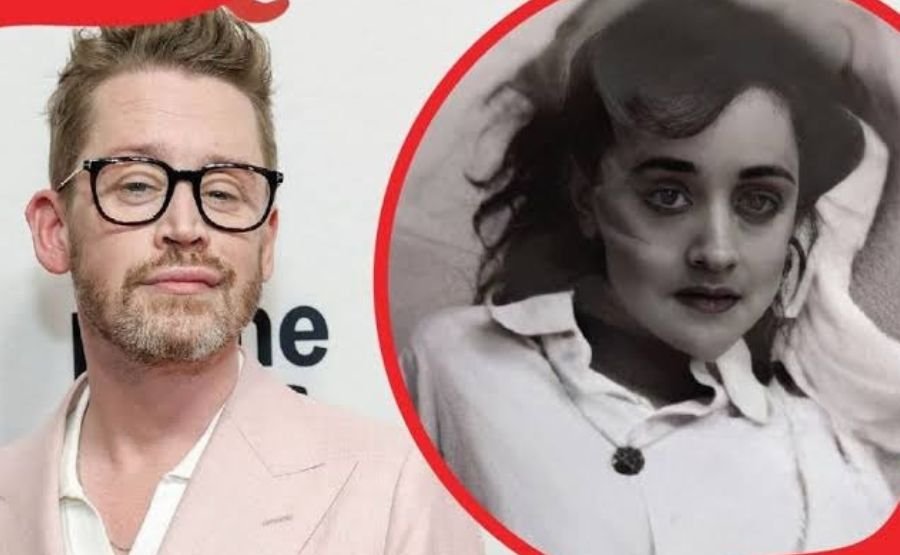
Jennifer Adamson: A Private Life in the Shadow of Hollywood’s Loudest Family
Quick Bio
| Detail | Info |
| Full Name | Jennifer L. Adamson |
| Date of Birth | June 27, 1970 |
| Birthplace | New York City, New York, USA |
| Nationality | American |
| Profession | Supervisor, group home for adults with developmental disabilities |
| Father | Christopher Cornelius “Kit” Culkin (stage actor and manager) |
| Mother | Adeena VanWagoner |
| Half-Siblings | Rory Culkin, Shane, Dakota, Macaulay, Kieran, Quinn, and Christian |
| Date of Death | May 20, 2000 (age 29) |
| Cause of Death | Heroin overdose |
| Location at Death | Missoula, Montana |
| Estimated Net Worth | Approximately $500,000 (estimated from career earnings) |
| Notable For | Eldest child of Kit Culkin; half-sister to Macaulay Culkin; remembered in her obituary for exceptional empathy in her work with people with disabilities |
A Story About Choosing a Quiet Life When Loudness Was All Around You
There are people in this world who grow up connected to famous names and use those connections as a launching pad. They leverage the surname, the network, the built-in access. And then there are people who look at all of that noise and decide — consciously or instinctively — that it simply isn’t for them.
Jennifer L. Adamson was the second kind.
She was born into a family where performing was practically built into the walls. Her father, Kit Culkin, was a stage actor who moved through Broadway productions and later became the famously controlling manager of a son who would become one of the most recognizable child stars on the planet. Her half-brothers would eventually include Macaulay, Kieran, and Rory Culkin — three men who collectively represent something close to a dynasty in American film and television. Her half-sister Dakota worked as an art production assistant, drawn toward the industry even if not in front of the camera.
Jennifer went to Montana. A group home for persons with developmental problems was under her supervision. She kept her head down. She built something small and genuine and entirely her own.
She overdosed on heroin and died in May 2000 at the age of 29. The Missoulian, the local newspaper in the city where she had built her life, published her obituary. Her empathy was what her coworkers remembered about her. The word “empathy” keeps coming up in stories about her. Not her famous last name. Not her father. Not her brother.
Her empathy.
That’s worth understanding and honoring properly.
See also “James Westley Welch: The Private Man Behind Raquel Welch’s Hollywood Story“
New York City and a Father Who Moved Between Two Worlds
June 27, 1970, saw the birth of Jennifer Adamson in New York City. The city she came into was a very different New York from the polished tourist destination it would eventually become — it was a grittier, more economically precarious place, the kind of city that required navigation and toughness to live in without losing yourself.
Her father, Christopher Cornelius Culkin — universally known as Kit — was a man who had grown up in Manhattan himself, the son of a public relations professional and a writer and editor. He had studied at Saint Thomas Choir School, trained as a stage actor, appeared in Broadway productions, and carried the theatrical sensibility of a family that had always been adjacent to performance. His sister Bonnie Bedelia would become a well-known actress in her own right. The performing arts were simply part of the Culkin family’s genetic vocabulary.
But Kit and Jennifer’s mother, Adeena VanWagoner, did not stay together. The relationship ended, and Jennifer grew up bearing her mother’s subsequent surname — Adamson, from Adeena’s later husband Robert Adamson. That name shift tells a small but meaningful story: Jennifer’s formative years were shaped primarily by her mother’s household and her mother’s family, not by the theatrical world her father inhabited or by the sprawling family unit he would eventually build with Patricia Brentrup.
Kit Culkin and Patricia Brentrup began their relationship in 1974 and stayed together for over two decades, never formally marrying. Seven children—Shane, Dakota, Macaulay, Kieran, Quinn, Christian, and Rory—were born out of that partnership. Jennifer was the eldest of all eight of Kit’s children, but she was the only one who wasn’t part of that central household. She was the one who existed at a certain angle to the main story — related to all of it, embedded in none of it.
What that felt like from the inside, we can only estimate. The records don’t tell us whether Jennifer and Kit maintained a close relationship, or whether the distance between her upbringing and his other family was geographic and emotional in equal measure. What we know is that she didn’t carry the Culkin name. She carried her mother’s.

Growing Up Outside the Spotlight’s Radius
The Culkins who grew up with Kit and Patricia in New York City grew up in close quarters — multiple children in a Manhattan apartment, their father managing careers, the energy of the theater world and eventually the entertainment industry surrounding their daily lives. That household was under a great deal of pressure and attention throughout Macaulay’s rise in the late 1980s and early 1990s. Kit left his own acting career to manage his son’s, and what followed was one of the more widely documented examples of child stardom’s complicated machinery.
Jennifer was not in that apartment. She was not in that machinery.
She grew up with Adeena, with whatever stability or instability that household offered, in a New York that was moving fast and demanding much. No public record contains information on her education, friendships, or adolescence. She was a private person from the beginning, or perhaps she became one in response to the very particular pressure of being tangentially connected to something large and loud while personally wanting something smaller and quieter.
One account suggests she had a genuine interest in film production — that she harbored real creative ambitions even if she didn’t pursue them through the conventional channels her famous family name might have opened. Whether that interest translated into any specific study or pursuit is unclear. What is clear is that it didn’t define her professional path. She took a different direction entirely.
Montana: Building Her Own Story
At some point, Jennifer Adamson left New York. She moved to Missoula, Montana — a college town in the northern Rockies, home to the University of Montana, surrounded by some of the most beautiful and austere landscape in the American West. Missoula has a particular character that draws people who want something real and unhurried: artists, academics, outdoor enthusiasts, people who have decided that the metrics of success offered by coastal cities don’t fit the life they actually want.
For Jennifer, it appears to have been a genuine home. She wasn’t passing through on her way to somewhere more prestigious. She settled there. She built a life there. She worked there.
Her job was as a supervisor at a group home for adults with developmental disabilities. Let’s think about what that role actually requires, because it’s easy to summarize it in a sentence and move on without understanding what it means to do it well.
A supervisor in a residential care setting for adults with intellectual or developmental disabilities is responsible for the people in their care in a deeply personal way. You are managing staff, yes. You are handling administrative functions, certainly. But you are also ensuring that adults who require support — whose daily lives involve challenges that most people navigate without a second thought — are living with dignity, safety, and quality of care. You are showing up, every shift, for people who need you to show up. You are building relationships with people whose worlds are small and whose need for consistent, trustworthy presence is large.
The people who do this work well — who genuinely do it well, not just adequately — tend to be people with a particular quality. Not just compassion in the abstract, but the practical daily expression of it. The obituary published in the Missoulian after Jennifer’s death described her as someone with exceptional empathy in that work. Her colleagues and the community of care around her group home noticed something specific about how she did her job.
That’s not a throwaway compliment. In that industry, with those stakes, empathy isn’t just a personality trait. It’s a professional tool that either works or doesn’t. Jennifer’s apparently worked.
The Half-Siblings She Shared a Father With
The Culkin family’s trajectory through the 1990s was one of the more extreme examples of child stardom in American entertainment history. Macaulay’s transformation from a New York kid into the most commercially valuable child actor in the world — a distinction that reportedly made him the first child performer to receive a million-dollar film salary, for My Girl in 1991 — happened fast and produced enormous institutional pressure.
Kit Culkin’s management of that rise was controversial enough that it eventually contributed to a protracted custody dispute. By 1995, Patricia Brentrup initiated custody proceedings for their six minor children in New York State Supreme Court. Kit chose not to contest the custody case, and the children were raised thereafter primarily by their mother.
Through all of this — the Home Alone phenomenon, the custody battle, the enormous sums of money, the media attention — Jennifer Adamson existed at a remove. She shared a father with Macaulay, Kieran, Rory, and the others. She did not share their childhood or their Hollywood experience. She was seven years older than Shane Culkin, the eldest of Kit and Patricia’s children, and a full decade older than Macaulay. By the time Home Alone turned Macaulay into a household name in 1990, Jennifer was already twenty years old and living her own adult life.
The exact nature of her relationship with her half-siblings is not publicly documented. What is known is that after her death, Macaulay and Kieran both gave evidence of carrying her in their memories as part of their family. The family had already lost half-sister Jennifer when they would later also lose Dakota, who was struck by a vehicle in Los Angeles in December 2008 and died from her injuries the following day. That second loss — coming eight years after Jennifer’s — hit a family that was already carrying grief.
Personal Life: The Parts That Stayed Private
Jennifer Adamson was a private person. There are no publicly confirmed relationships, no known spouse or partner, no documented children. Whatever her personal life looked like in Missoula — the friendships she maintained, the relationships she navigated, the texture of her daily existence away from work — it stayed private.
That privacy is not a gap to be filled with speculation. It is simply the reality of a life that was lived without public accounting. Most people live exactly this way. The fact that Jennifer’s father and half-siblings were famous doesn’t require her private life to be any more visible than she chose to make it.
What we can say is that she built a community in Missoula. She was embedded enough in that community that her death produced an obituary in the local paper, written in a way that reflected genuine familiarity with who she was. The Missoulian’s account of her work ethic and her empathy toward vulnerable adults suggests someone who had become known in her neighborhood for the work she did, not for who her family was.
That’s a small and real kind of success.
The Struggles That Weren’t Public Until the End
Heroin addiction in the United States at the turn of the millennium was a crisis that didn’t yet have the widespread public recognition it would later develop. The opioid epidemic’s most visible chapter would come later, in the 2010s, when prescription painkillers created addiction pathways in communities that had never previously associated themselves with hard drug use. In 2000, heroin addiction still carried the specific stigma of a problem belonging to particular populations in particular places.
On May 20, 2000, Jennifer Adamson overdosed on heroin and died. She was twenty-nine years old. She passed away in her Missoula home.
The details of how her addiction developed, how long she struggled, what support she had or didn’t have, whether she sought treatment at any point — none of these are part of the public record. Addiction rarely announces itself neatly in public biographical accounts. It tends to exist in the private spaces of a person’s life until it can’t anymore. What we know is the outcome, not the journey toward it.
Jennifer’s death came at a moment when Macaulay was navigating his own complicated post-child-star years. He had stepped back significantly from acting by the mid-1990s and was living a lower-profile life himself. The loss of his eldest half-sister would have registered as part of the broader pattern of difficulty that characterized the Culkin family’s experience in those years.
The grief for Jennifer appears to have been private, absorbed into family life without public statement or media ceremony. She most likely would have preferred that.
Financial Reality: A Working Life on Honest Terms
Jennifer Adamson’s financial circumstances were those of a working professional in the nonprofit and social services sector in a mid-sized Montana city. Supervisory roles in residential care facilities for adults with disabilities are not high-paying positions. They require significant training, responsibility, and emotional labor, and they tend to compensate their workers at a level well below what that labor actually deserves.
An estimated net worth of around $500,000 circulates in some biographical accounts, which likely overstates what she would have accumulated on a nonprofit sector supervisor’s salary in Montana in the 1990s. The honest picture is probably more modest than that — a person living on a reasonable working income in a city where cost of living was manageable, with whatever savings and personal property she’d accumulated over the years of her adult life.
There is no evidence that she received financial support from the Culkin family’s entertainment earnings or that she sought any. She appears to have operated as a financially independent adult building her own livelihood through her own work. That matters, and it fits the pattern of everything else we know about how she moved through the world.
The Legacy That Stayed in the Community
Jennifer Adamson died twenty-five years ago. She left behind no films, no books, no recorded work of any kind. She left behind a job she had done with integrity and warmth for the adults in her care. She left behind colleagues who remembered her specifically for the quality of her empathy. She left behind a family that grieved her, a community that noted her passing, and an obituary in a Montana newspaper that described her in terms that had nothing to do with famous relatives.
Macaulay Culkin named his firstborn son Dakota in 2021 — a tribute to his half-sister Dakota, who had died in 2008. Jennifer’s memory has been carried more quietly, without the same public tribute, though she predated and perhaps in some way prepared the family for the grief of losing Dakota eight years later.
Both losses — Jennifer in 2000, Dakota in 2008 — became part of what the surviving Culkin siblings have carried. Kieran Culkin, speaking to The Hollywood Reporter in 2021, addressed how the family processed Dakota’s death. The weight of Jennifer’s earlier death was part of that accumulated experience too, even if it wasn’t the headline moment.
Final Words
Jennifer L. Adamson lived twenty-nine years. She spent them in New York and Montana, in the margins of a spectacularly public family and the center of a genuinely human community of care workers and the people they looked after. She made a choice — whether consciously or instinctively — not to leverage what her last name or her family connections might have offered her. She went somewhere cold and beautiful and far away and built something small and honest.
The obituary in the Missoulian didn’t lead with her father’s name. It led with what she gave to the people she worked with. That seems right.
What makes Jennifer Adamson worth knowing is not her proximity to famous people. It’s that proximity to famous people apparently meant almost nothing to the way she decided to spend her life. She found something worth doing that had nothing to do with the entertainment industry, and she did it with enough genuine quality that the people around her noticed.
That’s a whole life, even if it was a short one.
See also “John Donahoe: The Consultant Who Ran Three Giants — and What Happened When He Got to Nike“
FAQs
1. Who is Jennifer Adamson?
On June 27, 1970, Jennifer L. Adamson was born in New York City. She is best known as the eldest child of Kit Culkin — the stage actor and manager — and therefore the half-sister of actors Macaulay, Kieran, and Rory Culkin, among others. On May 20, 2000, at the age of 29, she overdosed on heroin while working as a supervisor in a group home for adults with developmental impairments in Missoula, Montana.
2. Who were Jennifer Adamson’s parents?
Her father was Christopher Cornelius “Kit” Culkin, a former stage actor born in Manhattan who later became the manager of his son Macaulay’s acting career. Her mother was Adeena VanWagoner. Kit and Adeena did not stay together, and Jennifer took the surname Adamson from her mother’s later marriage to Robert Adamson.
3. How is Jennifer Adamson related to Macaulay Culkin?
She was his half-sister — they shared the same father, Kit Culkin, but had different mothers. Macaulay’s mother was Patricia Brentrup, Kit’s long-term partner with whom he had seven children. Jennifer was Kit’s daughter from his earlier relationship with Adeena VanWagoner, making her the eldest of all eight of Kit’s children.
4. What did Jennifer Adamson do for work?
She worked as a supervisor at a group home for adults with developmental disabilities in Missoula, Montana. Her Missoulian obituary noted that she was remembered by those who knew her for her exceptional empathy in that work.
5. Did Jennifer Adamson work in entertainment like her father and half-siblings?
No. She deliberately chose not to enter the entertainment industry. Among Kit Culkin’s children, she was specifically noted as someone who had no interest in acting or the surrounding industry, choosing instead to pursue a career in social services.
6. Where did Jennifer Adamson live at the time of her death?
She was living in Missoula, Montana, where she had built her professional and personal life. She died at her home there on May 20, 2000.
7. How did Jennifer Adamson die?
She died from a heroin overdose. She was twenty-nine years old. The date is most consistently reported as May 20, 2000, though some sources cite May 10 — the May 20 date appears in more reliable accounts including the People magazine coverage.
8. Were there any public memorials or tributes to Jennifer Adamson?
Her passing was noted in an obituary published in the Missoulian, Missoula’s local newspaper. The Culkin family did not make widely publicized public statements at the time. Macaulay Culkin later named his first child Dakota in 2021 as a tribute to his half-sister Dakota Culkin, who died in 2008 — a separate loss that compounded the grief the family already carried from Jennifer’s death.
9. What was Jennifer Adamson’s relationship with her half-siblings?
The specific nature of those relationships isn’t publicly documented in detail. She was significantly older than most of them — a full decade older than Macaulay — and grew up in a different household. She shared a father but not a childhood with the Culkin siblings. The family appears to have maintained connection with her, as her death is consistently noted in accounts of the family’s history as part of their shared grief.
10. Did Jennifer Adamson have children or a spouse?
No publicly confirmed marriages, partners, or children are documented. She kept her personal life entirely private, and nothing in the available public record — including her obituary — indicates that she had a spouse or children at the time of her death.
11. What is Jennifer Adamson’s estimated net worth?
Estimates suggest around $500,000, though this figure likely overstates what someone in her professional role and geographic location would have accumulated. She worked in a social services supervisory position in Montana — a sector that compensates workers modestly. Her financial picture was that of a working professional building an honest, independent livelihood rather than anything accumulated through inheritance or entertainment industry income.
12. Why does Jennifer Adamson’s story matter today?
Her story matters as a reminder that family connections to fame don’t define a person’s worth or the choices they make with their life. She was given proximity to the entertainment industry through her father and half-siblings, and she declined it. She built a career in human services, became known for her genuine care for vulnerable people, and lived privately. That story — of choosing substance over spectacle, community over celebrity — is worth knowing alongside the louder stories of the family she was part of.
Discover people, ideas, and stories that matter with CelebsBeacon.



One Comment