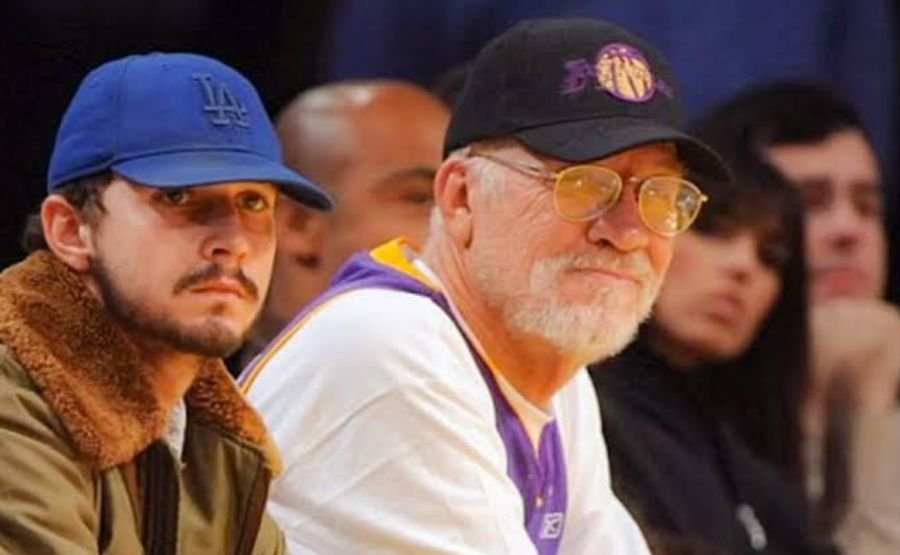
Jeffrey Craig LaBeouf: The Man Behind the Most Complicated Son in Hollywood
Quick Bio
| Detail | Info |
| Full Name | Jeffrey Craig LaBeouf |
| Nationality | American |
| Ethnicity | Cajun French descent |
| Military Service | U.S. Army; three tours of duty in Vietnam |
| Occupation | Former street performer, circus clown (commedia dell’arte tradition), rodeo performer, hot dog vendor, snow cone seller |
| Famous As | Father of actor Shia Saide LaBeouf |
| Son’s Full Name | Shia Saide LaBeouf (born June 11, 1986, Los Angeles, CA) |
| Former Partner | Shayna Saide (visual artist and jewelry designer) |
| Legal History | Placed on sex offender registry in 1981 following assault conviction |
| Notable Connection | Portrayed fictionally by his own son Shia in the autobiographical film Honey Boy (2019) |
Why Jeffrey LaBeouf’s Story Matters — Even When He Isn’t the Star
There are some people in Hollywood’s orbit who earn their place in the story not because of what they built, but because of the wreckage they helped create — and sometimes, the unexpected love embedded inside that wreckage.
Jeffrey Craig LaBeouf has never headlined a film. He doesn’t have an IMDb page with twenty credits. He isn’t famous in any conventional sense. But if you want to understand one of the most genuinely complicated actors working in American film over the past two decades — his son Shia — you have to understand Jeffrey first. Because Shia LaBeouf has made it impossible to separate the two. He wrote a screenplay about their relationship from inside a rehabilitation center. He cast himself as his own father. He put the whole beautiful, broken dynamic on screen and let the world watch.
That doesn’t happen unless the source material is worth examining.
Jeffrey Craig LaBeouf is a Vietnam veteran who came home from war carrying things that never fully left him. He’s a man of extraordinary and eccentric range — circus clown, rodeo performer, street vendor, commedia dell’arte practitioner — who somehow raised a boy inside that chaos who became famous partly because of it and partly in spite of it. His story is tangled up with addiction, violence, poverty, and a kind of love that exists in the same breath as harm.
It’s worth telling straight.
See also “Ben Shapiro Sister: Meet Abigail Shapiro Beyond the Famous Family Name“
Cajun Roots and the Road to California
Due to his Cajun French ancestry, Jeffrey Craig LaBeouf’s family is rooted in Louisiana’s rich cultural traditions, which are characterized by hard work, music, stubbornness, and a unique relationship with American identity that deviates significantly from the norm. The Cajun experience is, in many ways, about survival with flair. About making something out of almost nothing and doing it with enough personality that people remember you for it.
At some point, Jeffrey’s path led him away from whatever Louisiana roots his family held and eventually toward the United States Army. He served three tours of duty in Vietnam — not one, not two, but three. Whatever the circumstances that led a Cajun kid into that particular war at that particular moment in American history, the result was exposure to sustained violence and trauma at a level that defined everything that came after it.
Vietnam veterans who served multiple tours came home carrying burdens the country was spectacularly unprepared to help them manage. The PTSD was real, the addiction that often followed was real, and the instability it created inside families was documented across an entire generation of American households. Jeffrey was not an exception.
He came home from Vietnam and began living the kind of life that doesn’t have a neat description. He performed as a clown — not carnival-tent clown but something more artistically specific, rooted in the commedia dell’arte tradition, the Italian theatrical form built on improvisation, stock characters, and physical comedy. That’s not a background you acquire by accident. It suggests someone who, beneath whatever else was happening, had a genuine artistic sensibility and an understanding of performance.
He worked as a rodeo performer. He sold hot dogs from a street cart. He sold snow cones. Despite appearing to be a failure from the outside, he managed to subsist on the periphery of the American economy by hustling whatever opportunity presented itself.
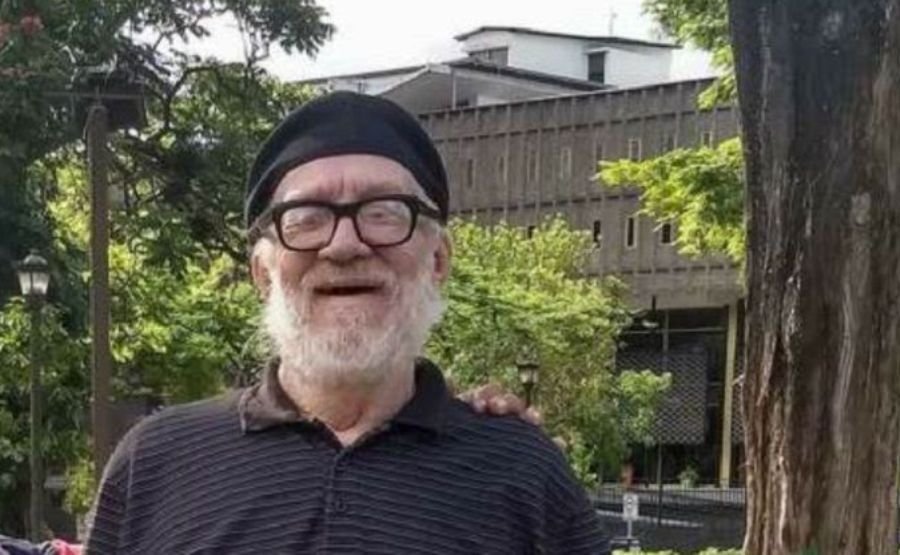
Los Angeles: Echo Park and the Family It Made
By the mid-1980s, Jeffrey LaBeouf was in Los Angeles, living in the Echo Park neighborhood, which then was a working-class pocket of the city — predominantly Latino, economically stretched, far from the Hollywood dream machine geographically and economically even though it sat within its orbit.
He had connected with Shayna Saide, a woman whose background was as different from his own as two American stories can be. Shayna was Jewish, a visual artist and jewelry designer with creative instincts of her own. The pairing of a Cajun Vietnam veteran turned street clown with a Jewish artist from a different world sounds unlikely, and probably was. But it produced, on June 11, 1986, a son.
They named him Shia. The name came from Shayna’s side of the family — her father had been a Jewish comedian, and Shia was named in his honor. The name itself derives from Hebrew, meaning something close to “God is salvation.” Whether or not either parent was thinking about salvation in those terms at the moment of naming is another question. They called him Shia, and Shia grew up watching his father try to survive the internal war he’d brought home from Vietnam.
Jeffrey Craig LaBeouf as a father was, by almost every account — including his own son’s — a contradiction walking around in human form. He was tough in the way that men who survive multiple combat tours are tough. Shia has described him as someone built differently from ordinary people, possessing a physical and psychological hardness that bordered on terrifying and commanded a certain kind of awe simultaneously. He was also, demonstrably, someone whose damage expressed itself outward in ways that landed on the people around him.
There were times when Jeffrey’s Vietnam flashbacks overtook him in ways that turned dangerous. Shia has described one incident in which his father pointed a gun at him — not in anger exactly, but in the dissociative state of a combat veteran whose brain momentarily couldn’t locate itself in the present. That kind of moment leaves permanent marks on a child. It doesn’t disappear because the adult understands, in retrospect, what was happening neurologically.
The Clown Who Taught His Son to Perform
Here’s the detail that keeps pulling you back when you look at Jeffrey LaBeouf’s life: his son’s extraordinary performing ability did not emerge from nowhere, and it did not emerge despite his father. It emerged, at least partly, from his father.
The family — Jeffrey, Shayna, and young Shia — would sometimes dress up as clowns together and work the streets, selling hot dogs near the park across from their apartment. There is something in that image that contains multitudes. A Vietnam veteran, still fighting whatever war lived inside him, putting on a painted face and working a corner to keep the lights on. And a small boy watching, absorbing, learning at an instinctive level what it means to perform your way through a hard moment.
Shia has said that as a kid dealing with the chaos of his parents’ relationship — the addiction, the instability, the looming divorce — he learned to perform for the family. He would mimic his father. He would do bits. He would get laughs. It was a coping mechanism that happened to be, as it turned out, the beginning of one of the more remarkable acting careers of his generation.
Jeffrey’s addiction to heroin during these years is documented in his son’s public statements and is the central wound of the Honey Boy narrative. When the drug was present, it crowded out everything else. When it wasn’t present, there were moments of real connection — road trips, performances, the particular intimacy of a father and son who both understood what it meant to entertain. Shia accompanied his father to Alcoholics Anonymous meetings when he was twelve, during the filming of Even Stevens, in an attempt to keep Jeffrey grounded.
A twelve-year-old enters his father’s AA meeting in an attempt to maintain the adult’s stability. That’s the kind of childhood detail that explains a lot about why an adult becomes the kind of person they become.
The Criminal Record That Cannot Be Separated From the Story
Any honest account of Jeffrey Craig LaBeouf’s life has to include the entry from 1981 that placed him on the sex offender registry for life. He was convicted of assault with intent to commit rape against a stranger in a car. He was placed on the registry permanently as a result.
This fact is documented in reporting from sources including The Sun, and it has been part of the public record around the LaBeouf family story for years. It sits in painful proximity to other documented family traumas — including an incident involving Shia’s mother that Shia has spoken about, having witnessed something violent and sexual against her when he was a child.
What to make of this in the context of a biographical account of Jeffrey as a person is genuinely complicated. It doesn’t disappear by being minimized, and it doesn’t define the entirety of a human being’s existence by itself. It is part of the record of who Jeffrey LaBeouf is and what Shia LaBeouf grew up inside.
His son has not erased this from his accounting of their relationship. Honey Boy doesn’t sanitize the father figure. It looks at him directly — at his damage, his love, his violence, his humor, his horror — and refuses to reduce him to either villain or victim. That act of artistic refusal is itself a kind of complicated grace.

Honey Boy: Being Seen by Your Own Child
In 2017, Shia LaBeouf was arrested in Savannah, Georgia, for public drunkenness, disorderly conduct, and obstruction. He was ordered into rehabilitation as part of the legal process. Inside that rehab facility, he wrote a screenplay.
The screenplay became Honey Boy, released in 2019. Directed by Alma Har’el, it tells the story of a child actor’s relationship with his father — a relationship defined by dependency, love, abuse, humor, and the impossible entanglement of needing someone who is hurting you. Shia played his father. Noah Jupe and Lucas Hedges played versions of himself at different ages.
Jeffrey Craig LaBeouf, the actual man, watched the film. He appeared in interviews around its release, speaking about his son, about the film, about their relationship. He was alive and present for the public reckoning his son was making with their shared history.
That requires a kind of nerve that most people don’t possess — to watch your own child dramatize your worst moments, to see the harm made visible in the form of a movie that critics praised and audiences found devastating. Whatever Jeffrey’s interior experience of watching Honey Boy was, he showed up for it.
The film was described by critics as one of the most raw and autobiographical pieces of American cinema in years. It earned Shia renewed critical credibility after a period of significant professional disruption. It also permanently embedded Jeffrey Craig LaBeouf into the record of American film as a subject, even if he’s never been a practitioner.
Financial Picture: A Life Built Outside Money
Jeffrey Craig LaBeouf’s financial life is not a subject that has ever been formally documented. There is no estate to evaluate, no public salary record, no net worth estimate that carries any credibility.
What is clear is that he spent his adult life working the economic margins — street performance, food vending, whatever the moment offered. He was not a man who accumulated wealth. He was a man who accumulated experience, much of it harsh. The family resided in Echo Park’s Section 8 housing. There were periods when Shayna and young Shia lived in a motel while Jeffrey was in rehab. Shia’s maternal uncle was apparently close to adopting Shia at one point because the family couldn’t sustain itself financially, and his parents were too proud to accept public assistance.
That is the economic reality Jeffrey LaBeouf operated in. Whatever material stability existed in the LaBeouf household in subsequent years came from Shia’s earnings — first from Even Stevens, then from Holes, then from Transformers, which paid him $750,000 for the first film and eventually tens of millions across the franchise.
Jeffrey benefited from his son’s success in the way parents sometimes do — not through formal arrangement but through proximity, through a relationship that outlasted its worst chapters and found some form of functional reconciliation. He is, as far as public reporting indicates, still alive, having appeared in interviews as recently as 2019.
Present Day: The Man His Son Made Visible
As of the most recent available reporting, Jeffrey Craig LaBeouf is alive and living largely outside the public eye. He spoke to media around the release of Honey Boy in 2019 and has not, to any documented degree, sought further attention for himself since then.
His son’s life has continued its turbulent trajectory. Shia was formally confirmed into the Roman Catholic Church on December 31, 2023, a conversion he pursued with the intensity he applies to most things in his life. He has spoken about eventually pursuing the Catholic diaconate. The FKA Twigs lawsuit — which alleged sexual battery, assault, and emotional distress during their relationship — was settled in July 2025, with the NDA attached to that settlement subsequently voided in a follow-up legal dispute that concluded in 2026. After a fight in New Orleans during Mardi Gras 2026, Shia entered a guilty plea to minor assault charges.
Through all of it, Jeffrey Craig LaBeouf remains the man Shia keeps returning to in his own accounting of himself. The father who was simultaneously insufficient and excessive. The Vietnam veteran who came home broken and never fully got fixed. The clown who taught his son that performance was how you survive a life that’s trying to kill you.
Final Words
Jeffrey Craig LaBeouf is not a famous man. He is the father of a famous man, which is different — and often harder. To be the subject of your child’s most searingly honest work, to have your addiction and your violence and your love placed on a cinema screen for the world to examine, and to still be recognizable as a human being when it’s done — that’s something.
What his son made from the raw material of his childhood with Jeffrey is remarkable art. What Jeffrey himself made from a life that included Vietnam, addiction, artistic eccentricity, poverty, and harm is harder to characterize. It is incomplete in ways that biographies rarely get to be incomplete. It is honest in ways that most people’s lives never become public.
The clown who sold hot dogs in Echo Park and pointed a gun at his son and drove across California and took his twelve-year-old to AA meetings — that man is the foundation of one of American cinema’s most complicated stories. That’s not nothing. It’s not a redemption arc. It’s just a life, fully human, fully fractured, and now forever part of the record.
FAQs
1. Who is Jeffrey Craig LaBeouf?
He is the father of Shia Saide LaBeouf, an American actor. He is of Cajun French descent, served three tours of duty in Vietnam, and worked as a street performer, commedia dell’arte clown, rodeo performer, hot dog vendor, and snow cone seller throughout his adult life.
2. What is Jeffrey Craig LaBeouf known for professionally?
He worked primarily as a street performer in the commedia dell’arte tradition across cities including Los Angeles, New York, San Francisco, and Santa Monica. He also worked as a rodeo clown and sold food from street carts. He has no formal entertainment industry credits of his own.
3. How is Jeffrey Craig LaBeouf connected to the film Honey Boy?
Honey Boy (2019) is an autobiographical film written by his son Shia from inside a rehabilitation center. The film depicts a fictionalized version of their father-son relationship. Shia played the father character himself, and the film draws directly from Shia’s childhood experiences with Jeffrey.
4. Did Jeffrey LaBeouf serve in the military?
Yes. He served three tours of duty in Vietnam as a member of the U.S. Army. His combat experience left lasting psychological effects, including PTSD, which his son has described as manifesting in flashback episodes during Shia’s childhood.
5. What is Jeffrey LaBeouf’s criminal record?
In 1981, he was convicted of assault with intent to commit rape involving a stranger and was placed on the sex offender registry for life as a result.
6. What addiction did Jeffrey LaBeouf struggle with?
He struggled with heroin addiction, particularly during his son Shia’s childhood years. His addiction was financially and emotionally destabilizing for the family. Shia has spoken publicly about accompanying his father to Alcoholics Anonymous meetings at age twelve during the filming of Even Stevens.
7. Who is Shia LaBeouf’s mother?
Shayna Saide, who worked as a visual artist and jewelry designer. She is Jewish, and the cultural combination of her Jewish background and Jeffrey’s Cajun Catholic heritage shaped Shia’s mixed religious upbringing, which included both a Bar Mitzvah and a baptism.
8. Why did Jeffrey LaBeouf and Shayna Saide separate?
The separation was driven by Jeffrey’s drug dependency and the financial instability and emotional volatility it created. After their split, Shia was raised primarily by his mother, though he maintained a complicated ongoing relationship with his father.
9. What is Jeffrey Craig LaBeouf’s estimated net worth?
There is no documented estimate. Jeffrey worked at the economic margins throughout his adult life — street performing, food vending — and never accumulated substantial wealth. His financial stability in later life is not publicly documented.
10. Is Jeffrey Craig LaBeouf still alive?
As of public reporting available through 2019, yes. He appeared in interviews around the release of Honey Boy that year and has not been reported to have passed away.
11. Did Jeffrey LaBeouf watch Honey Boy?
Yes. He watched the film and participated in interviews about it around the time of its release in 2019, discussing his son and the nature of their relationship.
12. How does Shia LaBeouf currently interact with his father?
Based on Shia’s public statements, the relationship moved from profoundly traumatic to something more complicated and functional over time. Writing Honey Boy and the film’s release appear to have been part of Shia’s own process of reconciling with his childhood rather than a complete severance from his father. Shia has spoken about gratitude mixed with scars when discussing his early years with Jeffrey.
Discover people, ideas, and stories that matter with CelebsBeacon.




2 Comments