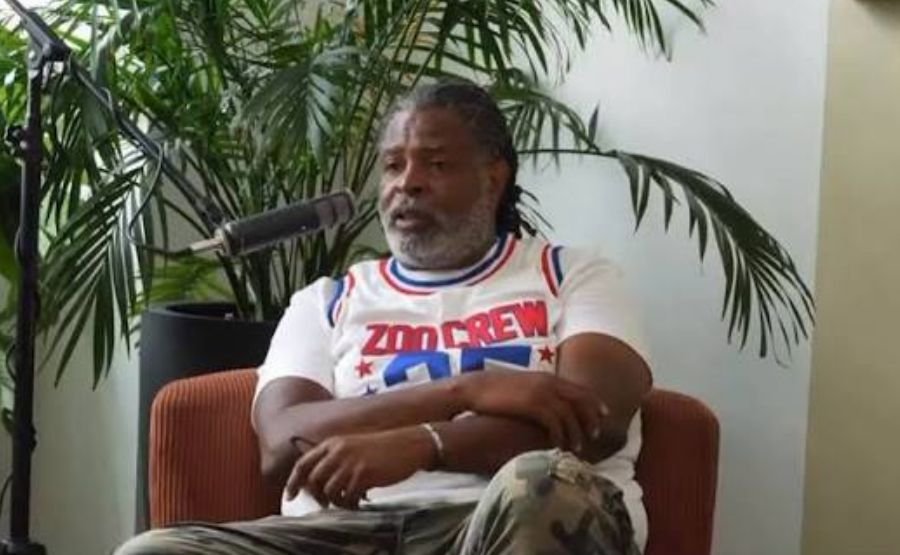
Shawn McCray: Newark’s Coach, Community Legend, and Living Proof
Quick Bio
| Info | Detail |
| Full Name | Shawn McCray |
| Nickname | “Coach OG” |
| Date of Birth | c. 1967 (exact date not publicly disclosed) |
| Nationality | American |
| Hometown | Newark, New Jersey |
| Profession | Basketball Coach, Attendance Counselor, Youth Program Director, Author |
| Major Achievements | NJ State Basketball Championship (2011); founder of Zoo Crew Basketball Program (1996–present); subject of LeBron James–produced YouTube docuseries Best Shot (2018); inducted into Caldwell University, Keystone College, and Newark Athletic Halls of Fame; Essex County Commendation for Community Service |
| Education | BA Sociology, Minor in Criminal Justice — Caldwell University (1990) |
| Book | One Foot In, One Foot Out (2016) |
| Family | Three children |
A Man the Neighborhood Made — and Then He Made the Neighborhood Better
There are people who talk about changing communities, and then there are people who never leave and just do it — quietly, stubbornly, year after year. Shawn McCray is the second kind.
Most people outside of Newark first heard of him in 2018, when a slick YouTube documentary produced by LeBron James landed him in front of a global audience. But folks in Newark’s Central Ward had known him for decades before that camera crew ever showed up. He was the guy at the playground. The guy who stopped young kids from going the wrong way — even when he himself had briefly gone that same wrong way. He was “Coach OG” long before anyone put a microphone in his face.
His story doesn’t fit neatly into any single category. He’s not a redemption narrative. He’s not a rags-to-riches tale. He’s something more complicated and more interesting than either of those things — a man who grew up in one of Newark’s toughest housing projects, carried both a basketball and the weight of the streets, earned a college degree, stumbled after graduation, then spent the next three decades building something real right where he was born.
That’s why the story still matters. Newark didn’t export him. He stayed.
See also “Melissa Meeks: A Life Lived on Her Own Terms“
Hayes Homes and the Central Ward Childhood
Shawn McCray grew up inside the Hayes Homes, a sprawling public housing complex that sat in Newark’s Central Ward. It’s been torn down since then, but for the kids who grew up there in the 1970s and ’80s, it was the whole world.
He was the oldest of Joanne McCray’s three children — one brother, one sister below him. Being the oldest means things in a neighborhood like that. You go first. You see things first. You figure things out first, for better and for worse.
What he saw around him was scarcity. People were struggling. Nobody had much more than their neighbor. But there was something that came out of that shared hardship — a closeness, a we’re-all-in-this-together spirit that he has talked about with genuine warmth. The projects, he’s said, taught him unity. When everyone’s situation looks roughly the same, there’s less reason to look down on one another.
He started at Cleveland Elementary, then moved to St. Rocco’s Grammar School, where something important happened: he caught the attention of the Victoria Foundation, which offered him an academic scholarship. That scholarship opened a door to St. Benedict’s Prep, one of the most respected private schools in New Jersey. He was a kid from the projects walking into a world built for a very different kind of kid.
He spent most of his time at St. Benedict’s, but transferred back to his home school — Central High — for his senior year, graduating in 1985. Going back wasn’t a retreat. It was more like something pulling him home.
Early Lessons: The Playground as Classroom
Here’s something most people don’t know about Shawn McCray: he was already a coach before he was even old enough to drive.
At sixteen, he started gathering up his younger brother and the kids from the neighborhood and taking them to a nearby summer league. They practiced at a local playground — nothing fancy, just a slab of asphalt and some determination. And they won. His first year running that ragtag group, they took the championship. Lost the following year, but something was already forming in him: the instinct to teach, to organize, to push kids toward something better.
He was coaching other people’s development while he was still figuring out his own. That tension — between caring for others and navigating your own path — would define his life for the next four decades.
College Years: Culture Shock and Breakthrough
Basketball took Shawn McCray out of Newark, something not many kids from Hayes Homes could say. He landed at Keystone Junior College (now Keystone College) in LaPlume, Pennsylvania — a small school tucked into the mountains of northeastern Pennsylvania.
The culture shock was immediate and real. He had grown up in a neighborhood where nearly everyone around him looked like him. Now he was in a predominantly white school, in a rural setting, far from anything that felt familiar. He nearly left. His mother talked him into staying, telling him that once the basketball season started, the feeling would shift. She was right.
He played well enough there to complete two years, then transferred his credits to what was then Caldwell College in New Jersey. That’s where things really took off on the court. He became the first player in Caldwell’s basketball history to score 1,000 points AND pull down 500 rebounds — and he did both of those in just two years. That kind of production doesn’t happen accidentally. It comes from someone who sees the game differently, who works when no one’s watching.
He graduated in 1990 with a Bachelor of Arts in Sociology and a minor in Criminal Justice. He was the first member of his family to complete college. That’s a fact he carries with pride — and with purpose, because it’s one of the things he holds up for his players when they tell him college isn’t for people like them.
But graduation didn’t solve everything. In fact, for a while, it looked like the diploma might not change his trajectory at all.
The Streets Come Calling — and He Answers
This is the part of the story that Shawn McCray doesn’t hide from. He talks about it openly, specifically because he thinks honesty matters.
When he left college in 1990, he had a sociology degree and a minor in criminal justice. He did not, however, have a job in his field. That gap — between graduation and legitimate employment — lasted nearly eight years. And in the meantime, the streets of Newark were right there, the way they always are, offering money that came faster than any entry-level counseling position ever would.
His friends were doing it. When he came home from Keystone after completing his first two college years, the housing projects had been closed and families scattered across the city. He landed in a new part of Newark without familiar ground under his feet. The old crew was already in motion.
He was clear-eyed about it later: nobody forced him. He chose it. He was young — twenty-one, twenty-two — still working out who he was, and the fast money was real and the camaraderie was real and for a time it seemed like a coherent life.
The group went by the name Zoo Crew. They weren’t just a drug operation — they were also, in a genuinely complicated way, community figures. They threw block parties. They made sure certain corners stayed peaceful. They brought in names like Queen Latifah and Chris Webber for neighborhood events. They were doing wrong and doing good at the same time, which is how a lot of young men in struggling neighborhoods experience the streets — not as pure evil, but as a tangled mix of loyalty and transgression.
McCray was still coaching through all of it. Still taking kids to leagues, still running practices. He recognized, even then, the contradiction. He was telling boys to stay out of trouble while he himself was knee-deep in it.
The Raid, the Reckoning, and the Turn
In 1997, everything shifted.
A young woman named Dannette “Strawberry” Daniels was killed by a Newark police officer near where McCray lived. The Zoo Crew — by that point a visible, recognized name in the neighborhood — stood up and marched. They protested alongside activists including Amiri Baraka, whose son Ras Baraka would later become Newark’s mayor.
But the political noise drew attention. Federal investigators who had already been watching the Zoo Crew moved in. In August 1997, there was a federal raid. More than thirty people were swept up. Several of McCray’s closest friends were among them.
McCray sat in his living room that morning and waited for his door to come in. It never did.
He wasn’t charged. But watching his friends disappear into the federal system — one of his closest, Terrence Dent, eventually sentenced to thirty years despite it being a first conviction — was a wake-up call louder than anything else could have been. That was the moment he sat still and thought: this is it. It’s time to carry out my training.
In February 1998, he got a job at the County Mental Health Association. That September, his daughter was born. Two anchors pulling him toward a different life.
Building Something That Would Outlast the Streets
What happened next is one of the quiet great American stories — not dramatic in the Hollywood sense, just relentlessly consistent over a very long time.
McCray had already started the Zoo Crew Basketball Program in 1996, even while he was still tangled up in street life. Around twelve kids from the neighborhood. No fancy facilities. Just a playground, a ball, and a coach who believed that showing kids something beyond their block — literally taking them to tournaments in Ohio, Minnesota, Pennsylvania — could rewire what they thought was possible for themselves.
He was right. The kids would get to a tournament, see a different city, eat somewhere new, compete against kids from somewhere else — and on the way home they’d say: Why do we have to go back? McCray saw something in that longing. They didn’t want the corner. They just didn’t know there was anything else.
He funded the early years partly by selling candy on Newark’s highways with the kids to raise money for travel. That image — a college graduate and former street figure standing on the side of the road selling candy so his kids could see Akron — says more about the man than any documentary ever could.
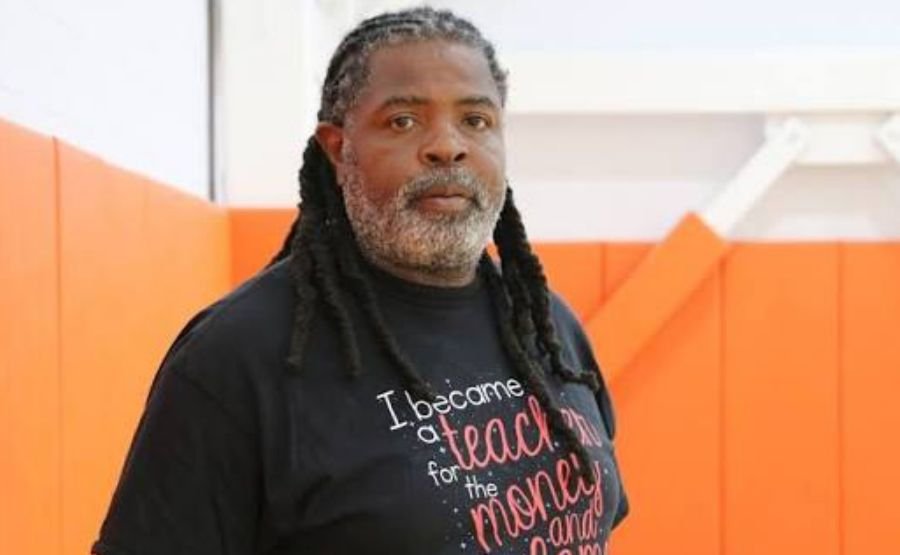
He went from substitute teaching to working as an Attendance Counselor at Central High School. He became the JV basketball coach there in 2002, then took over as varsity head coach in 2006. He has held that job ever since.
Championships, Best Shot, and National Recognition
Under McCray’s watch at Central High, the Blue Devils became something. Not just a basketball program — a pipeline.
The team appeared in the New Jersey state championship game in 2006, 2011, 2018, and 2022. They won it all in 2011. They’ve also stacked up seven conference championships, four sectional championships, and four North Jersey Group 2 championships over the course of his tenure. That’s not luck. That’s a program built on culture — on accountability, on kids being held to expectations they didn’t know they could meet.
In 2018, the whole country got a window into that culture. A production company connected to LeBron James’s SpringHill Entertainment reached out about a documentary concept. McCray assumed they’d pick a school from Philly or Brooklyn — bigger markets, more name recognition. He was wrong.
Best Shot, directed by Michael John Warren and co-starring ESPN analyst and former NBA player Jay Williams, premiered on YouTube Premium in July 2018. It followed McCray, Williams, and the Central High players through an entire season — capturing the chaos and tenderness and heartbreak of coaching teenagers who are dealing with things no teenager should have to deal with.
The series was seen by millions. ESPN ran it multiple times. It was nominated for awards. And grown men across the country called McCray to tell him they cried watching it.
Williams brought his own remarkable story — a promising NBA career with the Chicago Bulls ended by a motorcycle accident after his rookie year. Together, the two coaches gave the series its emotional center: two men who had each made serious mistakes, who understood the difference between a bad decision and a bad person, and who refused to write off the kids in front of them.
McCray’s line from the first episode stayed with people: “I want to win the state championship. However, I urge individuals to attend college.”
Personal Life, Family, and the Community He Never Left
Shawn McCray has three children. One of them graduated from Clark Atlanta University in 2021 — a milestone he talked about with the same pride he brings to discussing his own first-in-the-family college graduation thirty years earlier. The cycle of education continues, this time without the detour through the streets.
He is still a Newark resident. He has never left. In a city where opportunity has historically meant getting out, his choice to stay and to build something in place is itself a kind of statement.
He has run for Central Ward City Council three times — in 2014, 2018, and 2022. The 2018 race was the closest: he lost by around 250 votes. He didn’t win the seat, but the campaigns reflect something real about how he sees himself — not just as a coach, not just as a program director, but as a genuine civic actor in the life of his city.
He also published a memoir in 2016, One Foot In, One Foot Out, which walks through his upbringing, his years in the streets, and the long turn back toward purpose. The title captures his experience perfectly — that period when he was standing with one foot in the community programs and one foot in the drug trade, trying to figure out which direction to fall.
Difficult Periods — The Honest Accounting
McCray has been unusually transparent about his failures, and that transparency is part of what makes him effective as a mentor.
The years in the streets weren’t just a stumble. They were real years lost — years where a man with a college degree and genuine ability to help people was instead contributing to the problems he would later spend his life fighting. He has never sanitized that chapter or pretended it was someone else’s fault.
His closest friend went to federal prison for thirty years on a first offense. McCray walked away from that moment, not entirely by virtue of being smarter or more principled, but partly through the randomness of who got raided and who didn’t. He has sat with that reality and let it drive something in him rather than bury it.
The political losses stung too. Three campaigns, three losses. Running for council is not a small thing — it takes time, money, and the willingness to be rejected publicly. He did it anyway, and kept doing it, because his sense of obligation to the Central Ward runs deeper than any election outcome.
And coaching inner-city teenagers at a chronically under-resourced school means contending with loss in the sharpest possible sense. Kids he knows get shot. Parents he knows lose multiple children. He has described knowing two mothers who each lost all three of their sons. That is not abstract. He knows those families. He walks their streets.
Financial Picture
Shawn McCray is not a wealthy man in the conventional sense. He is a public school employee — an Attendance Counselor and basketball coach at a Newark public high school. Public school salaries in New Jersey are publicly recorded; a position like his in Newark would typically fall in the range of roughly $60,000–$85,000 annually depending on experience and years in service.
His Zoo Crew Basketball Program has operated primarily as a community nonprofit/community program rather than a profit-generating enterprise. The summer leagues and clinics are designed to reach at-risk youth, not to generate revenue. He has spoken about fundraising challenges throughout the program’s history — including the early days of selling candy to fund tournament travel.
The Best Shot documentary brought visibility and opened doors, but McCray is not a public figure whose net worth is tracked. His wealth is mostly of the kind that doesn’t show up on spreadsheets: the relationships he has maintained for thirty years, the young people who graduated college partly because he wouldn’t let them quit, the community trust that got him within 250 votes of a city council seat.
If you’re looking for the number, it’s modest. If you’re looking for the asset base, it’s enormous — and it’s all tied up in Newark.
Where He Is Now
As of the most recent available information, Shawn McCray remains at Central High School as both Head Boys Basketball Coach and Attendance Counselor. The Zoo Crew Basketball Program, which he founded in 1996 and ran for twenty-one straight years without interruption, continues as an institution in the city. The program serves kids from kindergarten through twelfth grade and has been credited with sending hundreds of young people to college.
He received the Veritas Award from Caldwell University in 2023 — the school’s highest honor for alumni, reserved for those who have made significant impact in their communities. The Essex County Board of Commissioners also formally commended him, an official recognition of what the neighborhood already knew.
His coaching record continues to accumulate. His teams play in the Super Essex Conference, and while the wins and losses shift from year to year, the program’s identity — disciplined, community-rooted, academically expectant — remains steady.
Final Words
Shawn McCray’s story is one of those real-life narratives that resists simple framing. He’s not the kid who escaped the ghetto. He’s not the cautionary tale who disappeared into it either. He’s the person who went in, got lost for a while, came back, and then spent the next three decades building a ladder for other people to climb.
What makes him remarkable isn’t the fact that he turned things around. It’s that he turned them around without leaving. He stayed in Newark. He stayed at Central High. He stayed in the neighborhood where his friends went to prison and where kids still sometimes go home to empty refrigerators and dark apartments. He showed up every day and coached basketball and pushed kids toward college and lost City Council elections and held block parties and ran summer leagues and wrote a book and let a camera crew follow him around for a season.
The Best Shot documentary brought him a moment of national attention, but his real legacy is older and quieter than that. It’s the former player who now teaches at a charter school, who called McCray crying after watching episode three because he saw himself in one of the kids. It’s the hundreds of young people who walked out of the Zoo Crew program with a plane ticket to their first out-of-state tournament and a head full of new possibilities.
Newark made Shawn McCray. He spent his whole life returning the favor.
FAQs
1. Where is Shawn McCray from?
He was born and raised in Newark, New Jersey, specifically in the Hayes Homes housing project in the city’s Central Ward. He still lives in Newark today.
2. What is his connection to LeBron James?
LeBron James served as an executive producer on Best Shot, a 2018 YouTube Premium documentary series that followed McCray and his Central High School basketball team for an entire season. The series was produced through LeBron’s production company, SpringHill Entertainment.
3. What is the Zoo Crew Basketball Program?
It’s a youth basketball and development program that McCray founded in 1996. It serves kids from kindergarten through twelfth grade in Newark, offering year-round programs and competitive travel basketball. At its peak, the program’s summer league had nearly 100 teams from across New Jersey and neighboring states.
4. Did Shawn McCray play professional basketball?
No. He played college basketball at Keystone Junior College and Caldwell University, where he became the school’s first ever player to hit both 1,000 points and 500 rebounds. But his playing career ended after college.
5. What year did Central High win the state championship?
Under McCray’s coaching, Central High won the New Jersey state basketball championship in 2011. The team also appeared in state title games in 2006, 2018, and 2022.
6. What is his book about?
One Foot In, One Foot Out, published in 2016, is his memoir. It covers growing up in Newark’s projects, the years he spent involved in street life after college, and his long journey back to the community work he has been doing ever since.
7. Was he ever arrested?
McCray was not charged in the 1997 federal raid that swept up members of the Zoo Crew. He has spoken openly about being involved in street activity during the early 1990s, but he was not among those prosecuted.
8. What does he do for work today?
He holds two roles at Newark Central High School: Head Boys Basketball Coach (since 2006) and Attendance Counselor. He is also the Program Coordinator for the Zoo Crew Basketball Program.
9. Has he run for political office?
Yes. McCray ran for Newark’s Central Ward City Council seat three times — in 2014, 2018, and 2022. His closest race was 2018, when he lost by approximately 250 votes.
10. What awards has he received?
He has been inducted into the Caldwell University Athletic Hall of Fame (2019), the Keystone College Athletic Hall of Fame, and the Newark Athletic Hall of Fame. In 2023, he received the Veritas Award, Caldwell University’s highest honor for alumni. The Essex County Board of Commissioners also issued a formal commendation for his community service.
11. Who are some notable players from the Zoo Crew summer league?
McCray has mentioned several NBA players who competed in the Zoo Crew summer league over the years, including Kyrie Irving, Karl Anthony Towns, Kenneth Faried, and Kyle Anderson.
12. Is Shawn McCray on social media?
Yes. He maintains a presence on X (formerly Twitter) under the handle @ShawnMcCray4 and has a Facebook page. His work with the Zoo Crew program can be found at zoocrewbasketball.com.
Discover people, ideas, and stories that matter with CelebsBeacon.



One Comment