Supa Peach Age: How Old Is the Rapper Who Started Her Career at 9?
Quick Bio
| Detail | Info |
| Full Name | Peach Aamonie Valero (reported; unconfirmed publicly) |
| Stage Name | Supa Peach |
| Date of Birth | March 7, 2003 |
| Zodiac Sign | Pisces |
| Birthplace | British Virgin Islands |
| Nationality | British-American |
| Current Base | Atlanta, Georgia, USA |
| Profession | Rapper, singer, dancer, actress, social media creator |
| Major Achievement | First artist invited to compete on Jermaine Dupri’s The Rap Game (Lifetime, 2016) |
| YouTube Channel | Launched June 2012; nearly 500,000 subscribers |
| Estimated Net Worth | ~$500,000 (unverified) |
| Manager / Sister | Precious Londyn (Precious Peach) |
She Was Making Noise Before Most Kids Found Their Voice
Let’s be real — most people don’t figure out what they want to do with their lives until their mid-twenties, if they’re lucky. Some people are still guessing in their forties. And then there are people like Supa Peach, who apparently skipped that whole uncomfortable discovery phase and just… started rapping.
In the third grade.
By the time she was nine years old, this kid from the British Virgin Islands had videos racking up millions of views on YouTube. Not thousands. Millions. Furthermore, she didn’t have a label supporting her, a group of A&R executives shaping her persona, or a publicist promoting her brand. She was doing it because music was wired into her from the start, and because her family made sure she had the room to let that out.
That’s the thing about Supa Peach’s story that keeps pulling you back in. It’s not a story about overnight luck or a viral accident. It’s a story about a girl who was pointed at the music from a very young age, placed in an environment where that could grow, and then just let it run. More than a decade into her career now, she’s still running.
See also “lyric ragston: The Houston Kid Who Made the Internet Stop Scrolling“
Island Roots and a Family That Traveled Toward the Dream
The story starts in the British Virgin Islands, which is a small cluster of islands in the northeastern Caribbean — the kind of place that most people picture when they close their eyes and imagine somewhere beautiful and far away. That’s where Peach Aamonie Valero came into the world on March 7, 2003.
She came into a full house. Her mother Josetta was raising five children, and Peach was the youngest. Having four older siblings in a Caribbean household means something specific — there’s always music playing, always someone dancing, always noise and energy and people doing things louder than they need to. That environment tends to produce two kinds of kids: the ones who retreat into themselves and the ones who lean all the way into the chaos. Peach leaned in.
Her heritage reflects the multicultural richness of the Caribbean. She’s described as Caribbean-Hispanic, a background that brings together rhythms, languages, and cultural textures that tend to show up in her musical range. You can hear it if you listen closely — she moves between rap and pop sensibilities with a kind of ease that suggests it’s all been marinating in her since before she could articulate why.
The family didn’t stay in one place. At some point during Peach’s early childhood, they moved — with the Virgin Islands as the starting point and Puerto Rico as a stop along the way. Different sources tell the story slightly differently, and one person who claims to know the family personally has pushed back on the Puerto Rico detail entirely, saying the family’s American roots actually trace back to Augusta, Georgia. What’s clear is that the journey involved movement — from the Caribbean to different parts of the United States — and that the family eventually settled in Atlanta, Georgia, specifically to give Peach the best possible shot at a music career.
Think about that for a second. The family uprooted to support a child’s talent. That’s a serious level of belief, and it says something important about how Josetta and her older children viewed what Peach was capable of.

School, Sort Of — But Mostly Just Music
Formal education was part of Supa Peach’s upbringing, though she was primarily homeschooled. That choice makes a lot of sense in the context of her life. When your nine-year-old is pulling in a million YouTube views and performing at events, locking her into a traditional school schedule creates friction that doesn’t serve the mission.
Homeschooling gave her the flexibility to rehearse, record, and perform without constantly running up against a bell schedule. She posted about her 2020 graduation on social media, which means she did finish, she did follow through on the academic piece — it just looked different from the standard pathway.
Growing up with that kind of educational flexibility also meant she was deeply shaped by the entertainment environment around her rather than by a conventional classroom. Her learning happened on stages, in studios, in YouTube comment sections, in the feedback loop between performer and audience that starts when you’re small enough that people can’t quite believe how good you already are.
She consumed R&B and hip-hop in the same manner that other children consume cartoons. That foundation — the cadence of those genres, the way lyrics and rhythm interact, the tradition of people telling their real stories through rap — became the DNA of everything she’d do with her own music later on.
From the Bedroom to the Internet
The YouTube channel came first. She launched it in June 2012. Do the math — that means she started building her digital presence when she was around nine years old. That’s almost absurdly young to be thinking about subscriber counts and video strategy, but in her case, it wasn’t really a strategy. It was merely a location for her current activities.
The videos showed a girl who could rap, sing, and dance — not as three separate skills awkwardly stitched together, but as one integrated thing. She moved with the kind of physical confidence on camera that most adults never fully develop. She performed with a presence that didn’t feel manufactured. And the internet noticed.
She reportedly crossed a million views on videos before she was ten. That number was enough to make people sit up and actually pay attention. By the time she was in her early teens, she had become something real in the social media entertainment space — not just a cute kid with a camera, but an actual performer people sought out on purpose.
The name Supa Peach stuck. Simple, memorable, a little playful, and she’s rocked it so consistently that it’s become more real than whatever’s on her birth certificate to most people who follow her.
The Rap Game Changed Everything
If YouTube was the slow build, The Rap Game was the acceleration.
Jermaine Dupri — music executive, producer, the man behind So So Def Recordings, and someone who has been shaping the direction of hip-hop since the 1990s — launched a reality competition series on Lifetime in January 2016. The concept was simple: take five talented young rappers, put them through a series of challenges, give them access to industry professionals, and let them compete for the chance to be signed to Dupri’s label.
Supa Peach was reportedly the first artist Dupri and his team reached out to for Season 1. Being the first person invited to join that cast says something. You don’t reach out first to someone you’re not sure about. You reach out first to someone you think anchors the show.
She was twelve years old.
Think about that in any other professional context. A twelve-year-old being specifically chosen by one of the most respected producers in the history of hip-hop to represent his new television project. It sounds almost fictional, but it happened.
She was first introduced to a national audience through the show. Lifetime reaches millions of households, and reality competition television has a particular ability to build connections between viewers and contestants. People root for people on those shows. They get invested. They follow what happens next.
Supa Peach didn’t win the competition. She has also spoken about the friction the show created — the conflicts with other contestants, the pressure, the way the competitive format can create tension that doesn’t necessarily reflect how young artists actually relate to each other. But she has also said the experience taught her things she couldn’t have learned any other way. Dupri’s most repeated piece of advice to her was to always be prepared, always be ready for whatever gets thrown at you.
That’s advice that lands differently after you’ve lived it in a high-stakes public environment.
Her sister Precious Londyn appeared on the show alongside her, which is one of the details that makes this family story feel real — Precious was already her manager, already in her corner in a professional capacity, and that relationship was visible enough to be part of the show’s narrative.
Music That Keeps Moving
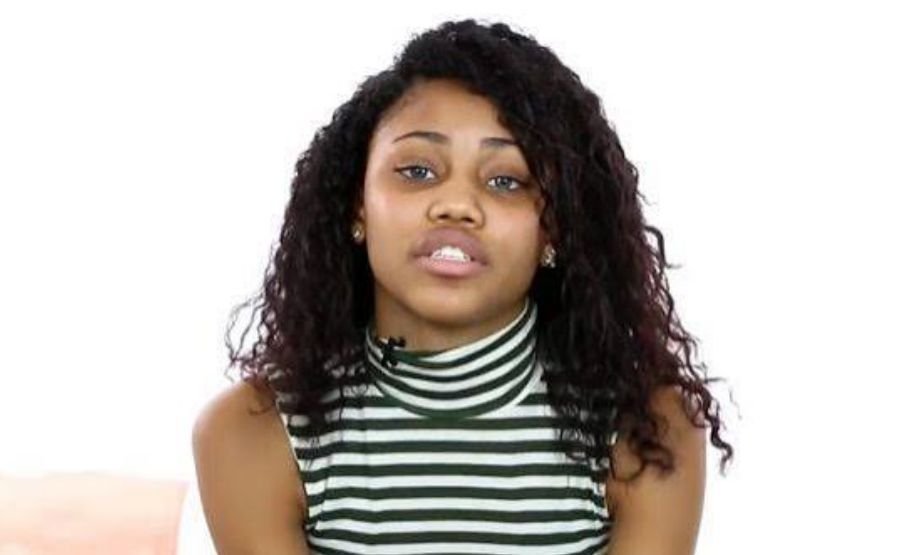
After The Rap Game wrapped, Supa Peach didn’t disappear the way some reality TV participants do. She kept making music, kept putting things out into the world.
Her discography spans more than a decade of releases. Early singles like “Run It,” “Pretty Gang,” and “Numero Uno” came out in the 2016 window, right around the show’s run. The 2018 project VII S.O.S showed her developing as an artist, building a body of work with multiple tracks rather than just standalone singles. Songs like “Mad for a Reason” and “Cartier Vision” followed in 2019 and 2020.
She expanded her acting resume in 2017 with a small role in the television series Music & Murder. She also popped up in studio photographs with Grammy-nominated producer James Worthy, fueling speculation about future collaborations.
More recently, releases like “Say Sum Else” (2023), “Hit You Different” (2023), and “Dirty Beast” (2024) show an artist who is still actively creating and releasing, still focused on the music, still pushing output into a marketplace that rewards consistency.
Her style sits at the crossroads of contemporary hip-hop and pop. She can lock into a sharp, rhythmically precise rap verse and then shift into melodic territory without it feeling jarring. That range is part of what Dupri noticed, part of what the YouTube audience responded to, and part of what keeps her moving across different sonic spaces.
She’s also maintained her social media footprint across platforms — Instagram, TikTok, Snapchat, YouTube — which in 2024 is as essential to an independent artist’s survival as the music itself.
Family Is the Business and the Backbone
The family angle in Supa Peach’s story isn’t just background detail — it’s structural.
Her sister Precious Londyn (widely known as Precious Peach) has been her manager through essentially the entirety of her public career. That’s a big thing. Having a family member in the manager role can go sideways quickly — the business pressures and the personal relationship are constantly bumping into each other. But in their case, it seems to be the arrangement that works. Precious was in the room when The Rap Game happened. She’s been in the room for the music decisions. She has skin in this in a way that goes beyond a contract.
Precious also has a daughter known online as Mini Peach, who has her own YouTube following. Three generations of the family — or close enough — wrapped up in this digital entertainment world together. Mini Peach is Supa’s niece, which is a detail that occasionally gets confused in the media when people misidentify her as Supa’s daughter.
Her twin brother makes appearances in her content from time to time. The siblings use social media handles that riff on the “Peach” branding, which gives the whole family operation a distinctive, unified identity.
Her mother Josetta is the quiet foundation under all of this — the person who made the moves that brought Peach from the Caribbean to Atlanta, who supported the career trajectory, who showed up for the ride when most parents would have pointed a kid toward something safer and more predictable.
The Obstacles Are Real, Even If She Doesn’t Broadcast Them
Being in entertainment as a child comes with complications that don’t always get addressed directly in the public narrative. There’s pressure built into having your talent on display before you’ve had time to figure out who you are privately. The reality TV experience at twelve — the editing, the manufactured conflict, the national scrutiny — leaves marks whether you talk about them or not.
Supa Peach hasn’t made public statements about any major personal crisis or breakdown, but the pressures of that world are real and documented across the entertainment industry at large. Growing up in public, growing up with millions of views attached to your name, building a career in a space dominated by adults — these are not easy circumstances.
The fact that she didn’t win The Rap Game also represents a real professional moment of not getting the thing you went after. A label deal from So So Def would have changed the shape of her career significantly. Not having it meant building forward independently, which requires a different kind of muscle — the one that keeps you making music even when the institutional backing isn’t there.
She has done that. Consistently.
She’s also navigating a music industry that has shifted dramatically across the span of her career. The landscape of 2012, when she launched her YouTube channel, looks nothing like the landscape of 2024. The way artists build audiences, monetize content, and release music has transformed entirely. Adapting across those shifts while staying true to your artistry is its own ongoing challenge.
The Money Picture
Let’s talk about this plainly. The estimated net worth figure that circulates most frequently for Supa Peach sits around $500,000. Some sources push that estimate higher, to around a million, while others peg it lower. None of these figures are verified, and Supa Peach has never publicly discussed her finances in detail.
What we can say with confidence is that her income comes from multiple streams: YouTube ad revenue from a channel that has been building since 2012 and carries nearly half a million subscribers, music sales and streaming royalties across platforms, performance appearances at events and celebrations, social media brand partnerships and sponsorships, and whatever acting work has come through.
For a 23-year-old who has been earning in this space for over a decade without a major label deal, the $500,000 estimate feels at least plausible — maybe even conservative when you factor in a decade-plus of digital revenue. But that’s all it is: a plausible estimate. The actual number is her business.
What’s not in question is that she has built an independent career that has lasted through multiple changes in the entertainment landscape. That staying power has real financial value even when the exact figures aren’t public.
Where She Is Now
As of 2025, Supa Peach is 23 years old and still based in Atlanta. She continues to release music — “Dirty Beast” in 2024 was her most recent documented single — and she maintains her presence across social media platforms. Her YouTube channel sits at nearly 500,000 subscribers, a number that represents years of consistent content and real audience loyalty.
She’s past the child prodigy phase. She’s past the reality TV contestant chapter. She’s in the part of the story where the work itself has to sustain the narrative — where you’re not running on novelty anymore, but on actual artistic output and accumulated credibility.
What she’s focused on now, from everything visible in her public activity, is continuing to build her music catalog, growing her social media presence, and developing as a multi-dimensional entertainer. She performs at events. She releases music. She engages with her audience. She does it as someone who has been at this long enough to understand what the game actually requires.
Final Words
There’s a version of Supa Peach’s story where you focus on what didn’t happen — the competition she didn’t win, the label deal that didn’t materialize, the mainstream breakthrough that hasn’t arrived yet. That version is technically accurate but fundamentally misses the point.
The version that makes more sense is this: a girl born in the Caribbean, raised across multiple cities by a mother who believed in her and a sister who became her professional anchor, taught herself the business of being an entertainer before most people her age knew what they wanted for lunch, went on national television at twelve to compete with some of the most talented young rappers in the country, and then kept going.
She kept making music. She kept building her audience. She adapted when the industry changed. She held together a career that has now lasted longer than some full-time adult artists manage.
What makes Supa Peach stand out isn’t the single flashy moment — it’s the durability. It’s the fact that she’s still here, still creating, still recognizable as the same person who launched that YouTube channel back in 2012. That kind of consistency is rarer than people realize, and it matters more than it gets credit for.
FAQs
1. What is Supa Peach’s real name?
Her name is widely reported as Peach Aamonie Valero, though she has never confirmed this publicly. She goes exclusively by her stage name in all professional and public contexts.
2. How old is Supa Peach?
She was born on March 7, 2003, making her 23 years old as of 2026. Her zodiac sign is Pisces.
3. Where is Supa Peach from?
She was born in the British Virgin Islands, a small British territory in the Caribbean. Her family moved to the United States during her early childhood, and she has been based in Atlanta, Georgia for most of her career.
4. What is Supa Peach’s ethnicity?
She is of Caribbean-Hispanic descent — a mixed heritage that reflects the multicultural background of the British Virgin Islands region.
5. Who is Precious Peach and what is her relationship to Supa Peach?
Precious Peach is Supa Peach’s older sister, whose full name is Precious Londyn. She has served as Supa Peach’s manager throughout her career and was part of the The Rap Game cast alongside her younger sister in 2016.
6. What is The Rap Game and why was it significant for Supa Peach?
The Rap Game was a Lifetime reality competition series hosted by music executive Jermaine Dupri. Five young rappers competed for a chance to be signed to Dupri’s So So Def label. Supa Peach, reportedly the first artist invited to join the Season 1 cast, competed at age 12. The show brought her national visibility for the first time.
7. Did Supa Peach win The Rap Game?
No. She did not win the competition or secure the label deal that was the prize. She has described both the challenges of the experience and the valuable lessons she took from it.
8. When did Supa Peach start her YouTube channel?
She launched her YouTube channel in June 2012, when she was around nine years old. The channel has grown to nearly 500,000 subscribers and remains one of her primary platforms.
9. What are some of Supa Peach’s most notable songs?
Her catalog includes “Run It,” “Pretty Gang,” “Numero Uno,” “Mad for a Reason,” “Cartier Vision,” “Talk My Shit,” “Say Sum Else,” “Hit You Different,” and “Dirty Beast.” The last three are her most recent releases (2023–2024).
10. Does Supa Peach have children?
No. Mini Peach — who is sometimes confused for Supa Peach’s child — is actually her niece, the daughter of her older sister Precious Londyn.
11. What is Supa Peach’s estimated net worth?
Estimates vary widely, ranging from roughly $500,000 to over a million dollars. These figures are unverified and should be taken as rough approximations. Her income comes from YouTube, music streaming, live performances, and social media.
12. Is Supa Peach still active in music?
Yes. As recently as 2024, she released the single “Dirty Beast,” and she continues to maintain an active social media presence across multiple platforms. She remains based in Atlanta and continues to perform and create.
Discover people, ideas, and stories that matter with CelebsBeacon.