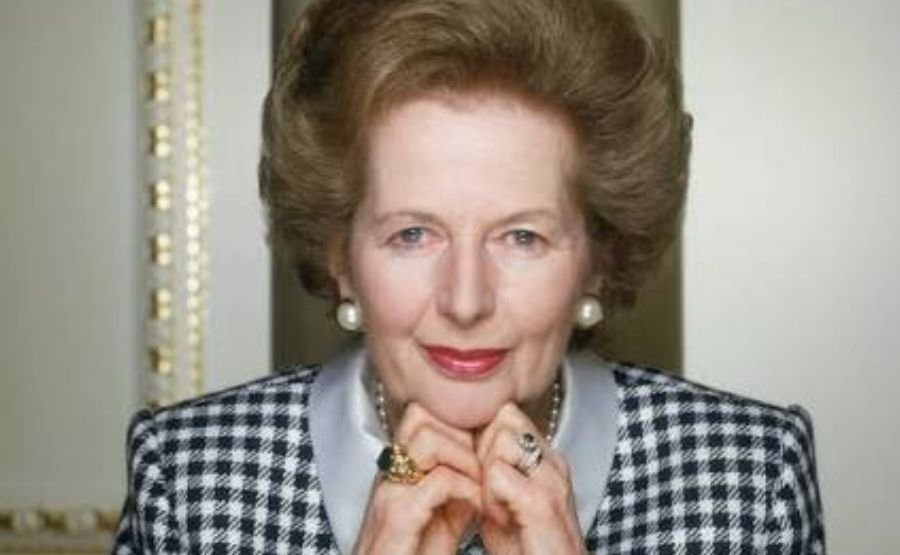
Margaret Thatcher: The Grocer’s Daughter Who Rewrote Britain
Quick Bio
| Detail | Information |
| Full Name | Margaret Hilda Thatcher, Baroness Thatcher (née Roberts) |
| Date of Birth | October 13, 1925 |
| Date of Death | April 8, 2013 (aged 87) |
| Nationality | British |
| Profession | Politician, chemist, barrister |
| Major Achievements | First woman to serve as UK Prime Minister (1979–1990); longest-serving British PM of the 20th century; three consecutive general election victories; Falklands War victory; architect of “Thatcherism” |
| Nickname | The Iron Lady |
| Spouse | Denis Thatcher (married December 1951, until his death June 2003) |
| Children | Twins Carol and Mark Thatcher (born 1953) |
| Post-PM Title | Baroness Thatcher of Kesteven (from 1992) |
| Estimated Net Worth at Death | Approximately $10 million USD |
Why She Still Gets People Talking
There’s a good test for how much a political figure actually mattered: are people still arguing about them decades later? By that measure, Margaret Thatcher passed with flying colors. She died in 2013, and within hours Britain had split — not for the first time — into those weeping and those opening Champagne bottles.
She was the first woman to lead a major Western democracy. She held the job for eleven and a half unbroken years. She went to war over a chain of tiny islands most people had never heard of and won. She stared down the trade unions that had, in many people’s view, been holding Britain hostage for a decade. She was friends with Ronald Reagan at a level that shaped the entire Western world’s direction in the 1980s.
And she was loathed by millions.
That combination — transformative, controversial, genuinely historic — is exactly why her story won’t sit quietly on any shelf.
See also “Hermann Göring: Decorated Pilot, Nazi Power Broker, and War Criminal“
A Flat Above a Shop in Lincolnshire
Margaret Hilda Roberts came into the world on October 13, 1925, above her father’s grocery store on North Parade in Grantham, a market town in Lincolnshire that even people from Lincolnshire find a bit dull. She was the second daughter of Alfred Roberts and his wife Beatrice.
Alfred was the central figure in Margaret’s early life. In addition to being the grocery store owner, he was also a Methodist lay preacher, an Alderman in the local government, and a guy who was not afraid to voice his strong ideas. He was a firm believer in self-sufficiency, thrift, civic responsibility, and the notion that no matter what you started with, you could succeed if you worked hard and led a moral life. From the time Margaret was old enough to comprehend them, he instilled those concepts in her.
Beatrice, her mother, is a quieter figure in history — Margaret herself rarely mentioned her in later life, which biographers have found telling. The relationship seems to have been cool. Alfred was the parent who mattered to her, the one she quoted, the one whose lessons she carried.
The family didn’t have a bathroom. They lived simply. Sunday was for church and silence. Holidays were modest affairs. Margaret later said her childhood contained no idle time — there was always something productive to be doing.
What the childhood did contain, more interestingly, was an exposure to public life through her father. Alfred took local politics seriously. He took ideas seriously. Additionally, he took his daughter’s intelligence seriously, which was unusual in 1930s Lincolnshire.
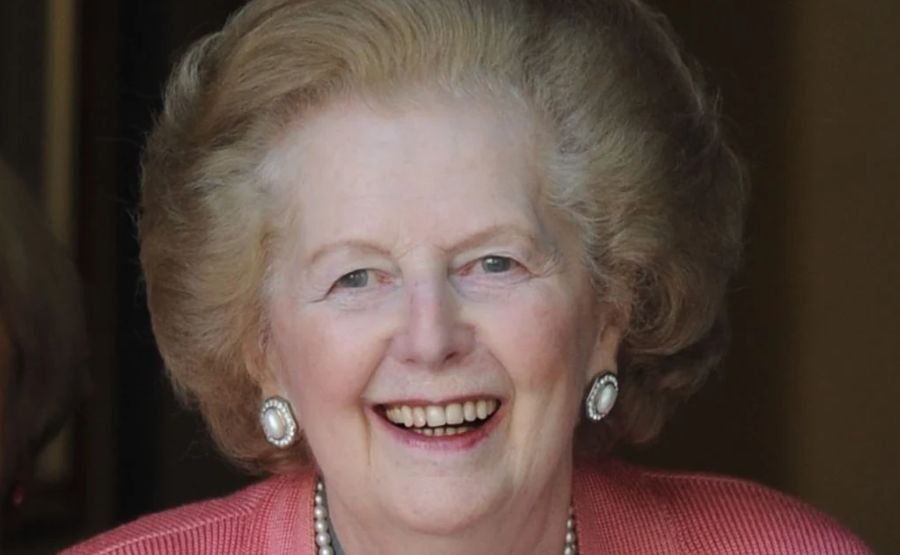
Oxford, Chemistry, and the Seeds of Something Bigger
Margaret was bright — properly, uncomplicatedly bright. She sailed through her local schools and won a scholarship to study chemistry at Somerville College, Oxford, arriving there in 1943 while the war was still grinding along.
Chemistry might seem like an odd choice for someone who would become one of the most ideologically driven politicians in modern history. But she was genuinely good at it. She specialized in X-ray crystallography under Dorothy Hodgkin, a Nobel laureate, and her undergraduate dissertation was on the structure of the antibiotic gramicidin. Later in life, she seemed to be more proud of being the first female British prime minister than of being the first with a science degree.
But Oxford wasn’t just about the labs. She threw herself into the university’s Conservative Association, eventually becoming its president. She was meeting people, building relationships, absorbing ideas, figuring out what she believed and how to argue for it. The political bug had really gotten underway.
She graduated in 1947 with a second-class degree and took a job as a research chemist in Colchester. She then moved to Dartford for work with another firm. But she was already applying for parliamentary seats on the side.
She also quietly started studying law in her spare time, eventually qualifying as a barrister in 1953. This woman was not sitting still.
The Long Climb Up
The path from ambitious young woman in 1940s Britain to Prime Minister was never going to be short. The Conservative Party of that era was not exactly bursting with enthusiasm for putting women forward in winnable seats.
She fought the seat of Dartford twice, in 1950 and 1951, in contests she couldn’t win. But she wasn’t supposed to win — these were safe Labour seats, the kind of early runs you do to build experience and get noticed. She got noticed. She was young, sharp, energetic, and fearless in debate. She also, at a Conservative dinner in Dartford, met Denis Thatcher.
Denis was a businessman, some years older, previously divorced — a detail that would have raised eyebrows in polite circles at the time. He was quietly wealthy, straightforward, and devoted to her in a way that gave her the stability to chase what she actually wanted. They married in December 1951, and twins Carol and Mark arrived in 1953, six weeks premature and delivered by Caesarean.
She didn’t slow down. While the children were still tiny, she was still studying for her bar exams. In 1959, she was elected to Parliament as the Member for Finchley, a suburban constituency in North London. She was 33.
The climb through Westminster was steady and deliberate. She got herself noticed in debates. She took on junior ministerial roles. By 1961 she was parliamentary under-secretary for pensions. In 1970, when Ted Heath’s Conservatives came to power, she became Secretary of State for Education.
That job handed her one of history’s more unfortunate nicknames. In one of her first acts as Education Secretary, she scrapped the universal free school milk program for children over seven. The tabloids went gleefully after her. The chorus was “Margaret Thatcher, Milk Snatcher.” It stung, and she knew it. But she stood her ground — a habit she would never break.
The Iron Lady Arrives
The Conservative Party’s two election losses in 1974 created a vacuum. Ted Heath had led them twice into defeat, and the party needed something different. What it got, in February 1975, was a jaw-dropping development: Margaret Thatcher stood against Heath for the party leadership, mounted a disciplined campaign, and beat him. The Conservative Party had its first ever female leader.
Four years of opposition followed, years she used to sharpen her ideas and build her brand. A Soviet newspaper gave her the nickname “Iron Lady” in 1976, intending it as a dig. She accepted it like a trophy.
When James Callaghan’s Labour government collapsed in May 1979 — following the chaos of the Winter of Discontent, with rubbish piling up in the streets and public sector workers striking across the country — Britain was ready for something different. Thatcher led the Conservatives to a majority. She walked into 10 Downing Street quoting St. Francis of Assisi about bringing harmony to discord, peace to strife.
Then she got to work.
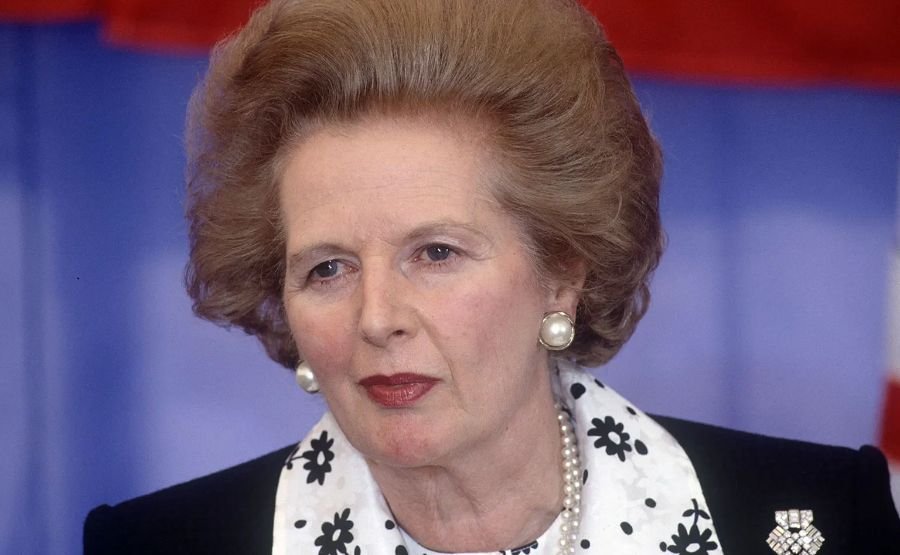
The Big Moments That Defined an Era
Thatcherism — the term that got attached to what she actually did in power — boiled down to some pretty clear ideas. Shrink the state. Free up markets. Break the grip of organized labor. Privatize industries that the government had been running and losing money on for decades. Fight inflation even if it means short-term economic pain. Be unapologetic about it all.
In the early years, the pain was real. Unemployment climbed sharply. She was deeply unpopular. Her poll numbers in 1981 were dreadful. The riots that summer in cities including Brixton and Toxteth reflected genuine fury at what felt like an abandonment of communities already struggling.
Then Argentina invaded the Falkland Islands in April 1982.
A tiny British overseas territory in the South Atlantic, home to a few thousand sheep farmers who considered themselves British. Most of Thatcher’s advisors expected a diplomatic solution to be sought. Many of her allies, including initially the United States, thought going to war was excessive. She didn’t hesitate. She sent the task force south.
The Falklands campaign lasted about ten weeks. Britain won. And everything changed. The patriotic wave that swept Britain, combined with an economy that had started to recover, turned her political position around completely. The Conservatives won a landslide in 1983. She had the mandate she needed for the second phase.
That second phase included the miners’ strike of 1984 to 1985 — a year-long industrial confrontation between her government and the National Union of Mineworkers, led by the combative Arthur Scargill. Thatcher had quietly prepared for this fight for years, stockpiling coal reserves and planning her strategy. The strike ended in defeat for the miners. The coal industry was gradually wound down. The communities built around those mines suffered enormously in the years that followed, and the resentment in those places toward Thatcher never faded.
In October 1984, while she was sleeping in her hotel during the Conservative Party Conference in Brighton, the IRA detonated a bomb. Five people died. Thatcher was unhurt. The following morning she delivered her conference speech as planned, on time, without wavering. It was one of the most remarkable displays of personal nerve anyone in British politics had seen in years.
A third election win came in 1987. She was now the longest continuously serving Prime Minister since the early nineteenth century.
The Personal Side of the Iron Lady
People who assume Thatcher was cold at home tend to be surprised by the actual picture. Denis was the bedrock of her life for over fifty years — calm, fiercely loyal, funny in a dry way, and completely uninterested in being in the spotlight himself. He called her “The Boss.” She depended on him more than she ever publicly acknowledged.
The relationship with her children was more complicated. Carol, her daughter, has written candidly about the distance that could exist — the sense that politics always came first. Mark, her son, became a minor public controversy in his own right over the years, with various business dealings that didn’t reflect well on the family name. Thatcher’s maternal warmth was real but constrained by the sheer scale of what she had taken on.
She worked extraordinary hours. She was famous for sleeping only four to five hours a night. She had her voice trained — famously lowered in pitch, made more authoritative — on professional advice. She cared about her appearance and image in ways that were strategic rather than vain. The handbag became a symbol. So did the hairstyle.
She also had a sharp and irreverent private sense of humor that her public persona rarely revealed.
The Fall: A Very British Coup
By the late 1980s, the cracks had been forming for a while. Her increasingly hostile attitude toward deeper European integration was putting her at odds with senior members of her own Cabinet. Geoffrey Howe, her longest-serving Foreign Secretary, resigned in November 1990 and delivered a resignation speech in the House of Commons that was devastating in its quiet precision.
But it was the poll tax — a flat-rate local charge that replaced property-based rates and meant a duke paid the same as his cleaner — that was the real killer. It was profoundly unpopular, widely seen as unfair, and had already triggered a riot in Trafalgar Square. Michael Heseltine, a longtime rival within the party, mounted a leadership challenge.
In the first ballot, Thatcher won — but by a handful of votes too few to avoid a second round. She polled Cabinet members one by one in the corridors of the Paris conference she was attending. The numbers weren’t there. On November 22, 1990, she announced she was resigning.
Those who were with her that morning say she wept. She told the Cabinet she was leaving with no regrets, that there was still work to be done. Then she left Downing Street for the last time. The television images of her tearful in the back of the car are some of the most watched footage in modern British political history.
After Downing Street: The Quiet Years and the Long Goodbye
She was given a life peerage in 1992, becoming Baroness Thatcher of Kesteven. She wrote two volumes of memoirs. She spoke, lectured, and consulted. She missed it. She found retirement genuinely difficult.
Denis died in June 2003 from pancreatic cancer, and that loss hit her in a way that seemed to accelerate her physical and cognitive decline. Carol, her daughter, later revealed that signs of dementia had been appearing since around 2000, though some in her circle suspected even earlier. Her public appearances became increasingly infrequent and private.
She suffered a stroke and passed away at the Ritz Hotel in London on April 8, 2013. She was 87. She received a ceremonial funeral with full military honors at St. Paul’s Cathedral, as the Queen authorized — one grade below a state funeral but aligned with her family’s wishes.
The Financial Picture
Margaret Thatcher left behind an estate estimated at £4–5 million pounds, or about $10 million at the time. This was a respectable but modest amount for one of the world’s most prominent individuals. Her income after leaving office came from speaking fees, the memoirs, advisory roles, and later from her daughter’s accounts of her life.
She lived in a Chelsea townhouse in her post-Downing Street years, a gracious part of London, but she wasn’t living extravagantly. Denis’s own business background meant the family had always been financially stable, but they weren’t in the territory of the genuinely super-wealthy. She died relatively modestly by the standards of former world leaders.
Final Words
What do you actually say about a woman like that?
She came from nothing special — a flat above a shop in a market town nobody visits on purpose — and reached the highest political office in one of the world’s most significant democracies. She did it in an era when the idea of a woman leading Britain was, to many people, genuinely unthinkable. She didn’t do it by asking politely. She fought for it, planned for it, outmaneuvered people, and then spent eleven years governing with an intensity and conviction that her critics found brutal and her supporters found thrilling.
Whether you think Thatcherism saved Britain or broke it — and perfectly reasonable, well-intentioned people fall on both sides of that argument — you can’t honestly pretend it didn’t matter. She changed the country’s relationship with the state, with labor, with markets, and with its own sense of international standing. The parties that came after her, including Tony Blair’s Labour government, governed in the landscape she had created, adapting to it rather than demolishing it.
She was stubborn. She was sometimes wrong. She was frequently merciless. And she was one of the most consequential figures Britain produced in the twentieth century. That combination is exactly why, more than a decade after her death, her name can still start an argument in any pub in England.
FAQs
1. Why is Margaret Thatcher called the Iron Lady?
The nickname originated in 1976 from a Soviet military newspaper that used the phrase to mock her hard-line anti-Soviet foreign policy speeches. She embraced it, and it stuck. The term captured her public image perfectly — unyielding, tough, and not especially interested in softening her positions to make people comfortable.
2. What did she actually study at Oxford?
Chemistry, with a specialization in X-ray crystallography. She worked under Dorothy Hodgkin, who later won the Nobel Prize. Her undergraduate dissertation was on the molecular structure of gramicidin, an antibiotic. She reportedly took more personal pride in having a science degree than in being the first female PM.
3. Who was Denis Thatcher and what was their marriage like?
Denis was a successful businessman, a divorcee when they met, and some years older than Margaret. By all accounts their marriage was genuinely close and mutually sustaining. He was steady, loyal, dryly funny, and content to support her ambitions without competing with them. When he died in 2003, she never fully recovered.
4. What is Thatcherism and did it actually work?
Thatcherism refers to her governing philosophy: privatizing state-owned industries, reducing trade union power, cutting income taxes, controlling inflation through interest rate policy rather than government spending, and shrinking the overall role of the state. Whether it “worked” depends entirely on which communities you look at. The south of England broadly prospered in the 1980s. Many former industrial areas in the north, Wales, and Scotland experienced deep and lasting economic damage.
5. Did she really go to war over the Falklands?
Yes. In April 1982, Argentine military forces seized the Falkland Islands, a British overseas territory in the South Atlantic. Against significant international skepticism — including from the United States at first — Thatcher dispatched a naval task force. After a ten-week campaign, Britain retook the islands. The victory transformed her political position.
6. What was the poll tax and why did it end her career?
The Community Charge — universally called the poll tax — replaced the rates system of local taxation with a flat per-person charge, meaning everyone paid the same amount regardless of their income or the value of their home. It was seen as deeply unfair. It triggered a major riot in Trafalgar Square in March 1990 and was wildly unpopular even within her own party. Combined with internal party tensions, it triggered the leadership challenge that led to her resignation.
7. How did Thatcher survive the Brighton bombing?
In October 1984, the IRA planted a bomb at the Grand Hotel in Brighton, where Conservative Party Conference delegates were staying. The bomb detonated in the early hours of the morning. There were numerous injuries and five fatalities. Thatcher, asleep in her room, was physically unhurt. The IRA later issued a statement saying they only needed to be lucky once. The morning after, she delivered her conference speech on schedule.
8. Did she get along with Ronald Reagan?
Yes — theirs was one of the genuinely significant diplomatic friendships of the Cold War era. They shared a world view: anti-Soviet, pro-free market, deeply skeptical of big government. They coordinated on major foreign policy decisions and personally liked and respected each other. Reagan called her the best friend America had in Europe. She called him one of the greatest presidents in American history.
9. Why did she actually resign?
Technically, she fell short in the first ballot of a Conservative Party leadership contest triggered by Michael Heseltine’s challenge in November 1990. She won enough votes to come first but not enough to avoid a second round. After individually consulting Cabinet members and finding insufficient support, she concluded she couldn’t win the second ballot and resigned rather than put the party through it.
10. What happened to her in her final years?
She suffered a series of small strokes beginning around 2002, which led her to retire from public speaking to avoid the risk of saying something that could be misinterpreted. Her daughter Carol revealed publicly in 2008 that dementia had been progressing for several years by that point. Her final decade was spent largely in private, at her London home, with diminishing public appearances.
11. What was her net worth?
Estimates put her estate at around £4–5 million sterling at the time of her death in 2013 — approximately $10 million. Income came from her two volumes of memoirs, speaking fees in the earlier post-PM years, and advisory consultancies. The family was comfortably wealthy rather than spectacularly rich.
12. How is Margaret Thatcher remembered today?
Deeply differently depending on who you ask. To her admirers, she rescued Britain from decline, restored national confidence, and proved that individual conviction and determination could move a country. To her critics, she dismantled communities, enriched the already wealthy, and pursued ideology at the expense of human cost. The honest answer is probably that she did some of both, and Britain is still negotiating what that means.
Discover people, ideas, and stories that matter with CelebsBeacon.