
J. Holt Smith: The Quiet Man Behind a Famous Name
Quick Bio
| Detail | Information |
| Full Name | J. Holt Smith (full given name: John Holt Smith) |
| Nationality | American |
| Profession | Attorney / Lawyer |
| Education | Vanderbilt University Law School (J.D.) |
| Texas Bar License | Admitted September 18, 1967 |
| California Bar | Admitted 1981 |
| Marriage | Julie Newmar, August 5, 1977 – circa 1984 (divorced) |
| Child | John Jewl Smith (born February 25, 1981) |
| Known For | Former husband of actress and Tony Award winner Julie Newmar |
| Net Worth | Not publicly disclosed; estimated modest professional income |
The Man Who Chose Obscurity
There’s something almost radical about a person who, even when handed the key to celebrity life, simply doesn’t walk through that door. J. Holt Smith had every opportunity to become a name people recognized. He married one of the most striking, talented, and culturally iconic women in American entertainment. He shared a home with a lady who had won a Tony Award on Broadway, played the original television Catwoman in a role that turned her into a gay icon for decades, and continued to be adored in popular culture for many years.
And yet — he remained almost entirely invisible.
That’s not an accident. That’s a choice. And in a world where attention is currency and privacy is increasingly scarce, J. Holt Smith’s commitment to living outside the spotlight makes him genuinely unusual. His story is short on tabloid drama and long on discretion. For some people, that’s frustrating. For others, it’s actually refreshing.
See also “Kimberly Ann Vadala: The Woman Who Chose Quiet Over the Spotlight — and Made It Look Like Strength“
Growing Up: The Background That’s Largely Hidden
Here’s the honest truth about J. Holt Smith’s early years: they’re not well documented. This is a man who has never given interviews, never sought press coverage, and has left almost no public footprint beyond what official records and his ex-wife’s biographical accounts reveal. Researchers who’ve gone looking for his birth date, his hometown, his parents’ names, and his childhood come back largely empty-handed.
What we do know is that he is American, of Caucasian heritage, and that his path eventually led him to law school in Nashville, Tennessee. Those facts suggest at least a middle-class upbringing with access to quality education, but beyond that, the specifics of his early family life simply aren’t part of the public record.
In a strange way, that tells us something. People from extraordinarily wealthy or prominent backgrounds tend to leave traces — newspaper mentions, family connections that surface in society columns, alumni records that get cited. People from the opposite end, whose circumstances were genuinely difficult, sometimes write memoirs or give interviews later in life. J. Holt Smith appears to have done neither. He existed, he studied, he built a profession, and he moved through the world without feeling any need to be documented.
That’s a personality. And it’s one that runs as a consistent thread through everything we do know about him.
Education: Vanderbilt and the Making of a Lawyer
The clearest educational fact tied to J. Holt Smith is that he earned his law degree from Vanderbilt University Law School in Nashville, Tennessee. Vanderbilt’s law program has long been one of the more respected in the American South — rigorous, well-regarded, and producing practitioners who tend to favor substance over flashiness. It’s not Harvard or Yale in terms of national name recognition, but it’s not trying to be. It trains excellent, practical lawyers.
The timeline suggests Smith attended Vanderbilt sometime in the early-to-mid 1960s, completing his degree before the fall of 1967, when Texas bar records show he was officially licensed to practice law in that state. The Texas Bar recorded his admission date as September 18, 1967 — a concrete, verifiable marker in an otherwise detail-sparse biography.
What led him toward law in the first place? That’s harder to say. Some lawyers are driven by a passion for justice. Some are drawn to the intellectual puzzle of legal argument. Others are simply practical people who see law as a stable profession with good earning potential and the chance to help people solve real problems. Given what we know of Smith’s personality — grounded, private, low-key, not particularly motivated by glory — the practical model feels most plausible. Law wasn’t his stage. It was his work.
Building a Career: Quiet and Competent
After being admitted to the Texas Bar in 1967, J. Holt Smith began building a legal practice. The specifics of that practice — which clients he represented, which cases he handled, whether he worked for a firm or ran his own shop — remain largely undocumented in any publicly accessible way. His bar records show no public disciplinary history, which is its own kind of statement. A clean record over a long career in law isn’t glamorous, but it speaks to professionalism and integrity.
Sources that have examined his practice suggest he worked in areas touching business law and real estate — bread-and-butter legal work that forms the backbone of countless American law practices. These are the situations that are the headlines. There are no dramatic courtroom showdowns, no major verdicts bearing his name. This is the daily, unglamorous, essential legal machinery that keeps transactions moving, disputes resolved, and ordinary people protected.
He is also noted to have obtained a California Bar license in 1981, which gives some shape to his movements during the years of his marriage. By 1977, he had relocated to Fort Worth, Texas, building a life there. The California bar admission later suggests he may have maintained or developed professional connections across state lines, possibly following the geography of his personal life as his marriage to Julie Newmar brought him into contact with the Los Angeles world.
His Texas bar card number — 18628500 — still exists in the record. His current status is listed as “Not Eligible to Practice in Texas,” which suggests he either retired from active practice or allowed his Texas license to lapse after many years.
The Marriage That Put His Name in the Public Eye
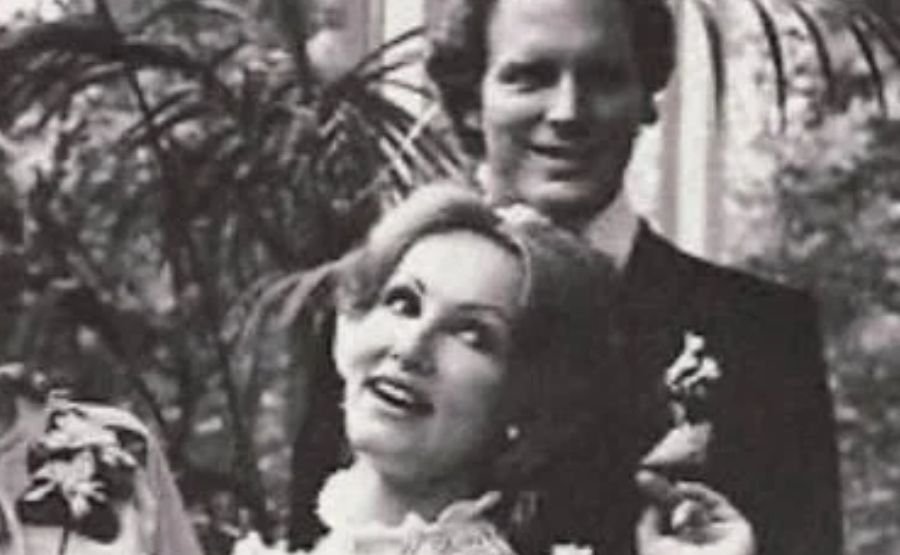
Sometime in the mid-1970s, J. Holt Smith met Julie Newmar. By then, Newmar was already a fully formed star — a six-foot-tall former dancer who had won a Tony Award in 1959 for her work in The Marriage-Go-Round, made countless television appearances, and become permanently lodged in pop culture history as the original television Catwoman opposite Adam West’s Batman in the 1960s. She was funny, brilliant, outspoken, and gorgeous. She was also, by the time she met Smith, in her mid-forties and single.
They married on August 5, 1977. Newmar left Hollywood behind — physically, not professionally — and relocated to Fort Worth, Texas, to build a life with the attorney she had chosen. That’s worth sitting with for a moment. This was a woman at the height of her cultural fame, choosing to transplant herself to Fort Worth, Texas, for a man who worked quietly in law and had no interest whatsoever in the entertainment industry. She described him as a man who swept her off her feet.
Their life together in Fort Worth offered something Newmar probably hadn’t had in abundance during her entertainment career: groundedness. A home, a rhythm, a partner who wasn’t in competition with her or interested in leveraging her fame. From what accounts suggest, J. Holt Smith was exactly the steady, private, low-drama counterpart to the vibrant, public life his wife had led.

The Son Who Changed Everything: John Jewl
The single most emotionally significant chapter of this marriage was the birth of their son, John Jewl Smith, on February 25, 1981. He arrived after enormous heartbreak — Julie had suffered through three miscarriages before carrying John to term. She was in her late forties when he was born, and described him as her “last-minute baby” in interviews years later, the words still carrying the weight of how close she’d come to never having him at all.
John was born with Down syndrome. As a toddler, he contracted meningitis, which left him without hearing. The combination of these challenges meant that John required devoted, attentive parenting from the very beginning. Julie has spoken openly about John over the years, describing him as one of the greatest sources of meaning in her life — someone who taught her about unconditional love in ways nothing else had.
What is less documented is how J. Holt Smith navigated fatherhood during the years he was in John’s life. What we know is that by the time John was a few years old, his parents’ marriage had ended. After the divorce, John was raised primarily by his mother, and sources note that there is no documented ongoing involvement from Smith in his son’s life following the split. That is a fact, not a judgment — the specific reasons are not part of the public record.
The Divorce and Its Aftermath
The marriage between J. Holt Smith and Julie Newmar ended in divorce, with most sources placing the final split around 1983 or 1984. The two had been together roughly six to seven years. Sources offer no dramatic explanation — no public scandal, no messy court battle played out in the press. It ended the way private people’s marriages end: between them, mostly out of sight.
After the divorce, Smith retreated even further from public life. He appears to have continued working in law for some time, maintaining professional licenses across multiple states. But he gave no interviews, made no public statements, and allowed no details of his post-marriage life to filter into the public conversation.
Julie Newmar, for her part, never remarried. She returned her focus to her career, to advocacy work on behalf of people with disabilities, to her son, and eventually to her health — she has dealt with Charcot-Marie-Tooth disease, a neurological condition that has affected her mobility in later years. She and John Jewl have remained deeply close. As of relatively recent accounts, they were still sharing her Los Angeles home.
Smith’s name appears only occasionally in the context of Newmar’s biography. He is not a villain in her story, nor a celebrated figure. He is simply someone who was there, who mattered, and who then — true to his nature — quietly stepped away.
The Financial Picture
No verified net worth figure exists for J. Holt Smith because he is not a public figure and has never disclosed financial information. Attempting to pin a number on his wealth would be pure speculation, and this biography won’t do that.
What can be said is this: a career practicing law across multiple decades, working in areas like business and real estate in Texas — a state with significant property and commercial activity — provides a solid, professional income. He was never a celebrity lawyer chasing high-profile cases or building a media persona. He was a working attorney, and working attorneys, especially those who practice quietly and consistently over long careers, tend to accumulate financial stability rather than splashy wealth.
His lifestyle reflected that. During his marriage, he lived in Fort Worth, Texas, not Beverly Hills. He and Newmar lived well, but in the understated way of a professional household rather than a Hollywood one. There is no available evidence of lavish expenditure, headline-making investments, or financial controversy.
Where Things Stand Now
As of 2026, J. Holt Smith’s current whereabouts and activities are genuinely unknown. He has been described in various sources as believed to still be alive, but with essentially no public presence to confirm or deny that. His Texas Bar status is listed as inactive, suggesting he has retired from active legal practice, at minimum in Texas. Whether he continues any form of work in California or elsewhere cannot be confirmed.
He has not appeared in any documented public setting since his marriage to Julie Newmar ended. No photographs of him have circulated in the tabloid press. No social media accounts bearing his name have surfaced. No legal commentary, speaking engagements, or professional recognitions have attached to his name in any traceable way.
He is, in the most complete sense of the phrase, a private person.
Final Words
You could look at J. Holt Smith’s life and conclude that not much happened. That he married a famous woman, had a child with her, divorced her, and disappeared. That he is nothing more than a footnote in Julie Newmar’s biography.
But that framing misses something.
To sustain genuine privacy in modern life — especially after being married to one of the most recognized women in American entertainment — requires real intention. You have to choose it, over and over, every time the internet makes it a little easier for someone to find you, every time a journalist reaches out, every time a curious stranger digs into old court records or bar databases hoping to put a human story together.
J. Holt Smith chose privacy. Not the performed humility of someone who wants to be noticed. Actual, committed, unbroken privacy. That takes a certain kind of person. Someone who knows exactly who they are and doesn’t need anyone else’s recognition to confirm it.
He was a lawyer. He was a husband for a while. He was a father. And then he was simply himself — which, apparently, was more than enough.
FAQs
1. Who is J. Holt Smith?
He is an American attorney best known publicly as the former husband of actress Julie Newmar. He practiced law for several decades, primarily in Texas, and is the father of their son, John Jewl Smith.
2. Where did he go to law school?
He attended Vanderbilt University Law School in Nashville, Tennessee, completing his degree before 1967.
3. When was he admitted to the Texas Bar?
His Texas Bar records show an admission date of September 18, 1967. His bar card number is 18628500.
4. When did he marry Julie Newmar?
They married on August 5, 1977, in what was described as a private ceremony.
5. How long were they married?
The marriage lasted approximately six to seven years, with the divorce finalized around 1983 or 1984, depending on the source.
6. Why did they divorce?
The specific reasons for their separation have never been made public by either party. No confirmed account of the cause exists in the public record.
7. Do they have children together?
Yes. Their son, John Jewl Smith, was born on February 25, 1981. He was born with Down syndrome and later lost his hearing after contracting meningitis as a toddler. His birth was especially meaningful because Julie had experienced three miscarriages before he was born.
8. Did J. Holt Smith stay involved in his son’s life after the divorce?
Available sources indicate that after the divorce, John Jewl was raised primarily by his mother Julie Newmar. No documented ongoing relationship between Smith and his son in public records has surfaced.
9. What kind of law did he practice?
He is reported to have worked in areas including business law and real estate, though his specific caseload and firm affiliations were never made public.
10. Does J. Holt Smith have a social media presence?
No. There are no verified social media accounts associated with him, and he has maintained essentially zero public digital presence.
11. Is J. Holt Smith still alive?
He is believed to be alive based on available information, but his current whereabouts and activities are unknown. He has not appeared in any public record or media in many years.
12. What is J. Holt Smith’s net worth?
No verified figure exists. He was a practicing attorney for many decades, suggesting a professionally comfortable life, but he has never disclosed financial information and no reliable estimate has been confirmed.
Discover people, ideas, and stories that matter with CelebsBeacon.




One Comment