
Carlos Scola Pliego: The Man Behind the Camera Who Married One of Music’s Most Private Icons
Quick Bio
| Detail | Info |
| Full Name | Carlos Scola Pliego |
| Nationality | Spanish |
| Profession | Film Director, Assistant Director, Documentary Filmmaker, Writer, Producer |
| Active Years | Early 1980s – 2007 (last confirmed credit) |
| Major Film Credits | Never Say Never Again (1983, uncredited second AD, Spain); Curse of the Pink Panther (1983); Eleni (1985); Christopher Columbus (1985 TV miniseries); Ngira: Gorilas en la Montaña (1988); Goal II: Living the Dream (2007) |
| Marriage | Sade Adu (October 11, 1989 – c. 1995) |
| Children | None with Sade Adu |
| Known Misattribution | Frequently and incorrectly identified online as Salma Hayek’s father — this is false |
| Estimated Net Worth | Not publicly disclosed; wide-ranging estimates online are unverified |
A Name You’ve Heard, a Life You Know Almost Nothing About
Let’s begin with the truth. If you’re googling Carlos Scola Pliego right now, there’s a very good chance you got here through one of two wrong doors. Either you read somewhere that he’s Salma Hayek’s father — he isn’t, not even close — or you landed on his name while reading about Sade, the British-Nigerian soul singer who turned musical restraint into one of the most recognizable artistic identities of the past forty years. And if it’s the second thing, you’re at least in the right neighborhood.
Carlos Scola Pliego was Sade Adu’s husband. They married in October 1989, in a Spanish castle, and the marriage ended somewhere around 1995. Since neither of them is the type of person who discusses things in public, something private and likely traumatic happened in between and was never made public. Sade has spoken about mourning the end of that relationship for a long time. Carlos said essentially nothing then, and has said nothing since.
But here’s what often gets missed in the rush to frame him purely through her story: Carlos Scola Pliego had his own career. It wasn’t a celebrity career. It was a working filmmaker’s career — the kind where you spend years on sets doing skilled, unglamorous work that never puts your face on a poster but absolutely puts your fingerprints on the finished product. He worked on a James Bond film. He helped shepherd a major television miniseries about Christopher Columbus through its Spanish production. He directed documentaries in Africa. Long before he became “that man Sade married,” he was a genuine person working at a real job.
This is his story — as much of it as anyone can responsibly tell, given how deliberately he has kept it.
See also “Shelly Tresvant: The Georgia Woman Who Knew Ralph Before the World Did“
Spain, but the Details Are Sparse
Carlos Scola Pliego was born in Spain. That much is solid. His precise birthdate, the city in which he was born, his parents, and his family history have all not been found in any trustworthy source. He has never conducted an interview in which such information is revealed. He has never written a memoir. He exists in the public record primarily through film databases and through the fact of his marriage to one of the most reclusive major artists of the late 20th century.
Growing up in Spain in the postwar and transitional decades — through the Franco era and into the democratic Spain that emerged after 1975 — would have meant something specific about the cultural climate. Spanish cinema was both constrained and deeply alive during those years. Directors like Carlos Saura and Luis Buñuel cast long shadows. There was a particular energy in the Spanish film world as democracy arrived, a sense of things opening up. If Carlos was coming of age in that environment and leaning toward a career behind the camera, he would have been breathing some of that in.
What his specific educational path looked like, whether he studied film formally or learned through working, remains undocumented. Based on his early career trajectory, it appears he entered the industry from the working-crew side — the kind of filmmaker who climbs up through practical experience rather than through an academic film program. That was not unusual for Spanish cinema professionals of his generation.

The Early Eighties: Learning the Trade on International Sets
The early 1980s were when Carlos Scola Pliego started getting screen credits, and what’s notable about them is how quickly he ended up on large-scale international productions. That doesn’t happen by accident. It happens because someone on set knows your work, recommends you to the next project, and the reputation builds by word of mouth before it builds in any official way.
In 1982 and 1983, a cluster of films brought major Hollywood and British productions to Spain for location work. The geography, the light, the lower costs — Spain was genuinely attractive to international productions during this period. And someone with local production knowledge who spoke the language and knew how the industry worked was genuinely valuable to any foreign unit landing there.
Never Say Never Again came out in 1983, with Sean Connery returning to the role of James Bond after over a decade away from it — a rival production to the official Eon franchise, unusual and much talked about at the time. Parts of the film were shot in southern Spain, and Carlos appears in the production’s records as a second assistant director on the Spanish unit work. The credit is uncredited, which was standard practice for local crew members contributing to one leg of an international shoot. The work was real. The name just didn’t make it to the end scroll.
Curse of the Pink Panther came the same year — 1983 — a film that attempted to continue the Pink Panther franchise after Peter Sellers’ death. Again, Carlos appears in the production records. Again, local crew work, but local crew work on a major international picture.
Then there was Eleni, the 1985 film produced by Nick Cage (the producer, not the actor) and starring John Malkovich, based on a real story of wartime Greece. It’s a serious film, not a pop entertainment, and Carlos’s credit there suggests he was versatile — not just picking up whatever local jobs were available, but working across different kinds of productions.
Christopher Columbus and the Documentary Turn
The 1985 television miniseries Christopher Columbus was a major undertaking — a four-part Italian-American co-production that starred Gabriel Byrne as Columbus, with Virna Lisi and Faye Dunaway in supporting roles. It was lavishly produced and distributed internationally. For the Spanish portions of the production — which made obvious geographic and historical sense — Carlos Scola Pliego is listed as assistant director for Spain.
His full name appears in the credits for this production, which is how researchers have been able to connect the shortened “Carlos Scola” appearing on some other credits to the same person. The miniseries aired to large audiences in multiple countries. It was the kind of work that would have kept his calendar full and his professional reputation solid.
Around the same time, there’s evidence of Carlos turning toward documentary work. Ngira: Gorilas en la Montaña — a documentary about mountain gorillas — bears his credit as director and writer. This was 1988. If the title rings a bell, it’s because the subject of mountain gorilla preservation in Central Africa was a topic of intense international attention at that time, particularly following the attention that Dian Fossey’s work had generated. A Spanish filmmaker directing a documentary about gorillas in Africa in the late 1980s was doing work that mattered, even if it didn’t make headlines.
He also directed Donde Termina el Corazón — which translates roughly as Where the Heart Ends — another documentary production. These projects suggest a filmmaker who was genuinely interested in the form for its own sake, not just picking up jobs to pay bills. Documentary work requires patience, sustained attention, and a point of view. It’s a different discipline than assistant directing on a big-budget international thriller.
Sade, Spain, and the Marriage That the World Got to Know About
This is the chapter that most people click through to find, so here it is in full.
Sade Adu — born Helen Folasade Adu, one of the most distinctive voices in British music history — had by the mid-1980s become a phenomenon on both sides of the Atlantic. Diamond Life, her debut album, had turned into a massive commercial success in 1984. Promise followed in 1985. She was famous in a specific, unusual way: intensely private about her personal life, photographed constantly but revealing almost nothing in interviews. She moved to Madrid specifically to escape the relentless media attention that was following her in England.
Her route and Carlos crossed in Madrid. The most detailed account of the meeting traces it to Spain in the mid-1980s, when Sade was filming music videos for Promise with director Brian Ward. The Spanish crew on a production like that would have included people Carlos knew, or possibly Carlos himself. The details of how they actually met remain fuzzy — which is entirely in keeping with both of their attitudes toward public disclosure.
What is documented: Carlos was with Sade during the production of Stronger Than Pride, her 1988 album, which means they were a couple for several years before they married. He was present in the studio. He was part of her daily life during the making of an album that produced songs like “Nothing Can Come Between Us” and “Love Is Stronger Than Pride” — titles that take on a particular color when you know what came next.
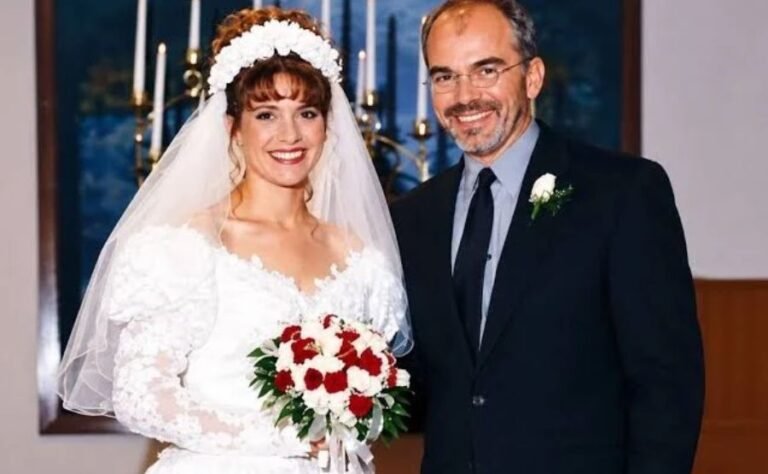
They married on October 11, 1989, in a Spanish castle. It was a private ceremony. The media knew almost nothing about it until after the fact, which is exactly how Sade operated on every personal matter throughout her career. They lived together in Madrid.
The marriage did not go well. Reports suggest it became rocky within a year or two of the wedding. Sade returned to London by the early 1990s. The official divorce came around 1995, after six years of legal marriage but a much shorter period of actually living together. There were no children from the marriage.
Sade has since said, in the occasional interview where personal matters have come up, that she grieved the end of that relationship for a long time — longer than the relationship itself lasted. That speaks to something significant about how it felt from the inside. Carlos has never made a corresponding statement, because Carlos has never made any public statement about any of it.

After the Divorce: Quiet and Then Quieter
Carlos Scola Pliego essentially disappeared from public view after the marriage ended. He continued to exist in Spain, but public records of his professional work became sparse and then mostly stopped.
The exception came in 2007. Goal II: Living the Dream was a soccer drama — a sequel to the 2005 film Goal! — following a young player’s rise through Real Madrid and European football. Carlos appears in the production records for this film as an additional crew member. It’s a modest credit. It’s not a directorial role, not a writing role, not the kind of credit that defines a filmmaker’s legacy. It reads more like someone staying loosely connected to an industry they’ve been part of for two decades without needing to be at its center.
After 2007, nothing. No confirmed further credits. No interviews. No social media presence. No appearances at film festivals or industry events that left a public record.
He returned to the private life he had apparently always preferred, and he stayed there.
Who He Was Not: Clearing Up the Salma Hayek Confusion
It needs to be said plainly. A persistent online myth has circulated claiming that Carlos Scola Pliego is the father of Hollywood actress Salma Hayek. This is completely and entirely false. Salma Hayek’s father is Sami Hayek Dominguez, a Lebanese-Mexican businessman who was involved in the oil industry. He and Carlos Scola Pliego share nothing beyond a vaguely similar professional-class biography and — apparently — enough online confusion that the wrong name keeps showing up in the wrong places.
How this myth started isn’t entirely clear. The most likely explanation involves a misattribution somewhere in the early days of online celebrity biography databases, which then got copied from site to site until repetition started to create the impression of fact. Repeating false claims is not the same as confirming them. Carlos Scola Pliego is not, in any sense, connected to Salma Hayek.
Financial Picture: What We Actually Know
The honest answer is: not much. Carlos Scola Pliego’s net worth has never been publicly disclosed, and the estimates that circulate online — including one figure as high as $70 million that appears on at least one website — have no verifiable basis whatsoever and should be dismissed entirely.
What can be said is this: a working filmmaker in Spain over the course of two decades, with credits on international productions, would have earned a professional living. Film work pays in proportion to your credit and your negotiating position. Assistant director work on major international productions, local-hire rates considered, would have provided a solid income. Documentary directing is rarely lucrative, but it keeps you active. By the mid-1990s, after the marriage to one of the most successful recording artists in the world, there would presumably have been a divorce settlement of some kind, the details of which were never made public.
He has not sought public wealth. He has not launched businesses. He is not listed on any business rosters or wealth rankings. He is a person of presumably comfortable but private and undramatic financial circumstances, living somewhere in Spain, well outside anyone’s radar.
Where He Stands Today
Carlos Scola Pliego is somewhere in his sixties, living in Spain, and not visible in any public-facing way. No social media. No film festival appearances. No interviews. No updates in any database that anyone has been able to find since that 2007 film credit.
Whether he is still making films — documentary work that simply hasn’t surfaced in English-language databases — or whether he has moved completely away from the industry, nobody can say with any confidence. What can be said is that he made a choice to be a private person very early in his life and has never deviated from it.
The world found out his name because he loved someone famous. He appears to have made his peace with that fact and moved on from it in ways that the woman in question — given everything she has built and continued to build — clearly also managed to do.
Final Words
A person who refuses to let their most well-known phase of life define them has a certain dignity. Carlos Scola Pliego worked on a James Bond film before most people his age had figured out what they wanted to do professionally. He directed wildlife documentaries in Africa. He spent years as a trusted crew member on some of the most significant international productions ever shot in Spain. He fell in love with a woman who sang about heartbreak and longing with an ache that millions of people recognized as their own. He married her, in a castle, in private. He lost her, in ways that were apparently slow and painful. Then he returned to his invisibility.
That is not a tragic story. It’s a life that was lived on its own terms, in its own scale, without needing anyone’s validation or anyone’s attention. The work was real. The love was real. And the choice to keep both of those things private — which is ultimately just the choice to live as a human being rather than a public figure — is one that plenty of people wish they could make but can’t quite manage.
Carlos Scola Pliego managed it. And for whatever it’s worth, that takes its own kind of character.
See also “Gianetta Fluent: The Untold Story of Justine Bateman’s Private Daughter“
FAQs
1. Who is Carlos Scola Pliego?
A Spanish filmmaker who worked as an assistant director, director, writer, and producer in both Spanish and international cinema from the early 1980s through at least 2007. His most well-known public persona is that of singer Sade Adu’s ex-husband.
2. Is Carlos Scola Pliego really Salma Hayek’s father?
No. This is a persistent online myth with no factual basis. Salma Hayek’s father is Sami Hayek Dominguez, a Lebanese-Mexican businessman. Carlos Scola Pliego has no connection to Salma Hayek.
3. When was Sade Adu married to Carlos Scola Pliego?
October 11, 1989. They married in a Spanish castle in a ceremony that was kept largely private at the time.
4. When did Carlos Scola Pliego and Sade Adu divorce?
The divorce was finalized around 1995. Reports suggest the couple had actually separated earlier — within a year or two of the wedding — with Sade moving back to London from Madrid during the early 1990s.
5. Do Carlos Scola Pliego and Sade Adu have children together?
No. There are no children from their marriage. Sade’s daughter, Ila Adu, was born in 1996 from a subsequent relationship with Jamaican producer Bobby Morgan.
6. What films did Carlos Scola Pliego work on?
His documented credits include Never Say Never Again (1983, uncredited second assistant director, Spanish unit), Curse of the Pink Panther (1983), Eleni (1985), Christopher Columbus (1985 miniseries), Ngira: Gorilas en la Montaña (1988, director/writer), Donde Termina el Corazón (documentary, director), and Goal II: Living the Dream (2007, additional crew).
7. Did Carlos Scola Pliego work on a James Bond film?
Yes. He served as a second assistant director for the Spanish unit production of Never Say Never Again in 1983. The credit is uncredited on the film itself but appears in production records and on IMDb.
8. How did Carlos Scola Pliego and Sade meet?
They first met in Spain in the middle of the 1980s, probably around the time Sade was filming music videos for her 1985 album Promise. She later moved to Madrid to avoid the constant media attention she was receiving in England. The exact meeting circumstances are not documented from either side.
9. What is Carlos Scola Pliego’s nationality?
Spanish.
10. What is Carlos Scola Pliego’s estimated net worth?
Unknown and unverified. Very high figures circulating on some websites have no documented basis. He has never been the subject of any financial reporting or appeared on any wealth rankings.
11. Where is Carlos Scola Pliego now?
It is thought that he resides in Spain. His most recent verified professional credit dates back to 2007. He has not conducted any recognized interviews and has no public social media presence.
12. Why did Carlos Scola Pliego and Sade Adu’s marriage end?
Neither party ever disclosed the precise reasons. Reports describe a rocky relationship that deteriorated relatively quickly after the wedding. Sade has acknowledged grieving the end of it for a considerable time, but beyond that, both she and Carlos have maintained complete privacy about the details.
Discover people, ideas, and stories that matter with CelebsBeacon.



One Comment