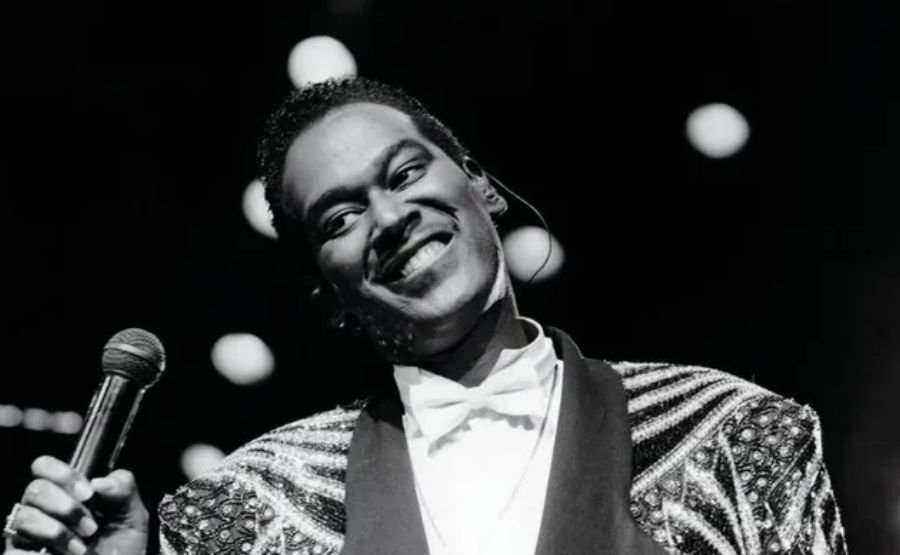
Charles Anthony Vandross: The Brother Who Never Sought the Spotlight
Quick Bio
| Info | Detail |
| Full Name | Charles Anthony Vandross |
| Date of Birth | February 7, 1947 |
| Place of Birth | Manhattan, New York City, USA |
| Date of Death | April 30, 1991 |
| Age at Death | 44 years old |
| Nationality | American |
| Ethnicity | African American (parents of South Carolinian heritage) |
| Profession | Private individual; not a public figure |
| Family Role | Eldest son of Luther Vandross Sr. and Mary Ida Shields Vandross; older brother of R&B legend Luther Vandross |
| Siblings | Patricia Marie Vandross, Ann D. Vandross Sanders, Luther Ronzoni Vandross Jr. |
| Known Child | Tonia Lazz Vandross (daughter, per genealogy records) |
| Cause of Death | Complications attributed to diabetes (consistent with the disease’s devastating pattern across the Vandross family) |
| Net Worth | Not publicly known |
A Man Who Mattered Without Ever Being Famous
Let me tell you something about Charles Anthony Vandross that every article about him gets slightly wrong. They call him “the quiet brother behind a legend” or “the untold story” — as if his whole value is just being adjacent to someone more famous. That framing sells him short.
Charles was a real person. He had his own forty-four years on this earth. He was a son, a sibling, a man who grew up in mid-century New York when the city was raw and loud and absolutely electric with music. He lived through things — losing a father young, watching a family hold itself together through grief, seeing a little brother slowly become someone the whole world would eventually love. And then he was gone, quietly, in 1991, before any of that happened at scale.
That’s a full life. A real one. And it deserves to be told honestly — not inflated with invented detail, not dressed up as something it wasn’t, but laid out plainly for what it actually was: the story of an ordinary man in an extraordinary family, doing the invisible work that made everything else possible.
See also “Marion Walmsley: The Quiet Heart Behind a Famous Name“
Manhattan in the 1940s: The World Charles Was Born Into
Charles Anthony Vandross came into the world on February 7, 1947, in Manhattan, New York. Think about what that city was like at that moment. The war had just ended. Black families from the American South had been streaming north for decades, part of the Great Migration, looking for something better — better work, better schools, less brutality. New York wasn’t a paradise. But it was a city where a family from South Carolina could put down roots and build something.
That’s exactly what Luther Vandross Sr. and Mary Ida Shields Vandross had done. They settled in Manhattan and started a family. Charles was their first son — and probably, in that household, that came with a certain weight to it. The eldest boy. The one who would be watched, who would set the standard, who would one day be expected to step up.
The Vandrossses lived on Manhattan’s Lower East Side, in the Alfred E. Smith housing projects — the kind of New York working-class environment that was tough but tight-knit. Neighbors knew each other. Kids ran in packs. Churches anchored communities. Music was everywhere, because in Black New York in those postwar years, music wasn’t a luxury. It was how people prayed, how they celebrated, how they grieved, how they survived.
Charles grew up inside all of that. And even if he never put a name on a record, that environment lived in him every bit as much as it lived in his famous little brother.

The Vandross Home: A Household Wired for Music
Luther Vandross Sr. was an upholsterer by trade, but he was a singer by nature. Mary Ida was a practical nurse — practical in every sense. She was the organizational center of a family that needed one. Together they raised four children: Charles first, then Patricia, then Ann, then Luther, the youngest, born in 1951 when Charles was already four years old.
Music was the family’s native language. The parents both sang. The sisters — Patricia and Ann — would go on to perform in various New York vocal groups. When baby Luther started teaching himself piano at age three, nobody in that household thought it was unusual. Of course he did. That was just what Vandross children did with sound.
Charles, four years older than Luther, was part of that atmosphere from the beginning. He was old enough to be aware of the music around him, young enough to be shaped by it in the most fundamental way. The gospel records spinning on the phonograph. The doo-wop harmonies drifting from the street corners. The rhythm of church. The rhythm of New York.
He wasn’t performing. Not publicly, anyway. But he was absorbing all of it, the same way everyone in that house was absorbing it. The Vandross home was less a household than it was a small music school that nobody had formally enrolled anyone in.
The Year Everything Changed: Losing Luther Sr.
In 1959, when Charles was twelve years old, everything in the family shifted. Luther Vandross Sr. died of diabetes.
Think about what that meant for this family. A father gone. A mother suddenly doing everything alone. Four children ranging in age from about eight to fifteen. Mary Ida was formidable — she would later be described as the backbone of the entire Vandross story — but no one person can absorb that kind of loss without the whole family feeling it.
Charles was the eldest son. Twelve years old. And in working-class New York in 1959, being the eldest son in a newly fatherless household meant something specific. You didn’t get to just be a kid grieving your dad. You were also, suddenly, a young man with responsibilities. You watched your mother differently. You watched your younger siblings differently. You felt the edges of the family in a way that hadn’t fully been visible before.
Mary Ida moved the family to the Bronx after Luther Sr.’s death. It was a practical decision — a different neighborhood, a fresh start of sorts, a change of air. And the Bronx of that era had its own musical ecosystem entirely. The sisters started taking young Luther to the Apollo Theater regularly. Charles, a teenager navigating a new neighborhood in a changed family, was learning how to be present in a different way — as the steadying older figure, not the one with the talent spotlit on a stage, but the one who made it possible for others to take up that space.
Growing Up and Stepping Back: The Private Path
Here’s where the honest account requires some honesty about what we don’t know. Charles Anthony Vandross’s adult life — his work, his relationships, the texture of his days — is not documented in the way a celebrity’s life would be. He didn’t give interviews. He didn’t pursue a public career in music, despite growing up in a family that practically breathed it.
What we know is that he stayed in New York. That he built his own life there — a private one, a personal one — separate from the public-facing world his younger brother was slowly building entry into. He had at least one daughter, a girl named Tonia Lazz Vandross, whose name appears in genealogical and family records. He was a father. He was a son to the remarkable Mary Ida.
It’s worth pausing on that choice for a moment — the choice not to pursue what was right there in his family’s DNA. Some people see music and fame as the natural destination for someone raised the way Charles was raised. But plenty of people who grow up in musical households decide, consciously or just by the drift of their nature, that the music belongs to someone else. That their job is different. Charles seems to have been one of those people.
That’s not a failure. That’s a decision. And it shaped the family in its own quiet way.
What Charles Meant to Luther
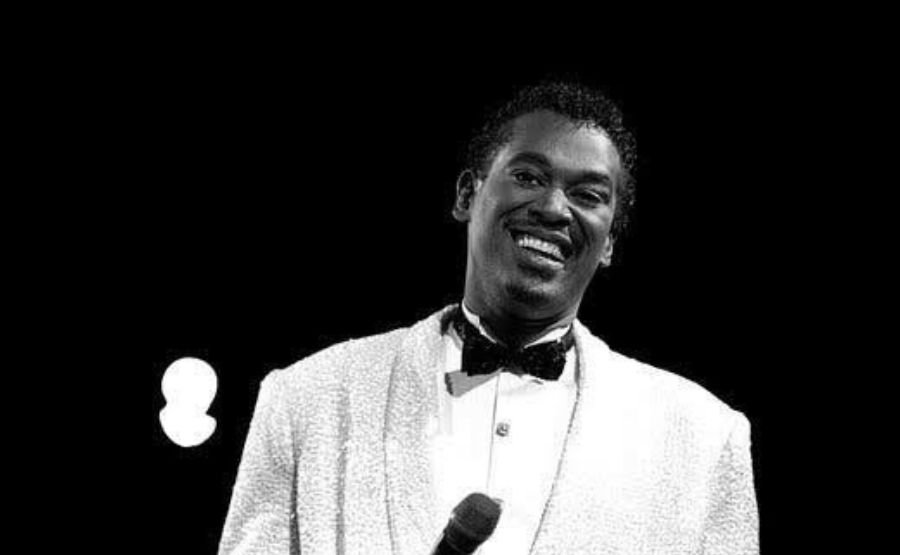
Luther Vandross spent the 1970s doing something remarkable and largely unrecognized at the time: he was the backing vocalist and jingle singer that the music industry ran on. He sang behind Bette Midler, Chic, Diana Ross, Bowie, Barbra Streisand. He wrote music for Broadway. He was everywhere — and nowhere, because none of those credits had his name on the marquee.
Charles was alive through all of that. He saw his little brother — the kid who had sat at the piano at age three — grinding through years of anonymous studio work, building a voice and a reputation that most of the public couldn’t yet hear properly. And he was part of the family infrastructure that surrounded that journey, even from a quiet distance.
When Luther finally broke through as a solo artist in 1981 with the album Never Too Much, Charles was thirty-four years old. He would have been old enough to feel the full weight of what that moment meant — not just for Luther personally, but for the whole family. For their mother, who had held everything together. For the memory of their father, who had died before any of this.
Luther was a deeply private man in many ways, famously guarded about his personal life. That kind of privacy often runs in families. Charles had modeled it. He was the first Vandross child to build a life that the outside world simply couldn’t see.
The Vandross Curse: Diabetes and the Family’s Losses
There is a painful thread running through the Vandross family story, and Charles is part of it. Diabetes — the disease that took Luther Sr. in 1959 when Charles was twelve — followed this family across generations. Charles himself is reported to have died of complications connected to diabetes in 1991. He was forty-four. Their father had been relatively young too when it took him.
Luther Vandross also struggled with the disease throughout his career, alongside the well-documented battles with his weight that swung dramatically over the years. The diabetes that ran through his family was almost certainly part of why he fought those weight fluctuations so hard, and why the fluctuations themselves carried such medical risk.
Charles died in April 1991. By that time, Luther had already achieved ten years of true fame, with eight consecutive platinum albums, a dominant presence on the R&B chart during the 1980s, and a reputation as one of the greatest romantic voices of his time. Charles got to see most of that. He got to see his little brother become exactly the kind of artist the whole family had always, in their bones, believed was possible.
He didn’t get to see the 2003 album Dancing With My Father, the Grammy-winning tribute that Luther made to their dad — a record built from the same childhood memories that both of them had carried. That one, Charles missed. It would have meant something to him.
The Financial Picture: What We Can Honestly Say
There is no public record of Charles Anthony Vandross’s financial situation, and speculating about a private individual’s net worth without evidence would be making things up. So let’s just be straight about what we can actually say.
Charles lived a working-class to middle-class life in New York City — the kind of life the Vandross family had always lived. His mother was a nurse. His dad had been an expert craftsman. The family was not wealthy, but they were not destitute. They worked. They managed. They built stability through effort, not inheritance.
Whether Charles ever benefited financially from his brother’s success is unknown. Luther Vandross himself was wealthy by the late 1980s — his album sales and touring generated enormous income — but what, if anything, flowed through family channels isn’t documented. Luther was famously protective of his private world, and Charles was famously invisible within it.
What we can say is that Charles Anthony Vandross died in New York City, where he had spent his entire life. He left behind a daughter. He left behind his mother and his surviving sisters. The money picture, like everything else about Charles, remains his own.
The World After Charles
The Vandross family began to shrink after Charles passed away in April 1991. Luther, already managing his weight struggles and the relentless demands of an active music career, kept working. He released album after album through the 1990s. He frequently reached the top of the R&B charts.
Then in April 2003, Luther suffered a massive stroke. He was fifty-two. The stroke left him severely impaired — unable to speak or walk properly, unable to perform. His mother, Mary Ida, the woman who had kept the family together since 1959, the woman who had attended events and accepted honors on his behalf after the stroke, died in 2008 at age eighty-five. She was the last living member of the Vandross family. By then Luther had already died — July 1, 2005, of a heart attack at a New Jersey medical center.
The whole immediate family — Luther Sr., Charles, Patricia, Ann, Luther Jr., and eventually Mary Ida — is gone now. It’s Seveda Williams, Luther’s niece (his sister Ann’s daughter), who has carried the public legacy forward, working to preserve his catalog and memory.
Among the siblings, Charles was the first to leave. That’s the thing about dying at forty-four. You don’t know yet what the end of the story will look like.
Final Words
Charles Anthony Vandross spent forty-four years being himself in a city that never quite noticed him. And that’s okay. Most lives look like that. The vast majority of people who mattered to someone — who held a family steady after a death, who showed a younger sibling what it looked like to be quiet and grounded in a chaotic world, who raised a daughter, who got up in the morning — don’t have Wikipedia pages or magazine profiles.
What Charles represents is something that gets too little attention in the way we tell celebrity stories: the ecosystem of people that surrounds great talent. Luther Vandross didn’t come from nowhere. He came from a family. A specific, complicated, grieving, musical, resilient family. Charles was one of the people who built that family, who shaped that environment, who made that particular version of Luther Vandross possible.
His life was a real one. Forty-four years. New York City. A sister, a sister, a brother who became famous. A daughter. A mother who survived to witness everything, and a father who passed away too soon. That’s not a footnote. That’s a human being.
And if remembering him requires knowing first who his brother was — well, that’s all right too. Sometimes the light falls on someone nearby, and you have to look carefully at the shadows to see who else was standing there.
See also “Heaven Richardson: The Small-Town Sprinter Making Every Stride Count“
FAQs
1. Who was Charles Anthony Vandross?
He was the older brother of R&B icon Luther Vandross and the oldest son in the Vandross family. Charles was not a public figure or entertainer. He lived privately in New York City throughout his life.
2. When was Charles Anthony Vandross born?
Manhattan, New York City, February 7, 1947.
3. When did Charles Anthony Vandross die?
April 30, 1991, in New York City. At the time of his passing, he was forty-four.
4. What did Charles Anthony Vandross die from?
Some sources attribute his death to complications from diabetes, the same disease that killed his father in 1959 and that plagued his younger brother Luther throughout his life. The remark regarding the cause of the family.
5. Was Charles Anthony Vandross a musician?
Not professionally. He grew up in an extremely musical household — his father sang, his mother was musically engaged, his sisters performed in vocal groups, and his younger brother became one of the great voices in American music. Charles, however, chose not to pursue a career in public music.
6. Charles Anthony Vandross had how many siblings?
Three: younger brother Luther Ronzoni Vandross Jr., and sisters Patricia Marie Vandross and Ann D. Vandross Sanders.
7. Did Charles Anthony Vandross have children?
Yes. Genealogical records reference at least one daughter, named Tonia Lazz Vandross. Very little else about his family life is publicly documented.
8. What was Charles and Luther Vandross’s age difference?
About four years. Luther was born in 1951, and Charles in 1947. That gap was enough to mean Charles was a teenager when Luther was still in early childhood, which shaped the older-sibling dynamic considerably.
9. Did Charles Anthony Vandross see the rise to fame of his brother Luther?
Yes, for most of it. Luther broke through as a solo artist in 1981, when Charles was thirty-four. Charles died in 1991, after a decade of Luther’s peak commercial success — eight consecutive platinum albums and consistent chart dominance. He did not live to see Dancing With My Father (2003) or Luther’s stroke the same year.
10. What is Charles Anthony Vandross’s net worth?
Not publicly known. He was a private individual, and no financial information about him has ever been documented or released.
11. Why do people search for Charles Anthony Vandross?
Mainly because they’re researching Luther Vandross and encounter the name. Some sources confuse “Charles Anthony Vandross” with Luther’s father, Luther Vandross Sr. — Charles was not Luther’s father. He was his brother.
12. Does Charles Anthony Vandross have a memorial or tribute?
Nothing public. Luther Vandross did establish a scholarship fund in his own and his mother Mary Ida’s honor — the Luther and Mary Ida Vandross Fund — but Charles isn’t specifically named in public documentation of it. His legacy lives primarily in the private memory of the family and what can be pieced together through genealogy records.
Discover people, ideas, and stories that matter with CelebsBeacon.




One Comment