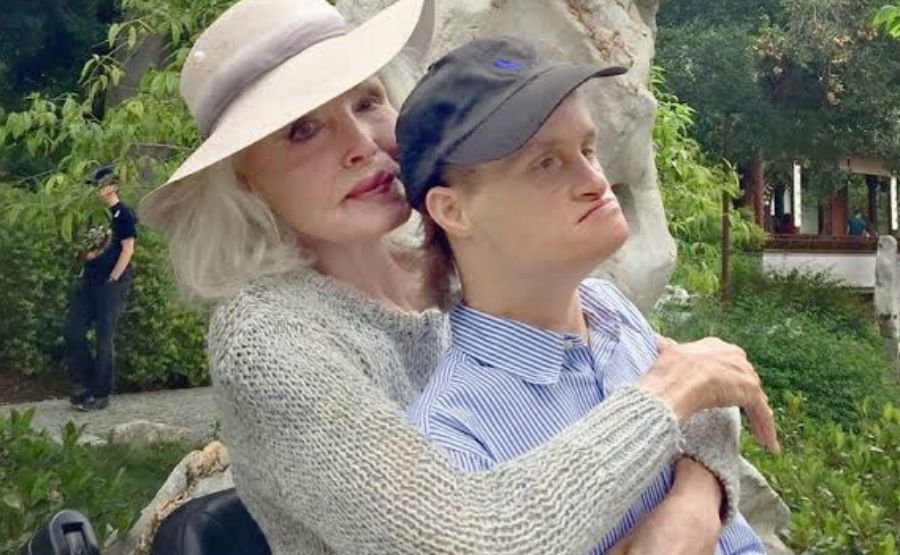
John Jewl Smith: The Untold Story of Julie Newmar’s Son and Their Extraordinary Bond
Quick Bio
| Detail | Info |
| Full Name | John Jewl Smith |
| Date of Birth | February 25, 1981 |
| Birthplace | Los Angeles, California, USA |
| Nationality | American |
| Known For | Son of actress Julie Newmar; visual artist |
| Health Profile | Born with Down syndrome; lost hearing to meningitis at age 3; non-verbal; uses a wheelchair |
| Mother | Julie Newmar (actress, dancer, singer; original TV Catwoman) |
| Father | J. Holt Smith (attorney) |
| Parents’ Marriage | 1977–1984 |
| Siblings | Elizabeth Whaley Smith (half-sibling) |
| Current Residence | Brentwood, Los Angeles, with his mother |
A Story That Quietly Changes the Way You Think About Love
Some people arrive in this world and reshape it in ways they never intended. They don’t write books or give speeches or win awards that get framed and hung on walls. They just exist — and somehow, their existence does something remarkable to the people around them.
John Jewl Smith is one of those people.
He’s 44 years old now, living quietly in a sun-warmed house in Brentwood, California, largely out of the public eye. He can’t hear you. He doesn’t speak. He gets around in a wheelchair. And yet his mother — a woman who was one of the most famous faces on American television, a woman who wore a Catwoman suit that is literally now in the Smithsonian — says without hesitation that John is the reason her life is great.
That’s not a throwaway line. That’s the real headline.
See also “Eduardo Tamayo: The Quiet Man Behind a Very Public Love Story“
Where He Came From
John’s parents got together when Hollywood fame and real life were trying to find a way to coexist. His mother, Julie Newmar, had already burned bright and fast through the entertainment world — a Tony Award on Broadway, a face known across America from her role as Catwoman on the 1960s Batman series, a body so distinctively graceful that people genuinely struggled to find words for it.
However, Julie was searching for something more subdued by the middle of the 1970s. Something with more staying power than camera flashes. So in 1977, she married J. Holt Smith, a Fort Worth-based attorney, and tried on a version of domestic life that felt more grounded.
The road to John wasn’t straightforward. Julie suffered three miscarriages over the years — three painful losses that came before John arrived. By the time she carried him to term, she was 48 years old. An age where most people who wanted children had long since stopped expecting them. She later described him, with real warmth in her voice, as her last-minute baby.
He was born in Los Angeles on February 25, 1981. And right from the start, the path ahead was going to look different from what most parents imagine.
The Formative Years and Their Contributions
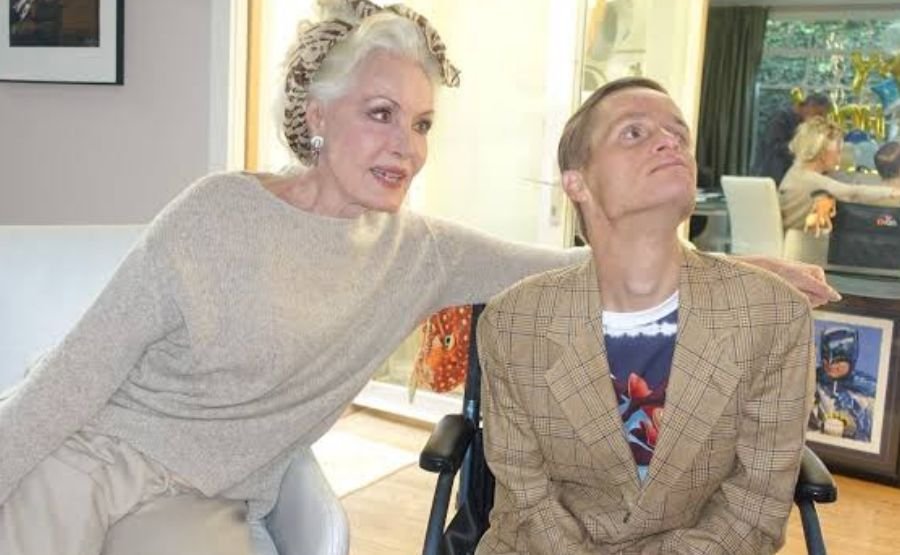
John was born with Down syndrome — a chromosomal condition that affects the way the body and brain develop. It’s more common than many people realize, but that doesn’t make the first moments of that news any easier for a new parent to absorb.
By all accounts, Julie didn’t flinch. She chose a different frame entirely. She has said in interviews that she never saw her son as someone with an affliction. She saw a child. Her child.
But just as the family was settling into their rhythm, another challenge arrived. When John was around three years old, he contracted meningitis — a dangerous infection that attacks the membranes surrounding the brain. It left him without hearing. He also lost his capacity to talk in the years that followed.
So the little boy who had already navigated the world of Down syndrome now had to find new ways to communicate, to understand his surroundings, and to connect with people. The world he inhabited became one built more on what he could see and feel and sense than on what he could hear or say.
All of this ended his parents’ marriage. When John was three years old, Julie and J. Holt Smith got divorced in 1984. It has been reported that Smith struggled with the weight of raising a son with significant disabilities. Whatever the full truth of that, the result was that Julie became John’s primary caregiver — and remained so, fully, for the next four decades.
Growing Up Beside an Extraordinary Woman
Not everyone gets to grow up with a parent who is genuinely one-of-a-kind. John Jewl Smith did.
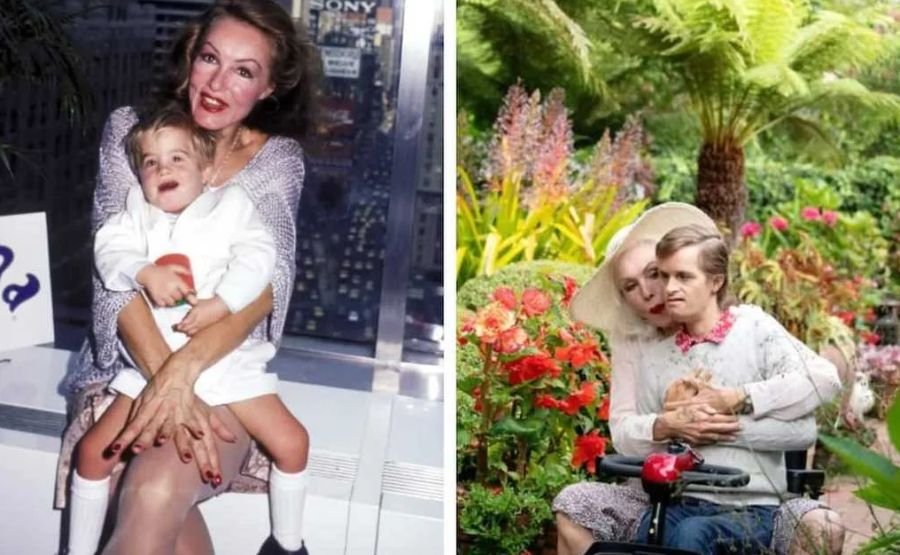
After the divorce, Julie moved back to California, settled into a home in Brentwood, and rebuilt. She went back to school at UCLA in her early fifties, kept a hand in entertainment, and devoted an enormous portion of her daily life to her son. The house in Brentwood became their world — a place Julie spent decades shaping and perfecting, with gardens that she tended with real care.
John grew up surrounded by that garden. By color and texture and growing things. And somewhere along the way, he discovered that he had a gift for making art.
That’s not a small thing. For someone who can’t speak, who can’t hear, for whom so many conventional channels of expression are simply unavailable, finding art must have felt like finding a door that was actually meant for him. Visual things were always particularly vivid for John — his mother noted that he delights in what he can see in a way that most of us probably take for granted.
His work eventually earned him a real showing at the Washington Reid Gallery in Culver City, California. Not a courtesy exhibit. An actual gallery showing his artwork, the kind of thing that gets framed and bought and hung on strangers’ walls.
The Life He Lives Now
John is in his mid-forties now, and his daily life looks nothing like what people typically picture when they picture a life worth living — which is precisely the point.
He lives full-time with his mother in Brentwood. The household has long-term helpers who handle cooking and transportation and daily care — people who have become a kind of extended family over the years. John goes to art classes. He explores the garden. On good days, he and Julie have been spotted riding through their grounds together on an electric scooter, he settled on her lap, the two of them moving through the greenery like they haven’t got a care in the world.
In his younger years, the two of them traveled widely. When Julie was in her sixties and still full of the energy that has always seemed to radiate off her, they made trips to Southeast Asia together — Bali among the places they visited. Whatever the world might assume about what a mother-and-son duo with their particular set of circumstances can or can’t do, those trips seem to say otherwise.
The Impact He’s Had on His Mother
Here’s the part that’s genuinely hard to understand until you hear Julie talk about it.
This woman won a Tony Award. She was a celebrated sex symbol. She played one of the most iconic television villains of the twentieth century in a costume that’s now in a national museum. She invented her own line of pantyhose. She was, by every conventional Hollywood measure, extraordinary.
And she says John made her better.
Not just as a mother. As a human being.
She has described him as the cause of the great expansion of her outlook. She credits him with teaching her what unconditional love actually looks like when it’s stripped of all performance and expectation. She has said she never felt like she had an afflicted child — she felt like she had been given something rare. A teacher who never once stood at a chalkboard.
That shift in perspective is no small thing. Plenty of people talk about unconditional love. Julie Newmar actually lived the version of it that asks something of you every single day.
The Financial Picture
John Jewl Smith has no personal income or public professional career. He is not employed and has never been in a position to earn independently. His life is supported entirely by his mother.
Julie Newmar’s net worth, accumulated over decades of acting, Broadway work, television appearances, and her entrepreneurial ventures — including her Nudemar pantyhose line and various real estate holdings — is estimated to be somewhere in the range of several million dollars, with most figures clustering around the $4–6 million mark, though exact numbers vary by source.
The Brentwood property itself carries considerable value given its Los Angeles location. Julie has invested decades in that home. It’s not just a residence — it’s the foundation of the life she built around her son.
John’s day-to-day care is covered through that financial base, along with the household staff who keep things running. It’s a private arrangement, and neither Julie nor anyone close to them has shared detailed numbers publicly. What’s clear is that John is cared for well, and that Julie has prioritized that above most other things.
Challenges and Hard Seasons
Telling this story without any shadows would be too simple.
The truth is that raising a child with Down syndrome is demanding. Raising a child who then loses hearing and speech before they turn four — while also navigating a divorce, a career in transition, and the particular loneliness that sometimes comes with being a primary caregiver — takes a toll.
Julie has never painted their life as simple. She has been honest about the weight of it, even while insisting that the weight is worth carrying. She stepped back from significant stretches of her career to be present for John. She chose proximity over professional momentum, repeatedly, over many years.
There was also the matter of J. Holt Smith’s exit from their lives. The reported circumstances of the divorce — that he struggled to accept raising a disabled child — left John to grow up without a father in any meaningful sense. That’s a particular kind of absence. Whatever John’s internal experience of it has been, it’s something his mother was left to navigate with him.
And Julie herself has dealt with her own health challenges in later years, including living with Charcot-Marie-Tooth disease, a neurological condition affecting the nerves. She has kept caring for John through that too.
Where Things Stand Today
As of late 2026, John Jewl Smith is 45 years old. He continues to live in Brentwood with his mother, who is now in her nineties and showing the kind of vitality that makes people genuinely wonder what she knows that the rest of us don’t.
The two of them appear in each other’s world in the way that long-time companions do — gardening, reading in shared spaces, moving through the rhythms of a day together. Staff help manage what needs managing. John continues to make art. He continues to be, by his mother’s consistent account, the best part of her life.
His sister Elizabeth Whaley Smith exists in the record as a relative, though details of their relationship are not publicly available.
There’s no dramatic update to report. No new gallery show confirmed, no public appearance being planned. Just a man living a private life alongside a mother who made a choice, a long time ago, to be exactly where he needed her to be.
Final Words
There’s a version of this story that treats John Jewl Smith as a footnote — the celebrity child, the medical curiosity, the sad backstory that makes his famous mother more interesting.
That version is wrong.
John’s life is not a footnote to Julie Newmar’s story. In her own telling, Julie’s life is a footnote to his. He reshaped her. He reorganized her priorities. He put her in contact with a depth of care that Hollywood, for all its glamour, simply couldn’t have provided.
He also, without intending to, put a human face on Down syndrome and disability in a way that had reach. Every interview Julie gave — every time she said “he’s wonderful,” every time she pushed back against the idea that her son was suffering, every time she showed up somewhere with him or talked about their garden — she quietly expanded what the public understood about what a disabled life looks and feels like from the inside.
John Jewl Smith never asked for any of that. He just showed up, the way he always has, and let the ripples spread on their own.
FAQs
1. Who is John Jewl Smith?
He’s the only child of actress Julie Newmar and her former husband, lawyer J. Holt Smith. He was born in Los Angeles in 1981 and currently resides in Brentwood, California, with his mother.
2. What health conditions does John have?
He was born with Down syndrome. At age three, a bout of meningitis left him deaf. In the years that followed, he also became non-verbal. He uses a wheelchair to get around.
3. Who raised John after his parents divorced?
His mother, Julie Newmar, raised him essentially alone after she and J. Holt Smith separated in 1984. She has been his primary caregiver ever since.
4. Does John have any siblings?
He has a sibling named Elizabeth Whaley Smith. Very little public information is available about their relationship.
5. Is John Jewl Smith an artist?
Yes. He makes visual art, and his work has been exhibited at the Washington Reid Gallery in Culver City, California. His mother has spoken warmly about his talent.
6. Did John and Julie travel together?
Yes. They traveled extensively, particularly to Southeast Asia — including Bali — during Julie’s sixties. Travel was a meaningful part of their life together.
7. Does John have any professional career or income?
No. He has no publicly documented professional career and no independent income. His care and daily life are supported by his mother’s financial resources.
8. What is John’s estimated net worth?
John has no personal net worth. His mother Julie Newmar’s net worth is estimated at around $4–6 million. The household they share in Brentwood is a significant asset.
9. How has John affected Julie Newmar’s life?
Profoundly. She credits him with teaching her unconditional love and says he is the reason her life is great. She has described raising him as one of the defining experiences of her existence.
10. Is John Jewl Smith still alive in 2026?
There is no public information indicating otherwise. He would be 45 years old as of February 2026.
11. Why doesn’t John appear much in public?
His disabilities — deafness, being non-verbal, and using a wheelchair — mean that most of his life happens in the private world he shares with his mother and their household. Neither he nor Julie has chosen to pursue a public profile for him.
12. What does his daily life look like now?
He lives at home with his mother and household helpers in Brentwood. He attends art classes. He spends time in their beloved garden. He and Julie share a close, daily bond that has, by all accounts, been the constant thread of both their lives.
Discover people, ideas, and stories that matter with CelebsBeacon.





One Comment