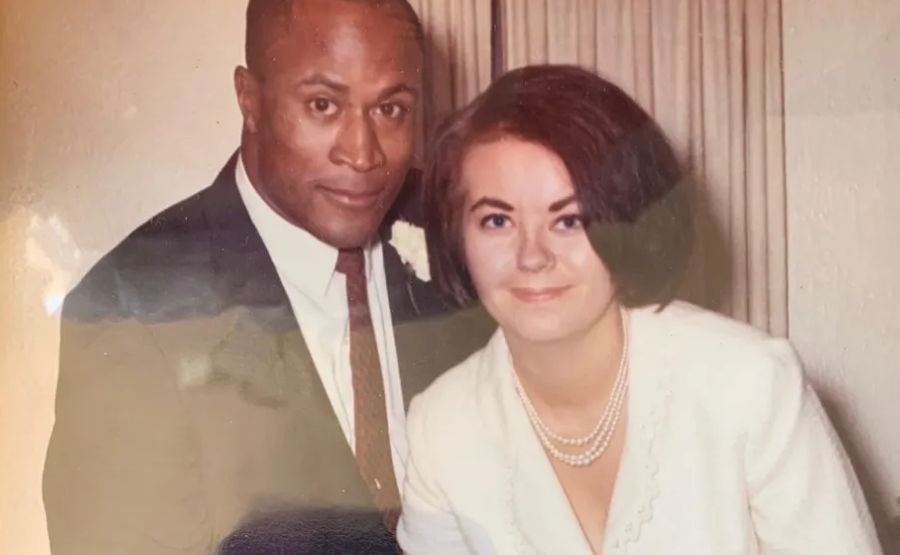
Noel J. Mickelson: The Artist and Equestrian Who Chose Love Before It Was Legal
Quick Bio
| Info | Detail |
| Full Name | Noel Jean Mickelson |
| Date of Birth | August 22, 1943 |
| Place of Birth | Jackson County, Minnesota, USA |
| Date of Death | December 2016 |
| Nationality | American |
| Profession | Artist, Craftswoman, Equestrian |
| Heritage | Danish and Ashkenazi Jewish descent |
| Education | Colorado State University — Fine Arts |
| Spouse | John Amos (married December 27, 1965; divorced 1975) |
| Children | Kelly Christopher “K.C.” Amos (born 1970) and Shannon Amos (born 1966/1967) |
| Known For | Interracial marriage to actor John Amos two years before Loving v. Virginia; artistic work; world-ranked equestrian endurance riding |
A Quiet Woman Who Did a Quietly Enormous Thing
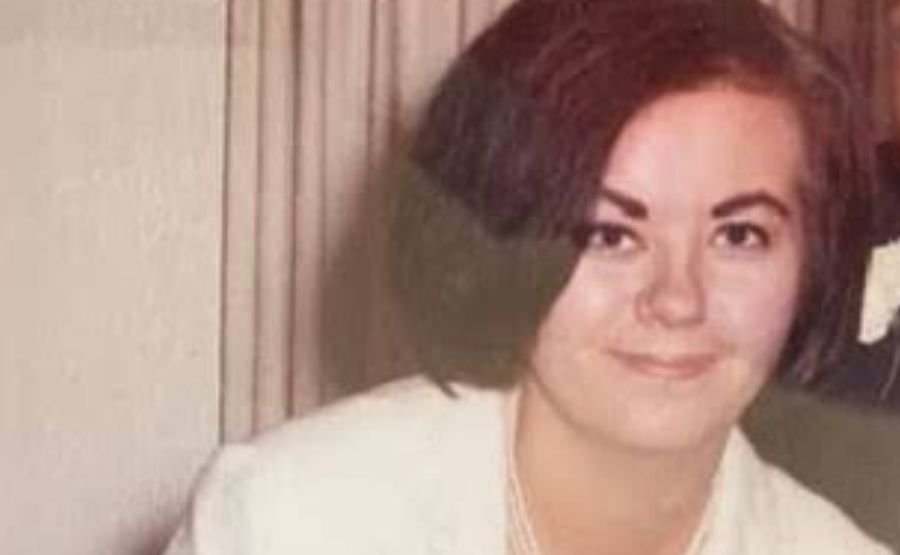
Here’s the thing about Noel J. Mickelson: she never tried to be famous. Not once. She wasn’t chasing a spotlight, building a brand, or positioning herself for anything beyond the life she was actually living — making art, riding horses, raising her kids, doing the creative work that gave her genuine satisfaction. And yet her life intersects with American history in a way that deserves to be understood on its own terms, not just as a footnote to someone else’s story.
In 1965, Noel Jean Mickelson — a white woman of Danish and Jewish descent, raised in the rural Midwest — married a Black man named John Amos at a time when sixteen American states still had laws on the books making exactly that kind of marriage illegal. Two years later, the Supreme Court of the United States finally ruled in Loving v. Virginia that those laws were unconstitutional. Noel and John didn’t wait for the law to catch up with them. They just got married.
That choice — made in a college chapel in Colorado, with their families opposed and their country divided — was one of the most personal and most political acts a person could make in 1965. And Noel made it without fanfare, without a press conference, without turning it into anything more than what it was: two people who loved each other deciding to be together regardless of what the world had to say about it.
Her story matters because ordinary people doing brave things in ordinary moments is how history actually gets made. Not always in courtrooms or in front of cameras. Sometimes in a chapel in Fort Collins, Colorado, on a December afternoon, with exactly the people who showed up to witness it.
See also “Roman Walker Zelman: Growing Up Between Two Worlds“
Minnesota Roots: A Midwestern Childhood That Planted Deep Seeds
Noel Jean Mickelson entered the world on August 22, 1943, in Jackson County, Minnesota — a rural county in the southwestern corner of the state where the landscape runs flat toward the Iowa border and the pace of life is measured in seasons and harvests rather than news cycles.
Her parents were Wilbur B. Mickelson and Dorothy J. Tims Mickelson. The household she grew up in was modest and rooted, the kind of Midwestern family that values practicality and work without making a show of either. One subtly humorous historical detail in the public record is that Noel was reported as male in the 1950 census, which was taken when she was six years old. This clerical error speaks more about the presumptions of the mid-century census procedure than it does about Noel.
From early childhood, she gravitated toward two things that would stay with her for the rest of her life: making things and animals. The rural Minnesota landscape gave her room to roam and the constant presence of nature and working animals. The artistic impulse showed up early too — she was drawn to visual creation, to the satisfaction of making something with her hands that had shape and form and meaning.
Her heritage was a particular mix. Her daughter Shannon later described her background as Danish and Ashkenazi Jewish — two distinct European traditions with their own histories and values, both of which contributed to the person Noel became. Growing up in that heritage, in a rural Minnesota county in the postwar era, was its own complicated navigation.
At some point in her younger years, sources suggest her family had a connection to Estherville, Iowa, a small city just across the Minnesota border — one of those border-town moves that happened frequently in agricultural families following work, opportunity, or family connections. Whether she grew up primarily in Minnesota or straddled both states in her early years, the broad character of her childhood was shaped by the same qualities: flat land, hard winters, quiet community, and the self-reliance that comes from all of it.
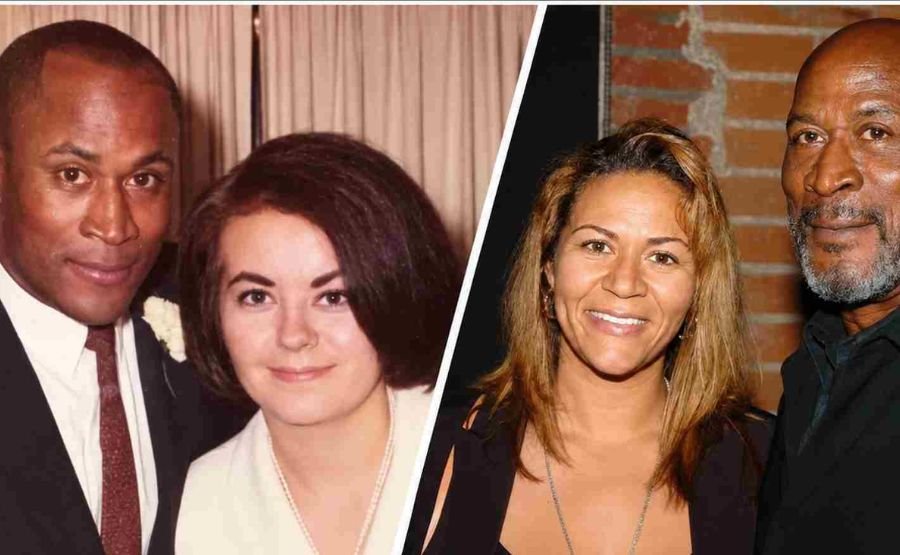
The Education That Transformed Everything at Colorado State University
Noel sought a degree in fine arts at Colorado State University in Fort Collins, Colorado, after completing her education. For a young woman from the rural Midwest who was passionate about both creative work and the natural environment, Colorado State was an obvious choice because it was and is a university with excellent programs in the sciences, agriculture, and the arts.
She studied with the seriousness of someone who had already decided what mattered to her. Fine arts wasn’t a default choice or a fallback. It was the specific thing she wanted to pursue — painting, craft, the full range of visual and material expression that would form the backbone of her creative output for the rest of her life.
Fort Collins in the early 1960s was a college town with a particular energy — it was an era of enormous social change happening fast, of ideas about civil rights and equality moving from the margins toward the center of American public life. Being a college student anywhere in America in the early 1960s meant being surrounded by the growing urgency of those conversations, whether you sought them out or not.
At Colorado State, Noel met John Amos. He was working his way through school too, in the same environment of creative ambition and limited resources that defines a lot of college experiences. He was studying for what would become an eventual pivot toward a football career and then, much later, the acting career that made him famous. But in the early 1960s at Colorado State, he was just a young man, and she was just a young woman, and they recognized something in each other.
They fell in love. In a different decade, in a different America, that would simply be the beginning of a love story. In the early 1960s, it was also the beginning of something considerably more complicated and considerably more dangerous.
December 27, 1965: The Marriage Nobody Could Tell Them Not to Have
By the time Noel and John decided to get married, the legal landscape of interracial marriage in the United States was still a patchwork of discrimination. Sixteen states — primarily but not exclusively in the South — had anti-miscegenation laws that made their marriage not just frowned upon but technically criminal within those borders.
Colorado was not among those sixteen states. They could legally marry in Fort Collins. And on December 27, 1965, in the chapel at Colorado State University, that’s exactly what they did.
Their families were reportedly not in support of the marriage. It’s not something to take lightly. Two sets of parents, from different racial and cultural backgrounds, both apparently struggling to give their blessing to a union that their children had decided to make regardless. Whatever conversations happened, whatever arguments or silences or painful exchanges preceded that December ceremony, Noel and John walked in and came out married.
Two years later, on June 12, 1967, the United States Supreme Court handed down its unanimous decision in Loving v. Virginia, ruling that laws prohibiting interracial marriage were unconstitutional violations of both the Due Process and Equal Protection clauses of the Fourteenth Amendment. The country’s law finally caught up with what Noel and John had already done. They had been ahead of it — not by marching or litigating, but by simply living.
Shannon Amos, their daughter, has spoken about her parents’ marriage with an awareness of its historical weight that she clearly inherited from both of them. She has called it brave. She’s right.
Life as an Artist: Making Things That Lasted
Throughout her marriage and long after it ended, Noel pursued her creative work with a consistency that comes from genuine vocation rather than ambition.
She was a painter, working in a visual language shaped by her connection to the natural world, to emotion, to the interior landscapes that good art opens up. Her daughter Shannon has described being raised in a household where creativity was simply the air they breathed — where making things was normal, expected, encouraged, and modeled daily by their mother.
Noel was also a carpenter and craftswoman. Not just someone who could pick up a tool and manage a basic home repair — a genuine craftsperson who built things. Furniture, structures, objects with function and form. The physical transformation of raw material into something beautiful and practical, the durability of a well-crafted joint, and the way a finished piece retains the marks of the hands that made it are all aspects of carpentry that painters and drawers may not often experience. Noel wanted that type of fulfillment.
She was a world-ranked equestrian endurance rider — which is a discipline that gets less mainstream attention than show jumping or dressage but demands extraordinary athleticism, knowledge of horses, and mental endurance from both rider and animal. Endurance riding involves covering very long distances — sometimes 50, sometimes 100 miles — across varied terrain, with horse welfare and completion rate as central measures of success. Being ranked at a world level in that discipline means years of dedicated training, competition, and a relationship with horses that goes far beyond casual enjoyment.
Horses had been part of her world since childhood. They remained central to her life through the marriage, through the divorce, through all the quiet decades that followed.
Shannon and K.C.: The Children Who Carried Her Forward
Noel and John Amos had two children together. Their daughter Shannon was born in 1966 or 1967 — sources vary slightly on the exact year — and their son Kelly Christopher, known universally as K.C., arrived in 1970.
Shannon Amos grew up to become a writer, producer, and filmmaker — creative industries that clearly reflect the household she was raised in. She has spoken publicly about her parents with a grounded affection, acknowledging the complexity of being a biracial child in America while also honoring what her parents gave her: creativity, resilience, and the example of two people who chose each other when choosing was costly.
K.C. Amos has maintained a considerably more private life than his father or sister, which once again tracks with the family’s general orientation toward privacy and quiet.
Noel was a grandmother through Shannon’s children — a detail that carries its own warmth, the circle of family expanding outward through the generations she helped create.
The Divorce and the Life She Built After
In August 1975, after a decade of marriage, Noel and John Amos divorced. John’s career was accelerating fast in those years — Good Times had launched in 1974, and Roots was coming in 1977. The pressures of a rising entertainment career, combined with whatever internal strains had been accumulating, brought the marriage to an end.
Noel never discussed the dissolution of her marriage in public, and the reasons behind any divorce are more nuanced than any public record can convey. What’s clear from the shape of her post-divorce life is that she did not define herself by the dissolution. She did not chase the story. She did not use the connection to a now-famous man as currency.
She raised her children. She made her art. She rode her horses. She lived quietly and deliberately in the way that suits people who know who they are and don’t need anyone else to confirm it.
John Amos went on to two more marriages. He died in August 2024, at the age of eighty-four. Noel had been gone for eight years at that point.
Financial Picture: Private Resources, Modest Estimation
Noel J. Mickelson’s financial life was entirely private. She did not make public disclosures, did not have a celebrity income stream, and the sources that attempt to estimate a net worth essentially admit they’re guessing. The figures cited range broadly — some suggest she had accumulated modest savings and assets from her artistic work and equestrian career, and she may have received some financial settlement from the divorce. Beyond that, any number would be speculation dressed as research.
It’s evident that she led a humble life, both voluntarily and due to circumstances, and that her relationships with her children, animals, and creative endeavors always took precedence over her worldly possessions.
December 2016: A Quiet Exit and a Final Wish
Noel J. Mickelson died in December 2016. She was seventy-three years old.
The details of her final years and the circumstances of her death are not part of the public record — in keeping with a life lived almost entirely outside the spotlight. What is documented is a request she made: that her ashes be scattered in a specific place that mattered to her. Her daughter Shannon honored that wish after her death.
That final request — specific, personal, rooted in a sense of place — feels entirely consistent with the woman the public record reveals. Someone who knew what mattered to her, asked for it plainly, and trusted the people she loved to follow through.
Final Words
Noel J. Mickelson’s life is one of those stories that keeps revealing new layers the closer you look. At the surface it’s the story of a quiet Midwestern woman who married an actor and then faded from view. But underneath that surface is something richer and more interesting: a woman who acted with genuine moral courage in a specific American moment, who built a creative life on her own terms for decades, who raised two children who carry her values forward, and who left the world without demanding that anyone make a fuss about any of it.
The 1965 marriage was courageous. The art and the horses and the craft were real. Motherhood was the foundation everything else rested on. And the choice to live privately, to be a person rather than a public figure, was as deliberate and dignified as anything else she did.
She chose love before it was legal. She made beautiful things. She raised good people. That’s life.
See also “Ramzi Habibi: The Wall Street Executive Who Chose the Quiet Life — and Built Something Real“
FAQs
1. Who was Noel J. Mickelson?
She was an American artist, craftswoman, and world-ranked equestrian endurance rider, best known as the first wife of actor John Amos. Born in Jackson County, Minnesota in 1943, she died in December 2016.
2. Why is her 1965 marriage historically significant?
When Noel and John Amos married on December 27, 1965, interracial marriage was still illegal in sixteen American states. Their marriage predated the Supreme Court’s landmark Loving v. Virginia ruling by two years — the 1967 decision that finally struck down all anti-miscegenation laws nationwide.
3. Where did Noel and John Amos meet?
Noel was a fine arts student at Colorado State University in Fort Collins, Colorado, where they first met.
4. What was Noel’s heritage?
Her daughter Shannon has described her as being of Danish and Ashkenazi Jewish descent.
5. What artistic endeavors did she undertake?
She was a painter, carpenter, and craftswoman. She worked across multiple creative disciplines, building functional objects as well as producing paintings. Her creative output was described by her daughter as central to the household environment she created for her children.
6. What does “world-ranked equestrian endurance rider” mean?
Endurance riding is a competitive discipline involving long-distance races — often 50 to 100 miles — across varied terrain. Being ranked at a world level requires years of training, competition, and deep horsemanship. It’s physically and mentally demanding for both horse and rider.
7. How many children did she have?
Two: daughter Shannon Amos, born 1966 or 1967, who became a filmmaker and writer; and son Kelly Christopher “K.C.” Amos, born 1970.
8. Why did Noel and John Amos divorce?
Their divorce was finalized in August 1975 after a decade of marriage. Neither Noel nor John publicly discussed the reasons in detail. John’s career was rising rapidly at the time, which may have placed additional strain on the marriage.
9. Did Noel remain close with her children after the divorce?
By all available accounts, yes. Shannon in particular has spoken warmly about her mother, describing her as encouraging, creative, and resilient. After Noel passed away, Shannon scattered her ashes in accordance with her last request.
10. When did Noel J. Mickelson die?
She died in December 2016 at the age of seventy-three.
11. Did Noel ever remarry after John Amos?
A second marriage is not documented in the public domain. She maintained a very private life after the divorce and no subsequent relationship has been documented.
12. What was her final wish?
She asked that her ashes be scattered in a specific place that held personal meaning for her. Her daughter Shannon fulfilled that wish after her death.
Discover people, ideas, and stories that matter with CelebsBeacon.
One Comment