
Kendrick Lamar Net Worth: How Rap’s Pulitzer Winner Built His $200 Million Fortune
Quick Bio
| Detail | Info |
| Full Name | Kendrick Lamar Duckworth |
| Date of Birth | June 17, 1987 |
| Age (2026) | 39 years old |
| Birthplace | Compton, California, USA |
| Nationality | American |
| Profession | Rapper, songwriter, record producer, entrepreneur |
| Major Achievements | 22 Grammy Awards; Pulitzer Prize for Music (2018)—first non-classical, non-jazz artist to win; hosted the most-watched Super Bowl halftime show in history (Super Bowl LIX, 2025); and the Grand National Tour with SZA became the highest-grossing co-headlining tour of all time. |
| Partner | Whitney Alford (engaged; together since high school) |
| Children | Uzi and Enoch |
| Business Venture | Co-founder of pgLang creative company |
| Estimated Net Worth (2026) | Approximately $200 million |
Why Kendrick’s Story Is Bigger Than the Numbers
Most people who search “Kendrick Lamar net worth” are looking for a number. That’s fair. The number is impressive. But if you stop there, you miss everything that makes that number meaningful.
Here’s the actual story. A kid born in one of the most studied, mythologized, and statistically dangerous neighborhoods in America grew up to become the first rapper outside of classical and jazz to win a Pulitzer Prize for Music. He did it by refusing to simplify his city or himself for the sake of commercial convenience. He wrote albums that function more like novels than playlists. He turned a rap feud into five Grammy Awards and the most-watched Super Bowl halftime performance in television history. He built a production and creative company. He invested in real estate. He did all of it, remarkably, without losing the thread back to the block where he started.
Kendrick Lamar’s financial story is interesting. But it’s the how and why behind those dollars that makes it worth sitting down to talk about.
See also “Marilyn Manson Net Worth: How Much Is the Shock Rock Icon Really Worth Today?“
Compton Before the Fame: A Childhood on the Front Lines
Kendrick Lamar Duckworth arrived on June 17, 1987, in Compton, California — the same city that gave the world N.W.A., the same city that hip-hop has been romanticizing and grieving over for four decades. His parents, Kenneth “Kenny” Duckworth and Paula Oliver, had come west from Chicago before he was born. They weren’t running toward opportunity in any simple sense. They were running away from the violence and circumstances of Chicago’s South Side, hoping California offered something safer.
It offered Compton.
To understand what that means, you have to understand what Compton was in the late 1980s and early 1990s. The crack pandemic was already in full swing. Gang culture structured daily life in ways that most Americans only understood through evening news coverage or rap records. Drive-by shootings were not abstract statistics. They happened on actual streets, on actual Tuesday afternoons, in front of actual children. The Duckworth family lived in Section 8 housing. At different points they experienced homelessness. These are facts from Kendrick’s own accounts, not dramatic embellishment.
When Kendrick was eight years old, Dr. Dre and Tupac Shakur were filming a music video in his neighborhood. He stood and watched. That image — a child watching two of hip-hop’s legends perform on his actual street — has become one of the founding mythologies of who he became. Whether it’s apocryphal or not doesn’t matter much. What matters is that he grew up in a place where those men were not distant celebrities but neighborhood ancestors. The music wasn’t aspirational from a distance. It was local, immediate, and completely real.
His father was connected to the streets in ways that complicated the household. Kenny Duckworth was not innocent, by his son’s own account in his music. But he was present. He showed up. And that counted for something in an environment where a lot of fathers didn’t.
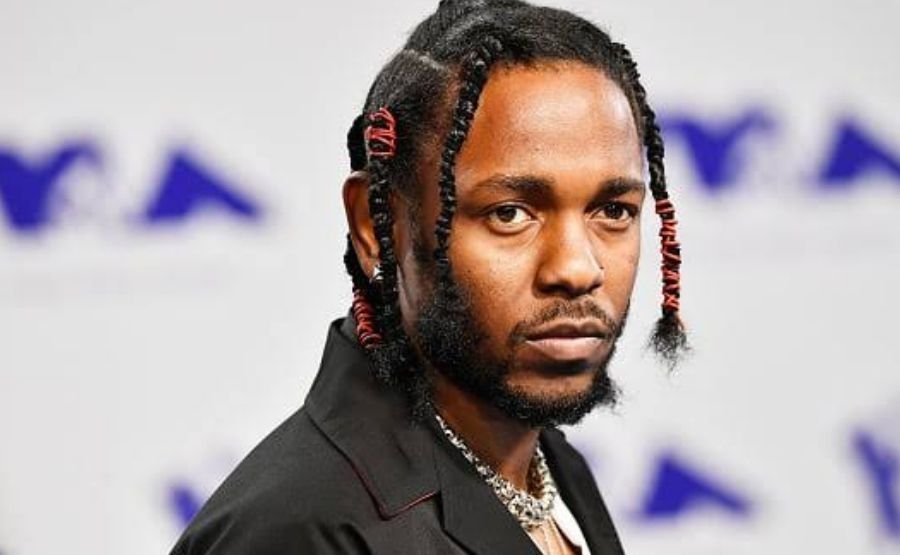
School, Street Education, and the Name K.Dot
Kendrick attended McNair Elementary in the Compton Unified School District and eventually enrolled at Centennial High School, the same school where he would meet Whitney Alford — the woman he would eventually propose to and spend his entire adult life alongside.
He was a genuinely good student. Not a kid who was written off academically and found redemption in music. He did both. He absorbed books. He paid attention in class. He also started writing rhymes around age twelve, which is where the parallel education began.
The name he went by early on was K.Dot. That’s the version of Kendrick Lamar who released mixtapes before he was old enough to vote — scrappy, hungry, already technically sharp in ways that made industry people look twice. He was absorbing Tupac in the way other kids absorb athletes or movie stars. Not just the music but the philosophical weight of it — the way Tupac wrestled with morality, community, violence, and beauty inside the same verse.
That dual education — formal schooling on one side, street knowledge and hip-hop apprenticeship on the other — produced something rare. A rapper who could write academically rigorous lyrics and still have them land on the corner.
The Climb: Mixtapes, Top Dawg, and Dr. Dre’s Attention
The early career chapter is the grind chapter. Kendrick released mixtapes through the mid-2000s under the K.Dot name and later under his birth name, building a local reputation that stretched into national conversations in music circles. There were odd jobs along the way — he worked security at some point, the kind of job that keeps the lights on while the bigger plan slowly assembles itself.
Top Dawg Entertainment was where everything changed. TDE, run by Anthony “Top Dawg” Tiffith, was a Compton-based label that understood exactly what Kendrick was — not just a talented rapper but a generational one. TDE became his creative home and remains so today, alongside Aftermath (Dr. Dre’s label) and Interscope, which came later.
The 2011 mixtape Overly Dedicated was the first thing that made industry executives nationally stop scrolling and actually listen. But it was Section.80 that same year — his first proper studio release under TDE — that confirmed this was not a flash. It was a sustained intelligence. The album dealt with crack cocaine’s impact on the generation born in the 1980s, with American politics, with faith and doubt and community. This wasn’t trap music. This was something older and more ambitious. And then came 2012.
Good Kid, M.A.A.D City is the album people point to as the line before and after in Kendrick’s career. A concept album told as a story — essentially a day in the life of a teenage Kendrick in Compton — it was cinematic in structure and devastatingly specific in detail. It went platinum. It contained “Swimming Pools,” “Bitch Don’t Kill My Vibe,” and “Backstreet Freestyle,” songs that hit commercial radio without compromising the album’s integrity. Dr. Dre, who had co-signed the record, wasn’t just lending his name. He had a clear understanding of the situation.
That album made Kendrick Lamar the most discussed rapper in America. And he was only getting started.
Turning Points: Butterfly, DAMN., and the Pulitzer
If Good Kid introduced him to mainstream America, To Pimp a Butterfly in 2015 was where he announced he wasn’t making music by those rules anymore. A sprawling, jazz-inflected, politically furious album recorded in the aftermath of the Black Lives Matter movement’s early years, it was the most critically important rap album in at least a decade. “Alright” became an actual protest anthem — people chanted the chorus at rallies. That kind of cultural resonance doesn’t get manufactured. It arrives when an artist has earned it.
Then came DAMN. in 2017. Stripped-down compared to Butterfly, harder, more commercial in some ways but no less complex underneath. It produced “HUMBLE.,” his biggest radio hit. And then, in May 2018, something happened that nobody in hip-hop had ever seen. The Pulitzer Prize Board announced their Music Prize winner.
Kendrick Lamar Duckworth from Compton, California.
Not for a classical symphony. Not for a jazz composition. For DAMN. — a hip-hop album. The Board cited it as “a virtuosic song collection unified by its vernacular authenticity and rhythmic dynamism.” The prize meant something that transcended music. It put hip-hop inside an institutional framework that had always locked it out, and it did so on hip-hop’s own terms. Nobody asked Kendrick to become more polished or more acceptable. The Pulitzer came to him.
He was 30 years old.

Personal Life: Whitney, the Kids, and Staying Low
Throughout all of this — the rising fame, the Pulitzer, the tours, the industry chaos — Kendrick Lamar has maintained a personal life that is remarkably private for someone at his level.
Whitney Alford is his partner, his fiancée, the woman he has been with since they were teenagers at Centennial High School. There’s something almost persistently romantic about that. In an industry that practically manufactures celebrity breakups, Kendrick has never given the entertainment press anything to work with when it comes to his relationship. Whitney exists at the margins of his public life — not because she’s been erased, but because he has protected that part of himself fiercely.
They have two children together, a daughter named Uzi and a son named Enoch. He does not publish them on social media. He doesn’t take them to red carpets. He is, in the best possible way, utterly boring when it comes to domestic details.
During the Drake beef in 2024, Drake leveled personal allegations involving Whitney. Kendrick addressed it in his music — he didn’t hold a press conference, didn’t give interviews about it. He responded the way he always responds: on the record, through the craft. And then he won five Grammys and performed “Not Like Us” at the Super Bowl.
The Drake Feud and the Year Everything Exploded Again
By 2024, Kendrick Lamar was already one of the most decorated artists alive. And then he had one of the most dominant years any rapper has ever had, and it was sparked by a beef.
The friction with Drake had been simmering for years — coded references in songs, indirect jabs, mutual circling. When it finally broke open in the spring of 2024, the scale of what followed was unprecedented. Kendrick and Drake exchanged multiple diss tracks over a compressed period. The creative world held its breath.
Kendrick released “Not Like Us” in the middle of it. DJ Mustard produced it. It was sharp, funny, brutal, and rhythmically irresistible — the rare diss track that works as a standalone record completely divorced from its context. It hit number one. It stayed there. Drake, who had never really lost a public confrontation of this scale before, found himself on the wrong end of a cultural verdict that was swift and decisive.
Drake sued his own record label, UMG, alleging they artificially boosted the track’s streaming numbers. That lawsuit was itself a kind of concession.
“Not Like Us” went to the Grammys in February 2025 carrying five nominations, including Record of the Year and Song of the Year. It swept. It became only the third hip-hop song in history to win Record of the Year, and the first time a diss track won anything in those categories at that level. Kendrick accepted the award and dedicated it to Los Angeles, naming the neighborhoods that raised him.
Then, two weeks later, he headlined the Super Bowl LIX halftime show at the Caesars Superdome in New Orleans — the first solo hip-hop artist ever to do so. He performed “Not Like Us.” The TV numbers shattered records for Super Bowl halftime viewership.
That’s not a normal year. That’s a legend-confirming year.
The Business Brain: pgLang and Building Beyond the Music
One of the things that separates Kendrick’s financial story from many rappers of his stature is the business architecture he’s built around the music rather than just from it.
In 2020, he co-founded pgLang alongside longtime creative collaborator Dave Free. The company is structured as a multilingual, multi-platform creative agency — not a record label in the traditional sense, but an organization that produces music, film, brand content, and other creative work. It has handled the creative direction for his major tours and performances, including the Super Bowl production. pgLang takes a cut of the creative economy around Kendrick’s work rather than just executing it for a fee.
His Grand National Tour with SZA, which ran in 2025, became the highest-grossing co-headlining concert tour in history. The touring income alone from a single run at that scale runs into hundreds of millions of dollars collectively, with Kendrick’s share representing a significant percentage of his current net worth.
The Financial Picture: Where $200 Million Comes From
Celebrity net worth estimates are always imprecise, and Kendrick’s is no different. The figures circulating as of 2026 range from $140 million at the conservative end to $200 million according to Celebrity Net Worth, with the jump largely reflecting the extraordinary year he had in 2024 and 2025.
Here’s what we know about the income streams that built that number:
Album sales across five studio albums — Section.80, Good Kid M.A.A.D City, To Pimp a Butterfly, DAMN., Mr. Morale & the Big Steppers, and GNX — plus streaming royalties that accumulate daily from hundreds of millions of plays. Touring revenue, which across his career has been substantial and reached historic levels with the Grand National Tour. Publishing rights through his Warner/Chappell deal. pgLang’s creative agency revenue. Brand partnerships and endorsements, done selectively and without the kind of saturation that diminishes artistic credibility.
Real estate: he has made documented purchases in California, including a property in Eastvale for around $520,000 early in his career, a $16 million Bel Air home purchased in 2022, an $8.6 million Brooklyn apartment in 2023, and a reported $40 million mansion in Brentwood in 2024. The real estate portfolio alone represents meaningful wealth held outside of the entertainment economy.
He reportedly earns over $2 million per live performance at his current tier. With the Grand National Tour selling out arenas across North America, the math compounds quickly.
The honest summary: whatever the exact number is, it is real money built from genuine commercial success, intelligent business structuring, and an artistic career that has maintained its premium value for over a decade.
Right Now: The Most Dominant Year, and What Comes Next
As of 2026, Kendrick Lamar is 39 years old and operating at the absolute peak of his influence. The Grand National Tour wrapped as the most commercially successful co-headline tour on record. The Grammys gave him five awards in one night. The Super Bowl gave him the biggest stage in American entertainment and he filled it completely.
There is a conversation happening in music circles right now about whether this is the best sustained period any rapper has ever had — not just commercially, but critically, culturally, and in terms of the actual craft of the songs. It’s a real debate. The answer isn’t settled. But the fact that the debate exists at this point in his career, when many assumed the peak was To Pimp a Butterfly, tells you something significant.
He continues to run pgLang with Dave Free. He remains engaged to Whitney Alford, still out of the public eye. His children, Uzi and Enoch, are growing up in a family that has somehow managed to stay largely private despite their father being one of the five most famous musicians on earth.
He is, by all visible evidence, exactly where he wants to be.
Final Words
What makes Kendrick Lamar’s story genuinely extraordinary — beyond the trophies and the dollar figures — is the consistency of his values throughout the whole arc of it. He never abandoned Compton as subject matter even when he could have made a career out of safer, more universally palatable themes. He never simplified his lyrics for radio even when simplification would have made him richer faster. He protected his personal life even when celebrity culture offered him easy and constant invitations to put it on display.
The Pulitzer Prize didn’t change who he was. The Super Bowl didn’t change who he was. The beef with Drake didn’t change who he was. At thirty-nine, he is recognizably the same person who stood on a Compton street at eight years old watching Dr. Dre and Tupac work — someone who understood that music was a serious matter, that it could carry truth, that it owed the people it came from something real in return.
That’s the thing about Kendrick Lamar that the net worth number can’t fully capture. The money is the result of the choices. And the choices came from somewhere much older and deeper than the music industry.
FAQs
1. What is Kendrick Lamar’s real full name?
His full birth name is Kendrick Lamar Duckworth. He has always performed under his first and middle names, dropping “Duckworth” for the stage. His early career nickname was K.Dot.
2. How much is Kendrick Lamar worth in 2026?
Celebrity Net Worth estimates his net worth at approximately $200 million as of 2026, a figure that jumped significantly from around $140 million the previous year due to the massive commercial and cultural success of “Not Like Us,” his Grammy sweep, the Super Bowl halftime show, and the record-breaking Grand National Tour with SZA.
3. Where did Kendrick Lamar grow up?
He was born and raised in Compton, California. His parents had moved from Chicago before he was born. The family lived in Section 8 housing during parts of his childhood. Compton is the subject and backdrop of much of his most important music.
4. What is the Pulitzer Prize Kendrick won and why was it historic?
In 2018, Kendrick received the Pulitzer Prize for Music for his album DAMN. — making him the first musician outside of classical and jazz to ever receive the honor. The Pulitzer Board specifically cited the album’s authenticity and rhythmic complexity. It was a landmark moment for hip-hop’s relationship with institutional recognition.
5. How many Grammys does Kendrick Lamar have?
He has won 22 Grammy Awards as of early 2025, including five at the 2025 ceremony alone for “Not Like Us” — among them Record of the Year and Song of the Year. That single song’s Grammy haul made it the most awarded song in Grammy history at that point.
6. Who is Whitney Alford?
Whitney Alford is Kendrick’s partner and fiancée. They met as teenagers at Centennial High School in Compton and have been together ever since. She maintains an extremely private life away from the entertainment press. They have two children together, a daughter named Uzi and a son named Enoch.
7. What is pgLang?
pgLang is a creative company Kendrick co-founded in 2020 with longtime collaborator Dave Free. It functions as a multilingual, multi-platform creative agency, handling music, film, and brand content. It was responsible for the creative direction of his Super Bowl halftime show and major tour productions.
8. What happened to the Drake beef?
A long-simmering tension between Kendrick and Drake exploded publicly in spring 2024 with a series of exchanged diss tracks. Kendrick’s “Not Like Us,” produced by DJ Mustard, became the decisive cultural moment — it hit number one, won five Grammys, and Kendrick performed it at the Super Bowl. Drake subsequently sued his own label alleging the track’s streaming numbers were artificially inflated.
9. What is Kendrick Lamar’s most important album?
Reasonable people disagree, but the two most commonly cited are To Pimp a Butterfly (2015), which is often called one of the greatest rap albums ever made, and Good Kid, M.A.A.D City (2012), which introduced him to mainstream America and is regarded as a nearly flawless concept album. DAMN. won the Pulitzer. GNX came out in late 2024 and continued its momentum.
10. How does Kendrick Lamar make his money?
His income comes from multiple streams: album sales and streaming royalties across a six-album studio catalog, touring (including the record-breaking Grand National Tour), pgLang’s creative agency revenues, Warner/Chappell music publishing, brand partnerships, and a growing real estate portfolio that includes properties in Bel Air, Brentwood, and Brooklyn.
11. Did Kendrick Lamar perform “Not Like Us” at the Super Bowl?
Yes. At Super Bowl LIX on February 9, 2025, at the Caesars Superdome in New Orleans, he became the first solo hip-hop artist to headline the halftime show and performed “Not Like Us” — with one lyrical modification for broadcast — as part of his set. The halftime show set viewership records.
12. Where does Kendrick Lamar live?
He owns multiple properties in California, including a reported $40 million mansion in Brentwood, Los Angeles purchased in 2024, as well as previous homes in Bel Air and Eastvale. He also purchased a Brooklyn, New York apartment in 2023. His primary base is Los Angeles, close to his Compton roots.
Discover people, ideas, and stories that matter with CelebsBeacon.


One Comment