
Wayne Newton: The Man Who Became Las Vegas
Quick Bio
| Detail | Info |
| Full Name | Carson Wayne Newton |
| Date of Birth | April 3, 1942 |
| Birthplace | Norfolk, Virginia, USA |
| Nationality | American |
| Profession | Singer, Entertainer, Actor |
| Major Achievements | Over 30,000 solo Las Vegas performances; signature hit “Danke Schoen” (1963); highest-grossing solo entertainer in Las Vegas history; five decades as a headlining act |
| Nicknames | Mr. Las Vegas, The Midnight Idol |
| Marriages | Elaine Okamura (1968–1985); Kathleen McCrone (1994–present) |
| Estimated Net Worth | ~$50 million (rebuilt after 1992 bankruptcy) |
He is Las Vegas — And That’s Not Even an Exaggeration
There are performers who play Las Vegas, and then there is Wayne Newton, who essentially became it. The city’s identity and his are so thoroughly wrapped up in each other that it’s hard to think about one without the other. He didn’t just headline a residency. He headlined the whole era. At his peak in the 1970s and 1980s, when Esquire magazine called him the single biggest moneymaker in the history of the Strip, Wayne Newton wasn’t just popular — he was practically a civic institution.
What makes his story worth telling today isn’t just the highlights, though there are plenty of those. It’s the whole arc. The kid with damaged lungs dragged across the country by a family chasing a healthier climate. The teenager who talked his way into a two-week Vegas contract and never really left. The man who earned millions, spent more than he earned, fought the law, lost the house, and still found his way back to the stage. That’s a story. And just one individual owns it.
See also “Michael Ciminella Net Worth: How Rich Is Naomi Judd’s First Husband?“
Born Sick, Born Singing: The Early Years
Carson Wayne Newton came into the world on April 3, 1942, in Norfolk, Virginia. His father, Patrick, was a mechanic of Irish and Powhatan Native American descent. His mother, Evelyn, had Cherokee and German roots. Wayne has spoken throughout his life about his Native American heritage — a piece of his identity he’s carried with real pride.
The family moved around during Wayne’s early years — Roanoke, then a stretch near Newark, Ohio — the way families did when work dictated geography. But Wayne and his older brother Jerry weren’t sitting still in any of those towns. They were performing. Little clubs, local theaters, county fairs, wherever someone would have them. Wayne has said he started picking out melodies by ear on the piano around age four. The music was never a plan. It was just what he did.
Then came the health crisis that changed everything. Wayne developed severe bronchial asthma — the kind that makes every winter a threat. By 1952, his doctors were blunt: the humid air of the Midwest and the East Coast was working against him. The family needed to move somewhere dry. They landed in Phoenix, Arizona, and the desert turned out to be exactly the right prescription. Wayne enrolled at North High School there, and Phoenix became the city where things started to accelerate.
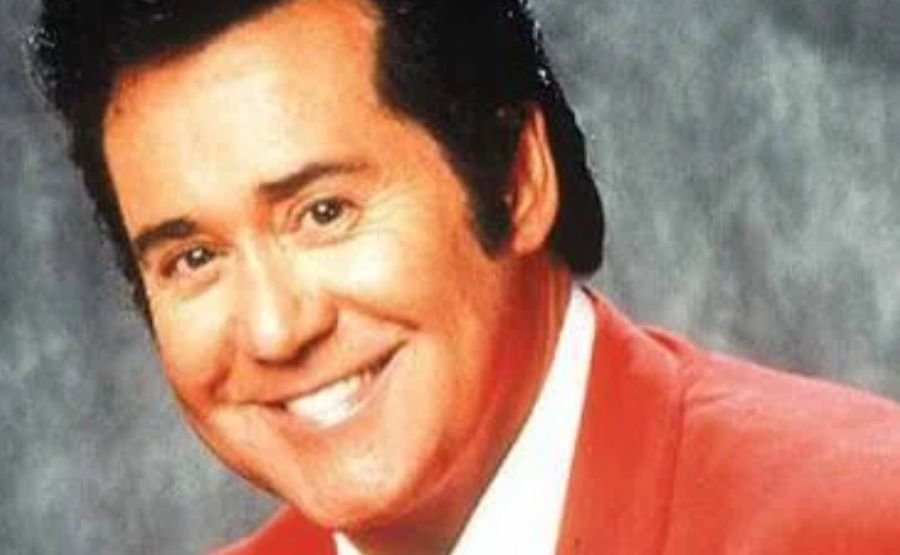
Phoenix, Rascals, and a Big Break That Almost Didn’t Happen
In Phoenix, Wayne and Jerry found their footing as a performing duo. They called themselves the Rascals in Rhythm, and they were good enough to get booked on local television, appear with Grand Ole Opry road shows, and even show up on ABC’s Ozark Jubilee. They performed for the president. They tried out for Ted Mack’s Original Amateur Hour, but they were turned down. This is one of those rejections that history silently laughs at.
The bigger moment came when the owner of a local TV station where the brothers had appeared was tasked with finding entertainment for a luncheon honoring Jackie Gleason. Wayne went and sang “Danny Boy.” Gleason stood up when he finished and announced: “You’re on my first five shows.” Just like that. A comedian with one of the biggest audiences on television had decided this kid from Phoenix was worth something.
The brothers made their debut on The Jackie Gleason Show in 1962. And then the rest of the entertainment world paid attention.
Fifteen Years Old and Walking Into the Flamingo
Before the Gleason breakthrough, there had already been a first taste of Las Vegas. A booking agent in the late 1950s caught the Newton brothers and invited them to perform at the Flamingo Hotel for two weeks. Wayne was fifteen. The idea of a teenager walking into one of the flashiest rooms in the most adult city in America and holding his own should have been impossible. It wasn’t. On closing night, they were offered a full year.
Six shows a day. Every day. For years. That is not a misprint. Wayne Newton started his professional Las Vegas career doing six performances daily alongside his brother, and that grind — that absolute commitment to volume and consistency — is part of what forged him into the performer he became. You don’t walk onstage six times in a day without getting very, very good at being onstage.
Bobby Darin, Capitol Records, and the Song That Refuses to Die
The entertainment legends of that era lined up to take this young performer under their wing. Lucille Ball saw something in him. Danny Thomas. George Burns. Jack Benny, who hired Wayne as his opening act for five years and had him appear on The Jack Benny Program regularly. That was prime television time, reaching audiences across the country. Newton’s reputation was building fast.
Then Bobby Darin entered the picture. Darin was at the height of his cool in the early 1960s — smart, musical, and apparently generous in ways the music business doesn’t always reward. He agreed to produce Wayne Newton’s records. And then he did something that genuinely changed the course of Newton’s career: he handed him a song.
“Danke Schoen” had originally been written with Darin in mind. But Darin decided his new protégé needed a hit of his own more than Darin needed another one. Wayne recorded it in the spring of 1963, and it climbed into the Top 20. That German phrase meaning “thank you sincerely” became the signature of a boy from Virginia who’d once been told not to breathe too hard.
More than two decades later, a filmmaker named John Hughes used it in a scene where a Chicago teenager lip-synced on a parade float, and a whole new generation discovered the song. “Danke Schoen” is one of those pieces of music that just keeps finding its way back into the culture.
“Red Roses for a Blue Lady” followed. “Daddy, Don’t You Walk So Fast” gave him a genuine crossover smash in 1972. “Years” hit in 1980. But the catalog almost doesn’t matter as much as the live show — because Wayne Newton’s real art form was always the room, not the recording studio.
The Highest-Paid Act in Las Vegas: Peak Wayne
By the 1970s, Wayne Newton had turned a corner from popular entertainer into something harder to categorize. He was the highest-paid performer in Las Vegas — not one of the highest-paid, the highest. He was outgrossing Sinatra there. Outgrossing Presley. The Washington Post called him America’s top nightclub act. Esquire made the Sinatra comparison and said there was simply no competition.
Part of what audiences loved was the sheer generosity of his shows. While other headliners wrapped things up in an hour and left, Wayne Newton stayed onstage for two or three hours. He sang everything. He told stories. He played multiple instruments. He made every person in the room feel like they’d gotten more than their money’s worth, which is a gift very few entertainers actually have.
He hit 25,000 solo Las Vegas performances in 1994. By the time his career approached 30,000 shows, the number had become almost mythological.

Casa de Shenandoah, Arabian Horses, and the Life Between Shows
Wayne Newton did not live like a man who was saving up. He lived like a man who believed the money would never stop.
His estate, Casa de Shenandoah, was a forty-acre spread outside Las Vegas that was part ranch, part museum, part personal world. He bred Arabian horses there starting in 1969 — a lifelong passion that began when he purchased his first stallion, a horse named Naborr. The ranch became home to dozens of horses over the decades, and he took that part of his life as seriously as the performance side. He had planes. He had art. He had animals of every kind. The estate became a piece of Las Vegas legend in its own right.
He married his first wife, Elaine Okamura, in 1968, right there at the Flamingo Hotel — already so intertwined with that place that it made a kind of sense. They had a daughter, Erin, born in 1976. The marriage ran seventeen years before ending in 1985.
In 1994, Wayne married Kathleen McCrone, a lawyer, in a relationship that has lasted through everything that came afterward — including some things that would have broken people less committed to each other. Their daughter Lauren arrived in 2002, born via surrogate. He became a grandfather. The man who used to do six shows a day eventually became the kind of person who talks about his grandchildren the same way he used to talk about the Flamingo crowd.
NBC, Bankruptcy, the IRS, and the Long Climb Back
The amount of trouble in the 1980s was comparable to the prosperity of the preceding years.
It started with a business venture. Wayne Newton became part of a group that owned the Aladdin Hotel in Las Vegas, holding a minority stake starting around 1980. Then NBC News ran a series of reports suggesting he had connections to organized crime figures in connection with that purchase. Newton denied it furiously, sued NBC for libel, and fought the case for years. He won a jury verdict at one point, only to have the judgment reversed on appeal. He lost.
But the legal fight had already cost him staggering amounts of money. By 1992, the bills had piled into something that couldn’t be managed any other way. Wayne Newton filed for Chapter 11 bankruptcy with debts exceeding $20 million. The IRS had a tax lien attached to his name. The estate faced challenges from multiple directions. There were lawsuits over hay deliveries, over wages owed to a former pilot, over construction disputes involving developers who wanted to turn Casa de Shenandoah into a theme park and tourist attraction.
He eventually lost the estate through bankruptcy proceedings. The place he’d built over decades — the horses, the memorabilia, the whole sprawling personal world he’d constructed — went through a court-supervised sale. It was painful to watch from the outside and almost certainly more painful from inside.
He also had a serious feud with Johnny Carson over the years, reportedly tied to Carson making jokes about him on The Tonight Show. Newton was allegedly threatened over it. It was a messy period all around.
But Wayne Newton is not someone who quit. By 1999, accounts of his finances had turned around. He rebuilt. The residency model — contained, manageable, income-generating without the overhead of ownership — became his financial foundation. He went back to doing what he’d always done best. He went back to the stage.
The Money Picture Today
Net worth estimates for Wayne Newton range pretty widely depending on who you ask, but the most grounded numbers settle around $50 million as of the mid-2020s. That’s not the peak — at his height, adjusted for inflation, the figure would have been significantly higher. But it represents a genuine rebuilding from the ruins of the early 1990s.
His main income source remains live performance. The residency at the Flamingo — called “Wayne Newton: Up Close and Personal” — has been extended multiple times. He announced another extension in August 2023, pushing the run toward the 65-year mark at that property. Getting paid to do the thing you love, in the city that is basically your second identity, while audiences fill seats because they want to say they saw you — that’s not a bad financial model.
He no longer has Casa de Shenandoah. He no longer has the horses, the planes, the art collection in the way he once did. But he has enough, and more importantly, he has the stage.
Where He Is Now
Wayne Newton is 84 years old as of 2026. He is still performing. He still lives in the Las Vegas area. He still has Kathleen by his side after more than thirty years of marriage. He has his daughters, his grandchildren, and the kind of legacy that doesn’t require any more building — it just needs to be maintained.
His health has required attention over the years. There have been heart concerns and other issues that briefly pulled him off the schedule. He has canceled shows when he needed to. But the pattern has always been: rest, recover, return to the microphone.
He has talked about what performing still means to him — not in terms of legacy or resume, but in a much simpler way. He missed it when he stepped back. His wife apparently asked him once what was wrong during a quiet stretch, and he told her honestly: the stage was missing. That kind of connection to performance, at 84, after 30,000+ shows, is genuinely remarkable.
Final Words
There is a category of entertainer that basically doesn’t get produced anymore — the all-in showman who builds a career not on albums or tours or streaming numbers, but on the live experience, the room, the connection with a physical audience night after night for decades. Wayne Newton is the last truly great example of that type.
His story has every element you’d want: poverty and asthma and a family always moving. A kid who sang his way into rooms he had no business being in. A breakthrough built on the generosity of older legends who didn’t have to help him but did. Decades of peak success that would have been enough for three separate careers. Financial collapse and legal humiliation and the quiet, grinding work of climbing back out. And then, improbably, still going. Still selling tickets. Still walking out under the lights.
What makes Wayne Newton stand out isn’t the number of shows or the hit songs or even the nicknames. It’s stubbornness. The refusal to be finished. Las Vegas is a city that chews through entertainment acts like a conveyor belt. The fact that one man ran on the same belt for sixty-five years and never fell off is its own kind of miracle.
FAQs
1. What is Wayne Newton’s real name?
His full name is Carson Wayne Newton. He was born with it — Wayne is his middle name, which became the one everyone knows.
2. Why is he called “Mr. Las Vegas”?
Because he spent more consecutive decades headlining there than anyone else in history. At his peak he was performing six shows a day, and over the course of his career logged well over 30,000 solo performances in the city.
3. What is Wayne Newton’s most famous song?
“Danke Schoen,” released in 1963. Bobby Darin gave him the song when it was originally intended for Darin himself. It reached the Top 20 and got a massive second life when Matthew Broderick lip-synced it in Ferris Bueller’s Day Off in 1986.
4. Is Wayne Newton still alive and performing?
Yes. As of 2026, he is 84 years old and has an active residency called “Wayne Newton: Up Close and Personal” at the Flamingo Las Vegas. He has extended it multiple times in recent years.
5. Did Wayne Newton really file for bankruptcy?
Yes, in 1992, with debts reported at over $20 million. Much of it stemmed from a costly, years-long libel lawsuit against NBC News and business losses connected to his stake in the Aladdin Hotel.
6. How many times has Wayne Newton been married?
Twice. First to Elaine Okamura from 1968 to 1985, with whom he has a daughter, Erin. Then to attorney Kathleen McCrone in 1994, with whom he has a daughter, Lauren, born via surrogate in 2002.
7. What was Casa de Shenandoah?
His famous forty-acre estate outside Las Vegas where he bred Arabian horses, stored a massive personal collection, and essentially built his own private world. He lost it through bankruptcy proceedings, though he later fought legal battles to recover personal items from it.
8. Does Wayne Newton have Native American heritage?
He has consistently claimed Cherokee heritage on his mother’s side and Powhatan heritage on his father’s side. Throughout his life, he has discussed this identity; at a concert in 2025, he revealed to the crowd that half of his ancestry is Native American.
9. What is Wayne Newton’s estimated net worth today?
Around $50 million, according to the most credible estimates — a significant rebuilding from the bankruptcy years, driven largely by his ongoing residency income.
10. Did Wayne Newton and Johnny Carson really feud?
Yes. The two reportedly had a contentious relationship, with Carson making jokes about Newton on The Tonight Show that Newton found demeaning. The feud reportedly got serious enough to involve alleged threats, though exact details were disputed.
11. How did Wayne Newton get his start?
He and his older brother Jerry performed together as kids in Ohio and Arizona, eventually breaking through on local Phoenix television. Jackie Gleason heard Wayne perform and personally put the brothers on his national television show in 1962. Bobby Darin then took them under his wing and helped Wayne get signed to Capitol Records.
12. What instruments does Wayne Newton play?
Several — including piano, guitar, and steel guitar, all of which he reportedly began learning by ear around age four or five. His live shows have always featured multi-instrument performances as part of the experience.
Discover people, ideas, and stories that matter with CelebsBeacon.



One Comment